
Agent context compression tools: Headroom, RTK, Engram, Attic and how each one measured its saving
Seven tools sit between a coding agent and the model as of October 2026. Every headline saving is self-measured, and RTK is the safest place to start.
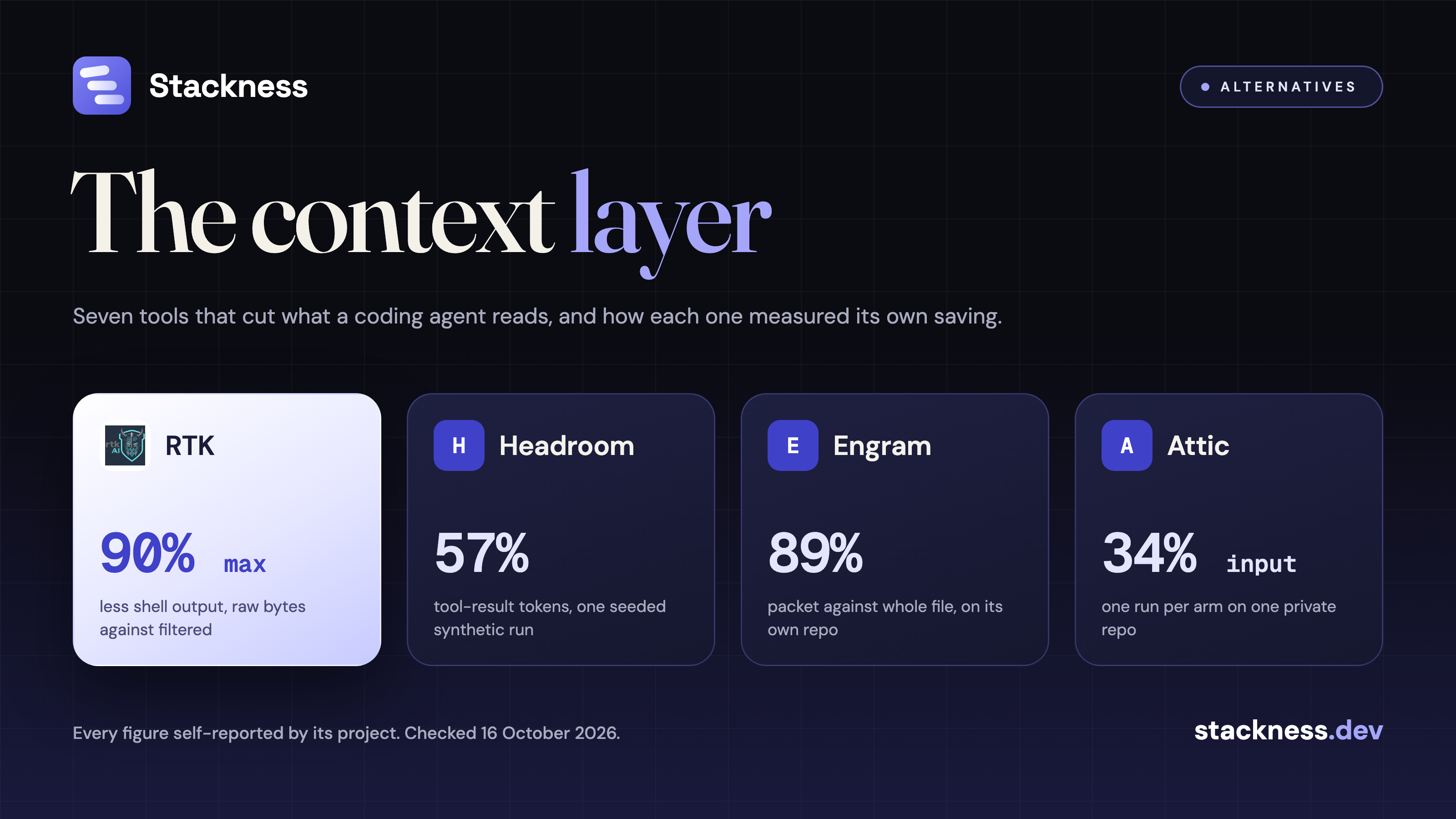
This article explores seven context compression tools that sit between coding agents and large language models (LLMs), each offering unique methods to reduce the amount of data processed. These tools are designed to optimize performance, reduce costs, and improve efficiency in coding workflows.
What happened
The article introduces seven context compression tools that sit between coding agents and large language models (LLMs). These tools aim to reduce the amount of data processed by the model, thereby improving performance and reducing costs. Each tool measures its savings differently, and the article highlights RTK as the safest starting point for users with existing prompt caches.
Why it matters
Understanding these tools is crucial for AI developers and software engineers looking to optimize their coding workflows. By reducing the amount of data processed, these tools can significantly improve performance and reduce costs, making them valuable for both individual developers and teams.
- RTK is recommended as the safest starting point for users with existing prompt caches.
- Each tool measures its savings differently, and none has been independently verified.
- Headroom is suitable for users with large, repetitive tool output and multiple agents.
- Engram is ideal for reducing file read overhead in large repositories.
- Attic is best for long investigations that span multiple sessions.
The bigger picture
The practical impact of these tools is significant, as they can reduce token usage, improve model performance, and lower costs. They are particularly useful for large repositories, long investigations, and teams that need to share findings across different agents.
The article provides an in-depth look at seven context compression tools that can optimize coding workflows by reducing the amount of data processed. Each tool has its own strengths and use cases, and the choice depends on the specific needs of the developer or team.
Technical details
- Headroom compresses logs, JSON, and other tool output before it reaches the provider, keeping the originals locally.
- RTK rewrites shell commands into rtk equivalents and returns trimmed output, reducing bash output by up to 90%.
- Engram builds a local structural graph of the repository and intercepts file reads to hand the agent a packet instead of the whole file.
- Attic writes findings to .attic/ as plain Markdown and injects a short index each session, reducing input tokens by 34%.
- cocoindex-code is an AST-based semantic code search tool that re-embeds only changed files.
FAQ
What is the main purpose of these context compression tools?
These tools aim to reduce the amount of data processed by large language models (LLMs) in coding agents, improving performance and reducing costs.
Which tool is recommended for users with existing prompt caches?
RTK is highlighted as the safest starting point for users with existing prompt caches.
How do these tools measure their savings?
Each tool measures its savings differently, with some using synthetic data, others using real-world scenarios, and some not providing detailed metrics.
What are the key differences between these tools?
The tools differ in what they touch: compressors, code indexes, memory stores, and prompt-cache fixers, each with specific use cases.
Which tool is best for large repositories?
cocoindex-code is ideal for large repositories where local semantic search is needed.
This summary and analysis were generated with AI from the original article and may contain errors. Read the original for the full story.
Read the full story
Originally published by Stackness Blog on Oct 16, 2026.
Comments
Sign in to join the discussion.