
AMD attempts to get ahead of expected RTX Spark launch with Gorgon Halo benchmarks
AMD is getting ahead of an expected RTX Spark launch later this week with a few benchmarks for its flagship Gorgon Halo chip, the Ryzen AI Max+ Pro 495.
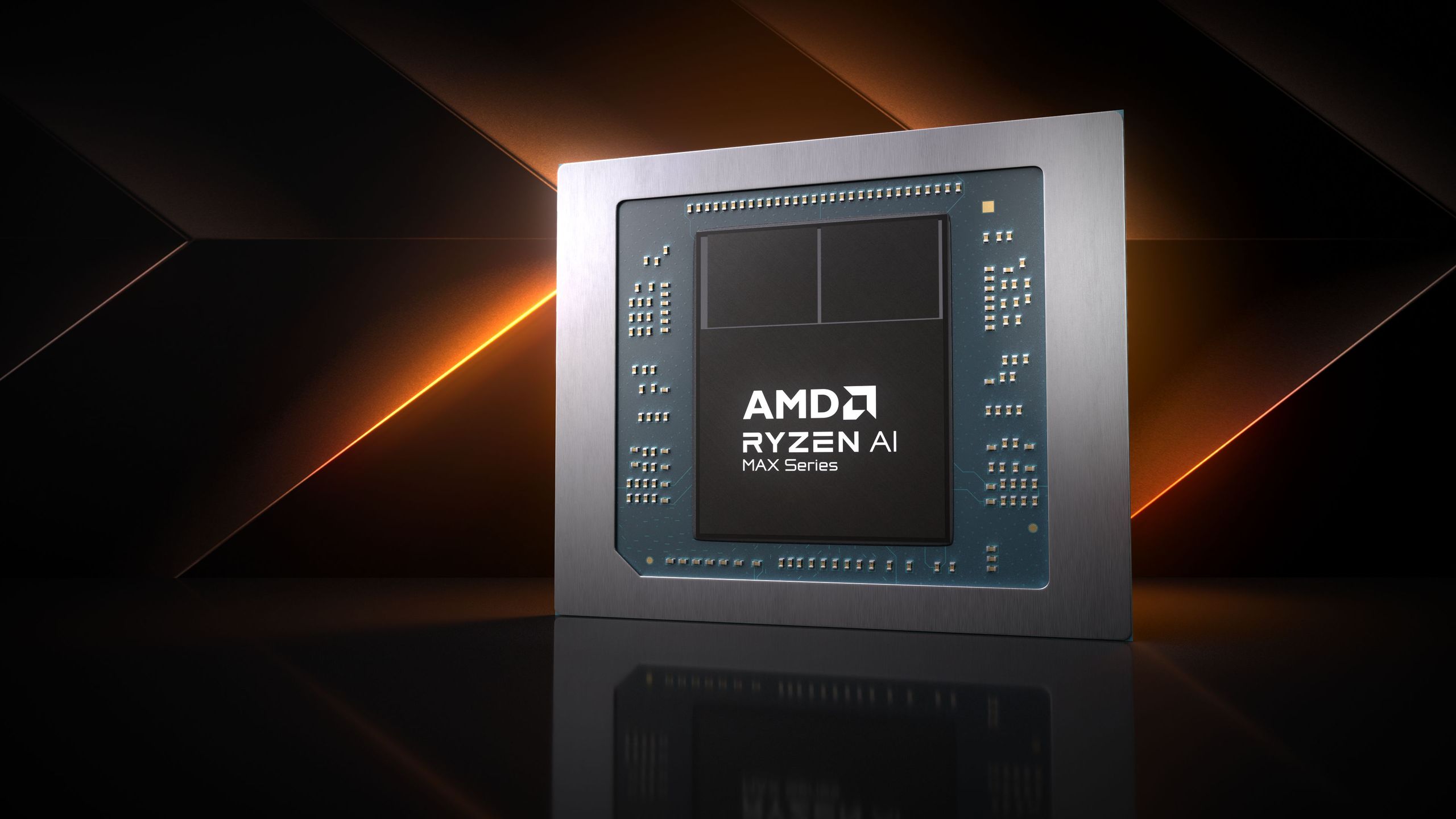
AMD has released benchmarks for its Gorgon Halo chip, the Ryzen AI Max+ Pro 495, ahead of the expected RTX Spark launch, comparing its performance against Intel's Core Ultra X9 388H.
What happened
AMD released benchmarks for its Gorgon Halo chip, the Ryzen AI Max+ Pro 495, ahead of the expected RTX Spark launch. The benchmarks compare the chip's performance against Intel's Core Ultra X9 388H, highlighting a range of performance advantages. The Gorgon Halo is positioned as a competitor to RTX Spark devices and Apple's M-series SoCs, with increased memory capacity and technical specifications.
Why it matters
The benchmarks provide insight into the performance of AMD's latest AI chip, which is positioned to compete with upcoming RTX Spark devices. The increased memory capacity and technical specifications of Gorgon Halo could influence the market for AI-powered devices, particularly in the agentic PC category.
- AMD's Gorgon Halo chip is a refresh of the Strix Halo line with enhanced memory and clock speeds.
- The benchmarks show significant performance advantages over Intel's Core Ultra X9 388H, though some results may be outliers.
- Increased memory capacity allows for running larger models locally, though performance may vary with context length.
- The agentic PC market is expanding, with AMD and other companies competing for market share.
- The RTX Spark launch is anticipated to bring new competition in the AI chip market.
The bigger picture
AMD's Gorgon Halo chip offers increased memory capacity and technical improvements, positioning it as a competitor to RTX Spark and Apple's M-series SoCs. The benchmarks highlight the performance differences between AMD and Intel chips, which could influence the adoption and development of AI-powered devices in the market.
AMD has released benchmarks for its Gorgon Halo chip, the Ryzen AI Max+ Pro 495, ahead of the expected RTX Spark launch. The benchmarks highlight the chip's performance against Intel's Core Ultra X9 388H and emphasize its increased memory capacity and technical specifications, positioning it as a competitor in the agentic PC market.
Technical details
- Ryzen AI Max+ Pro 495: 192GB unified memory, 100 MHz boost clock increase over previous-gen Strix Halo chips.
- ComfyUI was used to measure generative AI performance.
- GLM 5.3 Flash with 320 billion parameters, 18 billion activated per token.
- Qwen 3.8 Flash Next: 125 billion main parameters, 51 billion embedding parameters, 4 billion MTP parameters, 5 billion activated per token.
- Unsloth's UD-IQ4_XS and dynamic 4-bit quantization were used for performance measurements.
FAQ
What is the Gorgon Halo chip?
The Gorgon Halo chip is AMD's latest AI chip, part of the Ryzen AI Max+ Pro 495 line, designed to compete with RTX Spark devices and Apple's M-series SoCs.
How does the Gorgon Halo compare to Intel's Core Ultra X9 388H?
AMD's benchmarks show performance advantages ranging from 1.1x to 32.2x over Intel's Core Ultra X9 388H, though some results may be outliers.
What are the key technical specifications of the Gorgon Halo?
The Gorgon Halo supports up to 192GB of unified memory, has a 100 MHz boost clock increase over previous-gen Strix Halo chips, and uses dynamic 4-bit quantization for performance measurements.
What models were tested in the benchmarks?
The benchmarks tested models such as GLM 5.3 Flash, Qwen 3.8 Flash Next, and GPT-OSS 120B, with varying token throughput results.
What is the significance of the increased memory capacity in Gorgon Halo?
The increased memory allows for running larger models locally, though performance may decrease with longer context lengths, affecting usability for certain applications.
This summary and analysis were generated with AI from the original article and may contain errors. Read the original for the full story.
Read the full story
Originally published by Tom's Hardware AI on Oct 5, 2026.
Comments
Sign in to join the discussion.