
Can You Trust an AI Dashboard from Excel? A Review Checklist
Learn how to review an AI dashboard from Excel: define the KPI, trace it to source rows, test edge cases, and choose between a file workflow and BI.
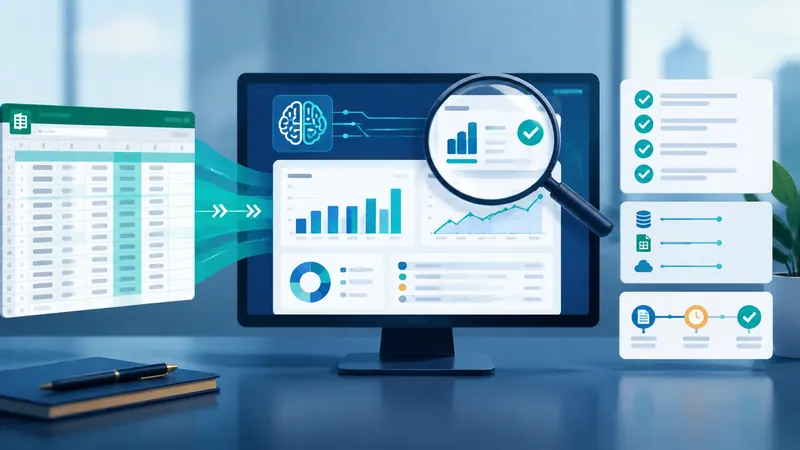
This article provides a structured methodology for reviewing AI-generated dashboards derived from Excel or CSV files, emphasizing accuracy verification and technical rigor.
What happened
The article outlines a systematic approach to validate AI dashboards created from spreadsheet data, focusing on preventing calculation errors through structured review processes and technical checks.
Why it matters
Ensures reliability of AI-driven business insights by addressing common errors in data aggregation and visualization, critical for decision-making processes.
- Always document KPI calculation rules explicitly
- Validate at least one key metric against source data
- Implement edge case testing in dashboard workflows
- Differentiate between snapshot reviews and live data connections
- Use specialized tools for transforming messy data into audit-ready formats
The bigger picture
Reduces risk of misinformed decisions by establishing verification standards for AI-generated business analytics.
The article establishes a critical framework for verifying AI dashboard accuracy, emphasizing structured review processes to prevent calculation errors in business analytics.
Technical details
- KPI contract framework with five mandatory fields
- Data tracing mechanisms from dashboard metrics to source rows
- Edge case testing protocols (duplicates, missing fields, partial periods)
- RowSpeak's role in converting unstructured data into audit-ready formats
- BI system selection criteria based on governance needs
FAQ
What is a KPI contract?
A structured document defining five elements: data source, row granularity, filters, calculation formula, and data currency date to ensure transparent metric definitions.
Why test edge cases in dashboards?
To identify how the system handles anomalies like duplicate entries, missing data, and currency conversions that could compromise metric accuracy.
How does RowSpeak differ from traditional BI tools?
RowSpeak focuses on transforming unstructured data sources into reviewable dashboards without establishing live data connections, whereas BI systems provide governed, scheduled data pipelines.
This summary and analysis were generated with AI from the original article and may contain errors. Read the original for the full story.
Read the full story
Originally published by Excelmatic Blog on Oct 10, 2026.
Comments
Sign in to join the discussion.