
Coding agent runtime, local VM vs cloud sandbox: what moves across the boundary after Cowork went cloud-only
Keep interactive coding agents local with the OS sandbox on, and send repo-scoped tasks that end in a pull request to a cloud sandbox. Cowork moved on 6 October.
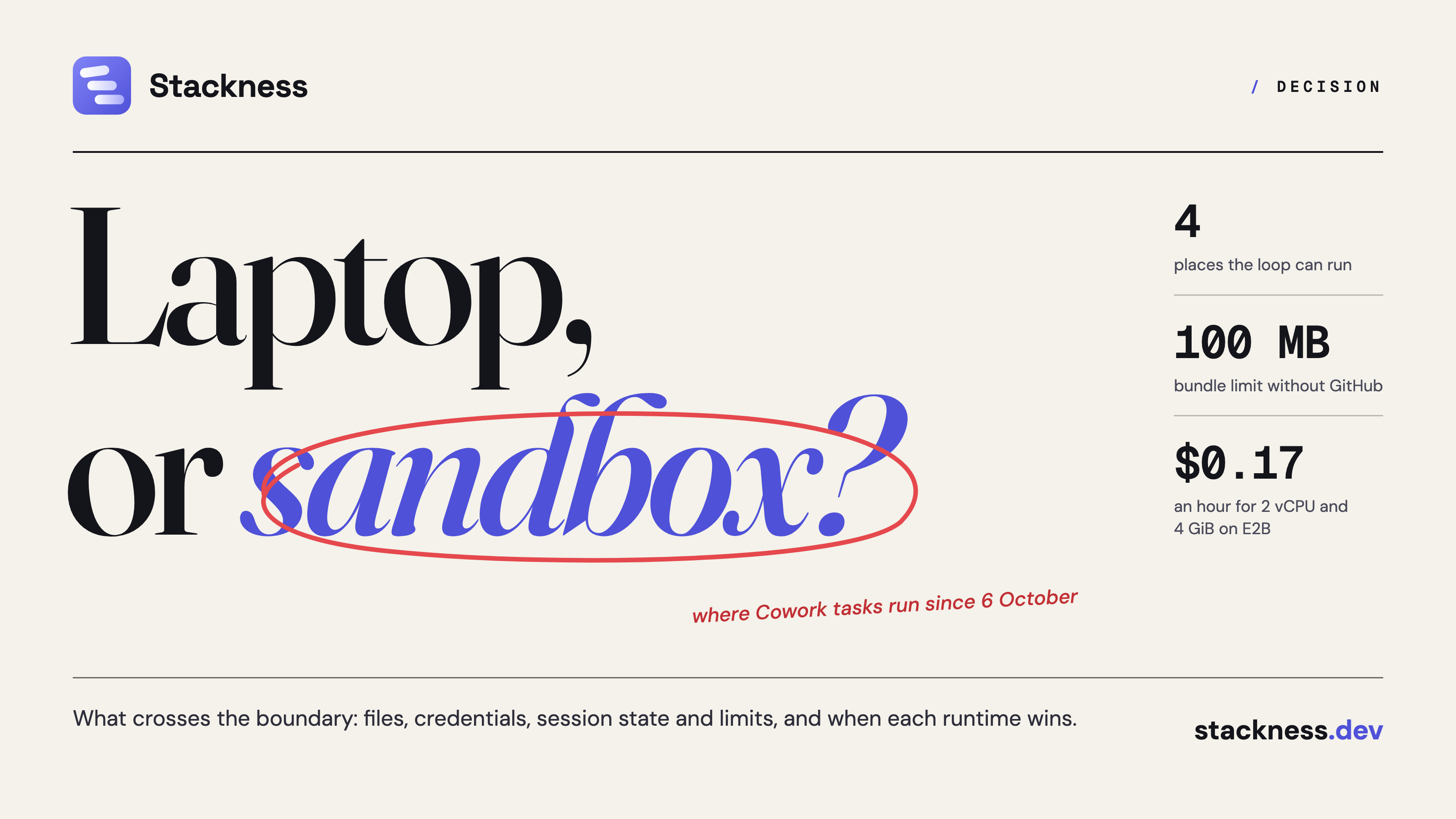
This article discusses the shift in coding agent runtime environments, focusing on the transition from local VMs to cloud sandboxes, particularly highlighting the changes made by Anthropic with Cowork's move to the cloud.
What happened
Anthropic moved Cowork tasks to the cloud, eliminating the option to run them locally. This change affects how coding agents interact with local systems and cloud environments, with implications for credential management, session state, and access to private resources.
Why it matters
The shift to cloud sandboxes impacts AI developers and teams relying on local execution for tasks requiring private networks, local tools, and SSO. It highlights the trade-offs between security, cost, and flexibility in agent runtime environments.
- Cloud sandboxes are suitable for tasks ending in pull requests but lack access to private networks and local tools.
- Local runtimes are preferred for tasks requiring private networks, local MCP servers, and SSO.
- Vendors like Anthropic, Cursor, and OpenShell offer varying levels of sandboxing and security.
- The choice between local and cloud runtimes involves trade-offs like lock-in, cost, and security.
- Self-hosted sandboxes like OpenShell and Mecatl offer more control but are still in beta.
The bigger picture
The move to cloud sandboxes affects how teams manage credentials, session state, and access to private resources. It also influences the choice of runtime environments based on security, cost, and flexibility.
The shift to cloud sandboxes for coding agents highlights the trade-offs between security, cost, and flexibility. Teams must choose between local and cloud runtimes based on their specific needs, with vendors offering varying levels of sandboxing and security.
Technical details
- Cloud sandboxes work on cloned repositories, not local checkouts.
- Credentials are managed through vendor proxies or environment variables.
- Local runtimes allow access to private networks, local MCP servers, and SSO.
- Tools like OpenShell and Mecatl offer sandboxing with kernel-level limits.
- Cloud sandboxes have limited access to credentials and session state.
FAQ
Why did Anthropic move Cowork to the cloud?
Anthropic moved Cowork to the cloud to reduce the performance and resource costs of running VMs locally, and to avoid work stopping when a laptop is closed.
What are the limitations of cloud sandboxes?
Cloud sandboxes work on cloned repositories, not local checkouts, and have limited access to credentials and private networks.
What are the advantages of local runtimes?
Local runtimes allow access to private networks, local MCP servers, and SSO, making them suitable for tasks requiring these resources.
Which vendors offer sandboxing options?
Vendors like Anthropic, Cursor, OpenShell, and Mecatl offer sandboxing options with varying levels of security and control.
What are the risks of using cloud sandboxes?
Cloud sandboxes risk lock-in to a vendor's account and git host, and may have higher costs for parallel tasks and sandbox hours.
This summary and analysis were generated with AI from the original article and may contain errors. Read the original for the full story.
Read the full story
Originally published by Stackness Blog on Oct 16, 2026.
Comments
Sign in to join the discussion.