
Context Rot: Why Bigger Context Windows Make AI Agents Less Reliable
Four ways an agent’s context goes bad, and why every fix means throwing information awayContinue reading on Towards AI »
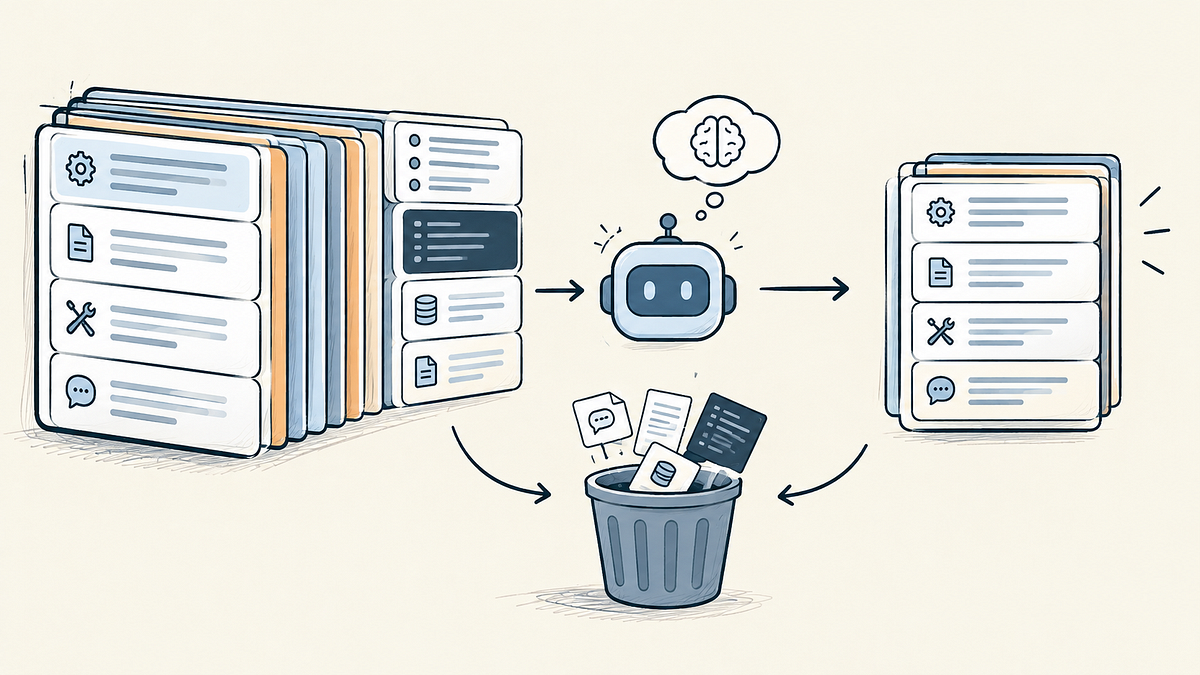
The article discusses the concept of 'context rot' in AI agents, where larger context windows lead to decreased reliability. It explores four failure modes and the challenges of maintaining context in AI systems.
What happened
The article explains how increasing the size of context windows in AI agents leads to 'context rot', where models become less reliable. It outlines four failure modes and discusses how context engineering can mitigate these issues, often requiring the intentional removal of information.
Why it matters
Understanding context rot is crucial for AI developers and researchers working on long-running tasks, as it highlights the trade-offs between context size and model reliability. This knowledge helps in designing more effective and reliable AI systems.
- Larger context windows can lead to decreased reliability in AI agents.
- Context engineering is essential to maintain model performance.
- Fixing context issues often involves discarding information.
- Understanding context rot is important for developing reliable AI systems.
The bigger picture
The findings suggest that while larger context windows can provide more information, they may compromise the reliability of AI agents. This has implications for the design and implementation of AI systems in real-world applications.
The article emphasizes the importance of managing context in AI agents to prevent 'context rot' and ensure reliable performance, even as context window sizes increase.
Technical details
- Context windows in AI models can range from a few thousand to a million tokens.
- Context engineering involves selecting relevant information to include in the context window.
- The study analyzed 18 frontier models to assess the impact of context window size on reliability.
FAQ
What is context rot in AI agents?
Context rot refers to the phenomenon where larger context windows in AI models lead to decreased reliability, as the model becomes less effective at using the information provided.
Why do larger context windows cause context rot?
Larger context windows may overwhelm the model, leading to unreliable use of information, as the model struggles to process and retain relevant data.
How can context rot be mitigated?
Context rot can be mitigated through context engineering, which involves carefully selecting and managing the information included in the context window, often requiring the intentional removal of some data.
What is the role of context engineering?
Context engineering is the process of deciding what information to include in the context window at each step of an AI agent's operation, ensuring the model uses relevant data effectively.
This summary and analysis were generated with AI from the original article and may contain errors. Read the original for the full story.
Read the full story
Originally published by Towards AI on Oct 16, 2026.
Comments
Sign in to join the discussion.