
Google's AI detection website is now available
SynthID Detector will flag content created with AI tools from OpenAI, Google, Apple and other companies.
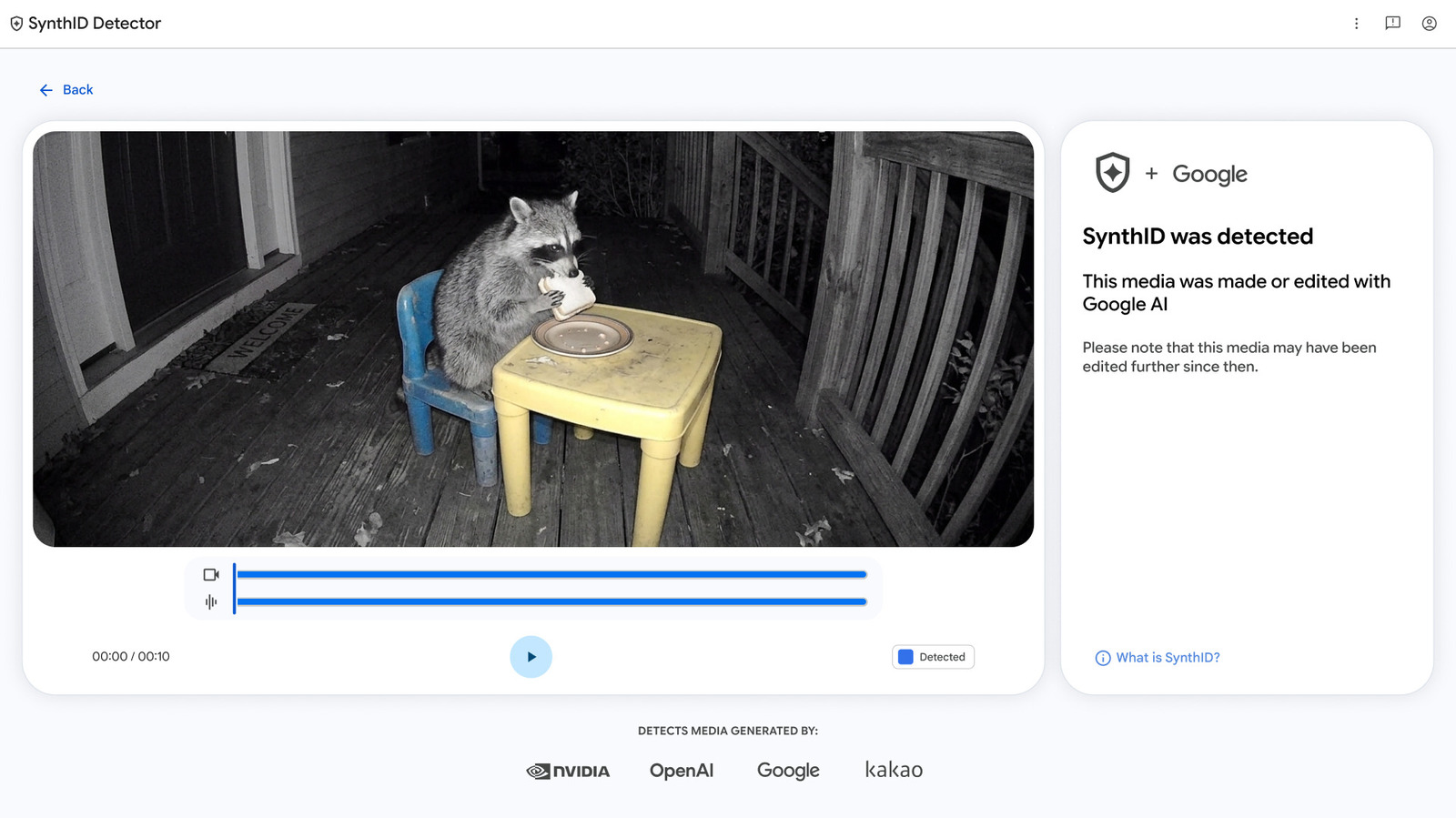
Google has launched SynthID Detector, a web-based tool designed to identify AI-generated or AI-edited content from various companies, including OpenAI, Google, Apple, and others.
What happened
Google has made its SynthID Detector, a web-based tool for identifying AI-generated or AI-edited content, available to the public. The tool can detect content from multiple AI companies and requires a Google, OpenAI, or Apple account to use. It is designed to flag images, video, and audio created with AI tools from various companies, including Apple, OpenAI, and Google.
Why it matters
The availability of SynthID Detector is significant for AI developers and technology professionals as it provides a tool to verify the authenticity of AI-generated content. This is crucial for maintaining trust in digital media and ensuring that AI content is properly identified, especially as AI tools become more prevalent in content creation.
- Google's SynthID Detector is now publicly available for identifying AI-generated content.
- The tool supports multiple AI companies and requires a Google, OpenAI, or Apple account.
- It has limitations in detecting all AI-generated content and distinguishing between AI-created and AI-edited content.
- Google is working on expanding partnerships to detect more generated media.
- The tool is part of a broader effort to address the challenges of verifying AI-generated content.
The bigger picture
The impact of SynthID Detector is that it provides a method for identifying AI-generated content, which is important for verifying the authenticity of digital media. However, its effectiveness is limited by the lack of universal standards for watermarking and the ability of watermarks to be stripped from content.
Google has launched SynthID Detector, a public web tool for identifying AI-generated or AI-edited content from various companies. While it offers a useful method for verifying digital media, it has limitations and relies on partnerships with other AI companies to improve its effectiveness.
Technical details
- SynthID Detector is a web-based tool for identifying AI-generated content.
- It uses watermarks and C2PA content credentials for detection.
- The tool can detect content from multiple AI companies, including Google, OpenAI, NVIDIA, and Kakao.
- It requires a Google, OpenAI, or Apple account for access.
- Support for Apple's AI features like Image Playground is planned for the future.
FAQ
What is SynthID Detector?
SynthID Detector is a web-based tool developed by Google to identify AI-generated or AI-edited content from various companies, including OpenAI, Google, Apple, and others.
What types of content can SynthID Detector identify?
The tool can flag images, video, and audio clips created with AI tools from Google, OpenAI, NVIDIA, and Kakao.
Does SynthID Detector require an account to use?
Yes, users need to log in with a Google, OpenAI, or Apple account to use the tool.
What are the limitations of SynthID Detector?
The tool cannot detect all AI-generated content, as different companies use varying watermarking standards. It also cannot distinguish between content that was entirely AI-created and content that was merely edited with AI.
What is Google's plan for expanding SynthID Detector?
Google is working on extending partnerships to allow detection of more generated media, including support for Apple's AI features like Image Playground.
This summary and analysis were generated with AI from the original article and may contain errors. Read the original for the full story.
Read the full story
Originally published by Engadget on Oct 7, 2026.
Comments
Sign in to join the discussion.