
Googlebooks mark the end of the old Google
Does Google still believe in the open web? With the launch of its new Googlebooks, it doesn’t feel that way. Googlebooks are Google’s attempt to establish a new platform of Android-based laptops, with native Android app support and tight connectivity with Android phones.
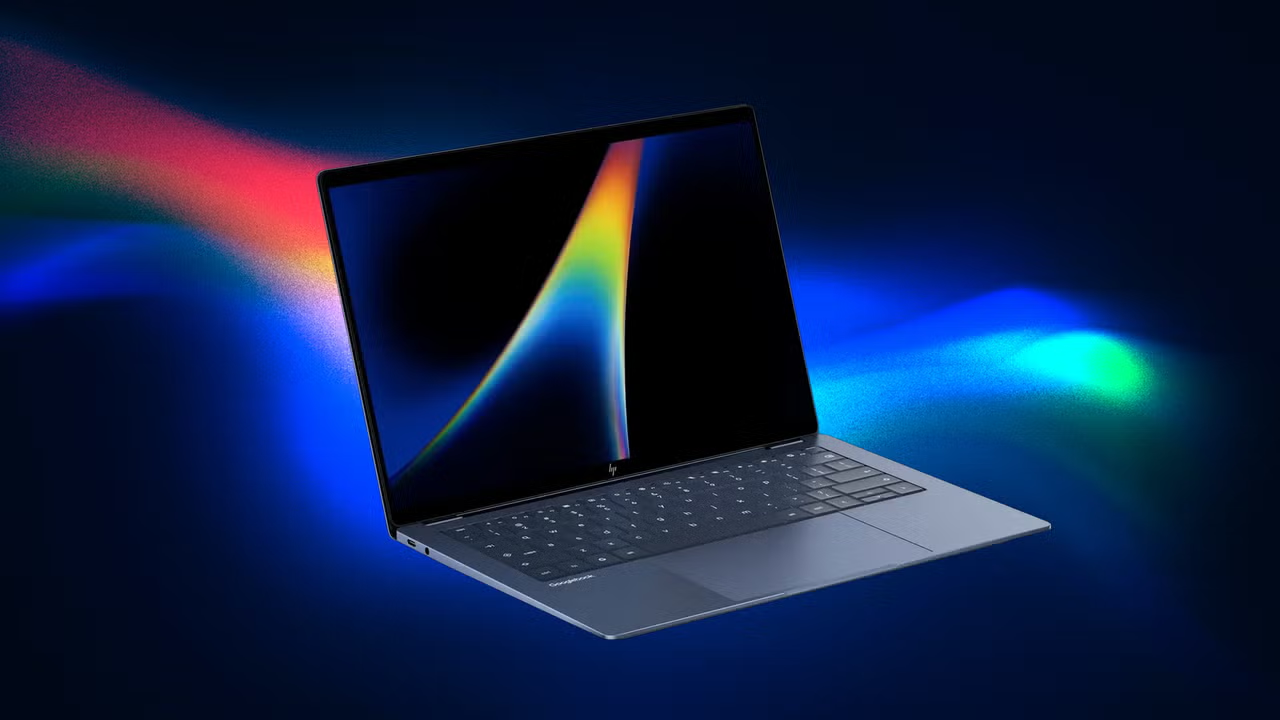
The article discusses Google's strategic shift from ChromeOS to Android-based Googlebooks, highlighting the end of an era for the open web and the integration of AI into its new platform.
What happened
Google announced the end of ChromeOS, transitioning to Android-based Googlebooks with AI features. This marks a departure from ChromeOS's original focus on the open web, as Google prioritizes a more controlled, app-centric ecosystem with AI integration.
Why it matters
For AI developers and tech professionals, this shift underscores Google's strategic alignment with AI-driven workflows and controlled platforms, impacting software development, user interaction models, and the future of open web technologies.
- Google's move reflects a broader industry shift toward AI-driven ecosystems.
- The end of ChromeOS signifies the decline of the open web ideal in favor of controlled platforms.
- AI integration is becoming central to Google's product strategy.
- Developers may need to adapt to Android and AI-focused development paradigms.
- The article highlights tensions between open web principles and corporate-controlled tech ecosystems.
The bigger picture
The transition may accelerate industry trends toward AI-centric computing, reduce reliance on traditional web browsing, and shift development priorities toward Android and AI-native applications.
Google's transition from ChromeOS to AI-driven Googlebooks represents a significant shift in its strategy, signaling the end of an era for the open web and a move toward controlled, AI-centric platforms.
Technical details
- Android-based laptops with native Android app support
- Integration of Gemini AI features (e.g., AI-generated content, chatbots)
- Phase-out of ChromeOS by 2034, replacing it with a platform emphasizing Android and AI
- Historical context of ChromeOS's open web-centric design vs. current app-centric approach
FAQ
What is the significance of Google phasing out ChromeOS?
ChromeOS's phase-out marks a shift from Google's original vision of an open web-centric platform to a more controlled, Android and AI-focused ecosystem.
How do Googlebooks differ from Chromebooks?
Googlebooks are Android-based laptops with native Android app support and AI integration, whereas Chromebooks were web-centric with limited local storage and a focus on browser-based applications.
Why is the article critical of Google's move?
The article critiques the loss of the open web ideal, increased corporate control over user experiences, and the prioritization of AI-driven workflows over traditional web browsing.
This summary and analysis were generated with AI from the original article and may contain errors. Read the original for the full story.
Read the full story
Originally published by Fast Company AI on Oct 10, 2026.
Comments
Sign in to join the discussion.