
How to Build an Agent Deployment Pipeline From Scratch
On a Friday afternoon, an engineer changes one sentence in a support agent’s system prompt to make replies more concise. Unit tests pass. The image...
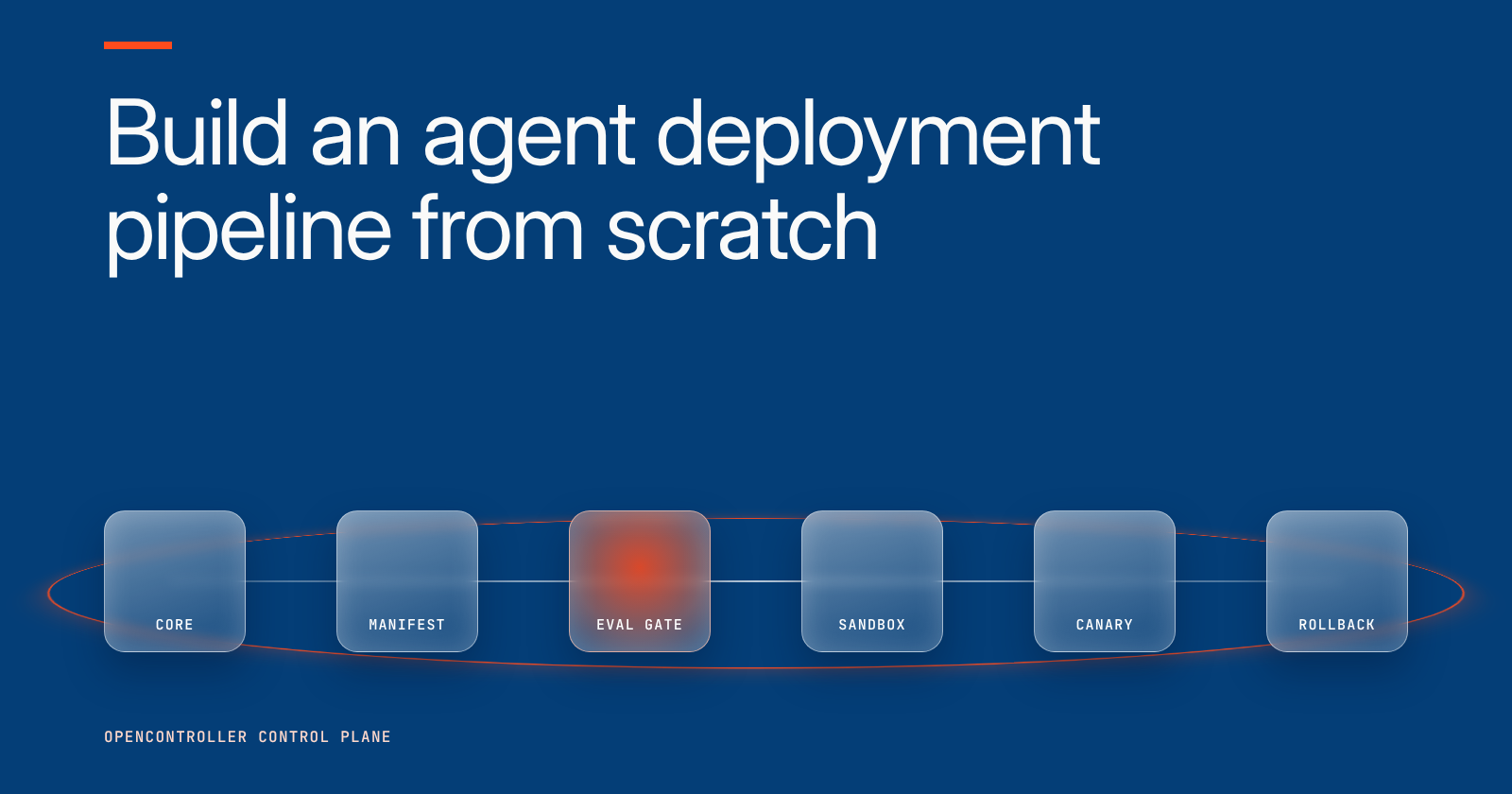
This article explains how to build a robust deployment pipeline for AI agents, addressing the limitations of traditional CI/CD practices and offering a structured approach to ensure consistent and safe agent behavior.
What happened
The article describes a scenario where an AI agent's behavior changed unexpectedly after a prompt update, highlighting the need for a robust deployment pipeline. It outlines steps to build such a pipeline, including decoupling the agent core, versioning components, implementing evaluation gates, and managing deployments.
Why it matters
Traditional CI/CD practices are insufficient for AI agents due to their dynamic behavior. A structured pipeline ensures consistent performance, prevents unexpected behavior, and enables safe scaling across multiple agents and environments.
- Decouple the agent core from transport layers for headless testing.
- Version all components in a manifest for reproducibility and rollback.
- Implement an evaluation gate with a golden dataset and LLM-as-a-judge.
- Use containerization and sandboxing for secure and scalable deployments.
- Deploy gradually using shadow and canary strategies with rollback capabilities.
The bigger picture
This approach ensures that AI agents behave consistently, prevents unexpected behavior, and enables safe scaling across multiple environments. It also provides rollback capabilities and governance for large fleets of agents.
Building a deployment pipeline for AI agents requires treating them as more than just code. By decoupling components, versioning, and implementing evaluation gates, teams can ensure consistent and safe behavior. At scale, a control plane like Opencontroller helps govern the fleet.
Technical details
- Decoupling the agent core from transport layers (e.g., FastAPI, Slack bots).
- Versioned agent manifest with pinned components (prompt, model, tools, knowledge).
- Golden dataset for deterministic checks and LLM-as-a-judge evaluation.
- Containerization with stateless containers and external state management (Redis, databases).
- Shadow and canary deployments with traffic splitting and session-sticky canaries.
FAQ
What is a versioned agent manifest?
A versioned agent manifest is a file that pins all components of an agent (prompt, model, tools, knowledge) for reproducibility and rollback.
How does the evaluation gate work?
The evaluation gate runs the agent on a golden dataset, performs deterministic checks, and uses an LLM-as-a-judge to score responses against a rubric.
What is the purpose of shadow and canary deployments?
Shadow deployments mirror live traffic without user interaction, while canary deployments send a small percentage of traffic to the new version for testing.
Why is containerization important for AI agents?
Containerization ensures stateless execution, allows for sandboxing, and enables traffic shifting and rollback without losing conversation history.
What is the role of a control plane like Opencontroller?
A control plane like Opencontroller governs the fleet of agents, applies consistent release controls, and enforces runtime policies across different environments.
This summary and analysis were generated with AI from the original article and may contain errors. Read the original for the full story.
Read the full story
Originally published by Opencontroller by lyzr Blog on Oct 14, 2026.
Comments
Sign in to join the discussion.