
Margaret Hamilton, software pioneer who helped put humans on the Moon, dies at 90
Her team's code kept Apollo 11's landing on course when the guidance computer became overloaded
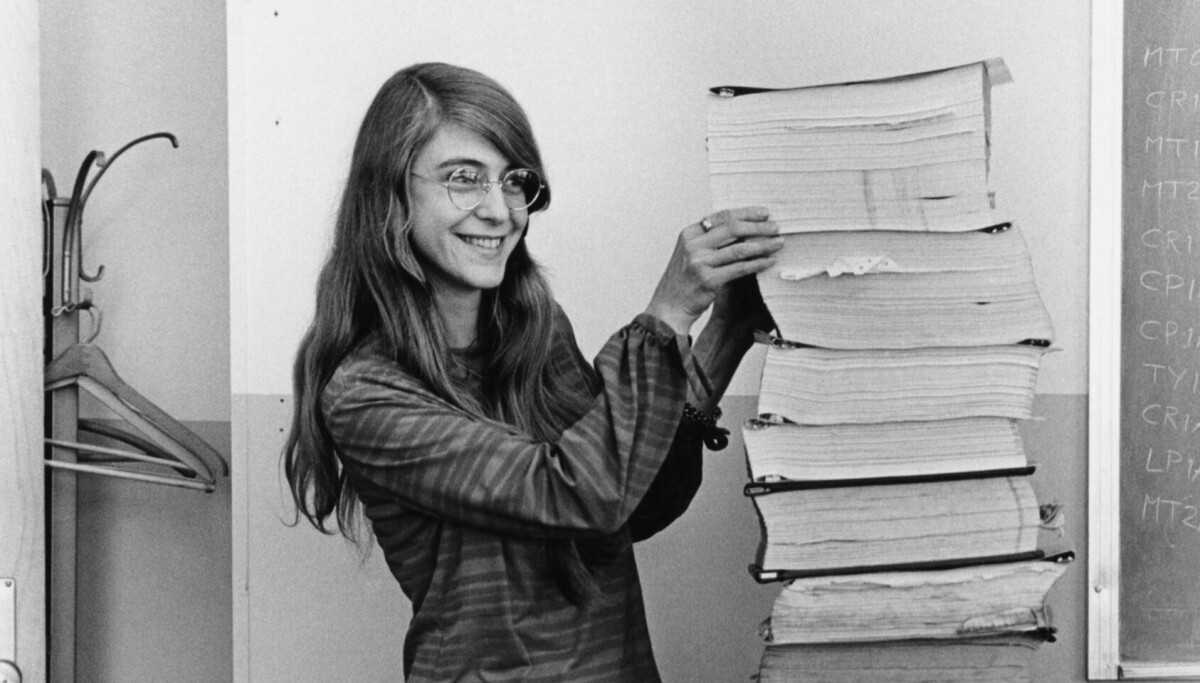
Margaret Hamilton, a pioneering software engineer who played a critical role in the Apollo 11 Moon landing, has passed away at the age of 90. Her team's code ensured the guidance computer remained functional during an overload, allowing the lunar module to land safely.
What happened
Margaret Hamilton, a software engineer who played a key role in the Apollo 11 Moon landing, died at 90. Her team's code ensured the guidance computer remained functional during an overload, allowing the lunar module to land safely. Hamilton also pioneered concepts like fault-tolerant software and the term 'software engineer'.
Why it matters
Hamilton's work on fault-tolerant software and error prevention has had a lasting impact on modern software design. Her contributions to the Apollo missions and the development of methodologies like DBTF and USL are foundational for AI and software engineering today.
- Design for the mistakes users supposedly won't make and the failures no one expects.
- Fault-tolerant software is essential for critical systems like space missions.
- The term 'software engineer' was coined by Hamilton, highlighting the importance of software in engineering disciplines.
- Her methodologies like DBTF and USL are foundational for modern software development.
- Her legacy emphasizes the importance of anticipating and mitigating errors in software systems.
The bigger picture
Hamilton's innovations in fault-tolerant software and error prevention have influenced modern software design and engineering practices. Her work laid the groundwork for reliable, ultra-reliable software systems used in critical applications today.
Margaret Hamilton's contributions to software engineering and the Apollo missions have left a lasting legacy. Her work on fault-tolerant software and methodologies continues to influence modern AI and software development practices.
Technical details
- Hamilton developed the onboard flight software for Apollo's command and lunar modules.
- She introduced the term 'software engineer' and developed the Development Before the Fact (DBTF) methodology.
- Her work included creating the Universal Systems Language (USL) for systems design.
- The software's restart protection allowed essential landing tasks to continue despite the overload.
FAQ
What was Margaret Hamilton's role in the Apollo 11 mission?
Hamilton led the development of the onboard flight software for Apollo's command and lunar modules, which played a crucial role in ensuring the lunar module's safe landing.
What was the significance of the 'Forget It' program?
The 'Forget It' program was a critical part of the Apollo abort procedure. It allowed the system to handle unexpected errors, and its success elevated Hamilton's status within the team.
What methodologies did Margaret Hamilton develop?
Hamilton developed the Development Before the Fact (DBTF) methodology to prevent errors early on and the Universal Systems Language (USL) for systems design.
What was the impact of Hamilton's work on modern software design?
Hamilton's work on fault-tolerant software and error prevention has influenced modern software design and engineering practices, contributing to the development of reliable, ultra-reliable systems.
What recognition did Margaret Hamilton receive?
Hamilton was awarded the Presidential Medal of Freedom in 2016, recognizing her contributions to concepts like asynchronous software, priority scheduling, and human-in-the-loop decision capability.
This summary and analysis were generated with AI from the original article and may contain errors. Read the original for the full story.
Read the full story
Originally published by The Register on Oct 8, 2026.
Comments
Sign in to join the discussion.