
"The beginning of a new scientific paradigm": Zuckerberg's Biohub, U.S. and Google build virtual cell
Mark Zuckerberg's Biohub is partnering with Google and the federal government in its ambitious effort to use AI for generating vast quantities of biological data that can predict how cells behave.Why it matters: The ultimate goal is an AI model that lets scientists test potential experiments…
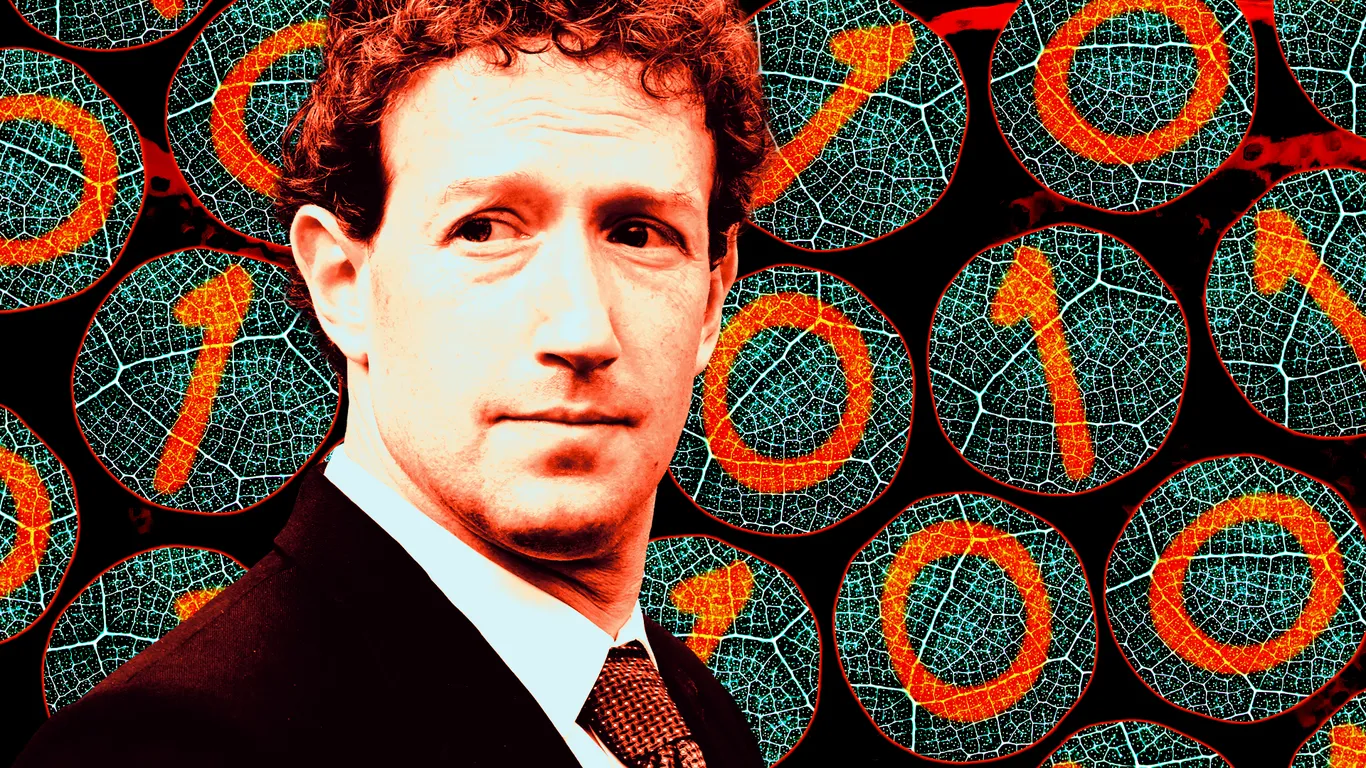
Mark Zuckerberg's Biohub is collaborating with Google, the federal government, and other organizations to develop an AI model that can predict cell behavior by generating vast amounts of biological data.
What happened
Biohub, in collaboration with Google, the Department of Energy, the National Institutes of Health, and other entities, is working on an AI-driven project to generate biological data that can predict cell behavior. This effort includes creating a 'universal virtual cell' and involves significant funding and data sharing agreements.
Why it matters
This project could revolutionize biological research by allowing scientists to conduct virtual experiments, reducing the need for costly and time-consuming lab work. It also addresses the challenge of obtaining sufficient biological data for AI models.
- Collaboration between tech companies and government agencies can drive significant AI research in biology.
- AI's role in virtual experimentation could transform scientific workflows.
- Data sharing agreements with temporary exclusivity may encourage private sector participation in public research.
The bigger picture
The project has the potential to accelerate biological research, reduce experimental costs, and provide open access to critical data for scientific advancement.
Biohub's partnership with Google and the federal government aims to create a universal virtual cell using AI, which could significantly enhance biological research and reduce experimental costs.
Technical details
- AI models for predicting cell behavior
- Data standardization for biological information
- Empirical AI models that learn from biological evidence
- Scaling laws in AI and biological data
- Integration of computational models with real-world biological data
FAQ
What is the main goal of Biohub's collaboration with Google and the federal government?
The main goal is to develop an AI model that can predict cell behavior by generating vast amounts of biological data, enabling virtual experimentation and reducing lab costs.
How much funding is involved in this project?
The project involves $1.8 billion in funding from the Department of Energy, NIH, Google DeepMind, Isomorphic Labs, Meta, and Biohub.
What is the significance of the one-year data embargo for commercial partners?
The one-year embargo allows commercial partners to have exclusive access to the data, providing an incentive for their investment, after which the data will be made publicly available for scientific use.
This summary and analysis were generated with AI from the original article and may contain errors. Read the original for the full story.
Read the full story
Originally published by Axios AI+ on Oct 7, 2026.
Comments
Sign in to join the discussion.