
The question behind AI panic: What happens to me if it works?
Workers may hide AI gains when working faster makes them look replaceable. Employers need to give them a reason to share.
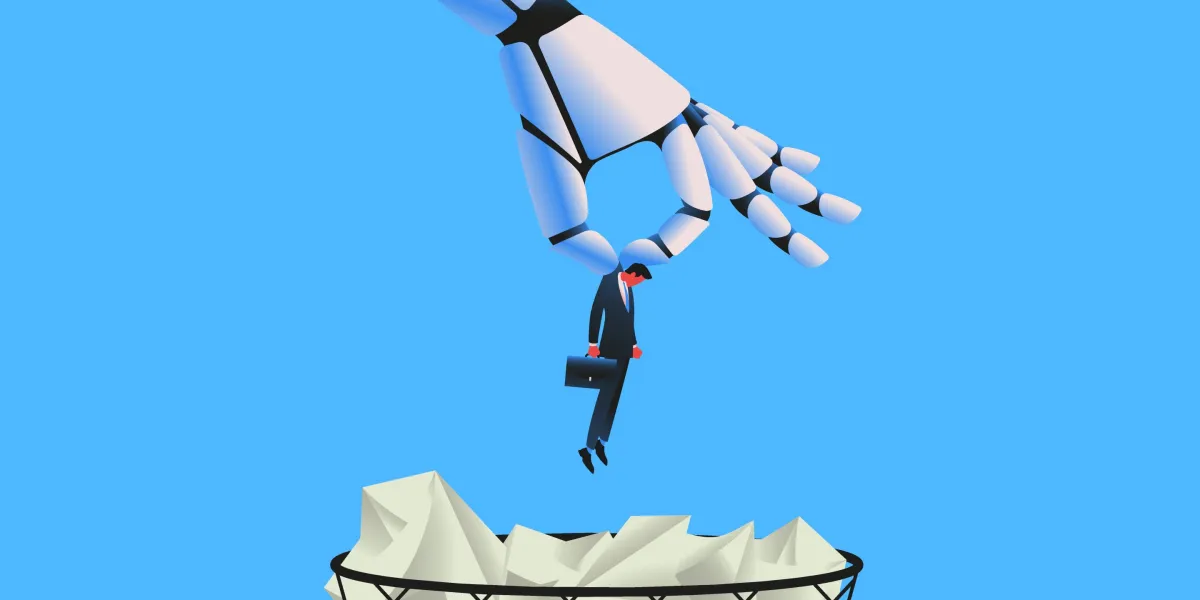
The article explores the dilemma workers face when using AI to increase productivity, questioning whether to disclose their use of AI for fear of being perceived as replaceable.
What happened
The article discusses how workers are hesitant to disclose their use of AI due to fears of being replaced, drawing parallels to historical labor practices and highlighting a Norwegian AI agreement aimed at involving workers in AI implementation.
Why it matters
Understanding worker behavior around AI adoption is crucial for businesses to effectively integrate AI while maintaining employee trust and productivity.
- Workers may hide AI usage to avoid being seen as replaceable.
- Employers should create incentives for employees to share AI-related productivity gains.
- Involving workers in AI decisions can lead to more equitable outcomes.
The bigger picture
The article highlights the need for companies to address employee concerns about AI to prevent resistance and ensure successful implementation.
The article underscores the complex relationship between AI adoption and worker perceptions, emphasizing the importance of addressing fears of replacement through collaborative approaches.
Technical details
- Workplace AI tools
- AI-driven productivity enhancements
- Participatory design in AI implementation
FAQ
Why do workers hide their use of AI?
Workers may hide AI usage to avoid appearing replaceable, as using AI to work faster could lead to fears of job reduction.
What is the Norwegian AI agreement?
The Norwegian AI agreement involves workers in AI implementation, ensuring gains benefit both workers and businesses, and is based on participatory design principles.
How can employers encourage workers to share AI usage?
Employers can provide incentives such as paid training, time to clear backlogs, or transparent discussions about how AI savings are used.
This summary and analysis were generated with AI from the original article and may contain errors. Read the original for the full story.
Read the full story
Originally published by Fortune AI on Oct 14, 2026.
Comments
Sign in to join the discussion.