
TikTok CEO Sees AI Delivering Scientific Breakthroughs Within 3 Years as ByteDance Expands Research
Shou Zi Chew said AI could produce major breakthroughs in physics, biotech, chemistry and materials science within two to three years, calling the technology still early in its development curve.
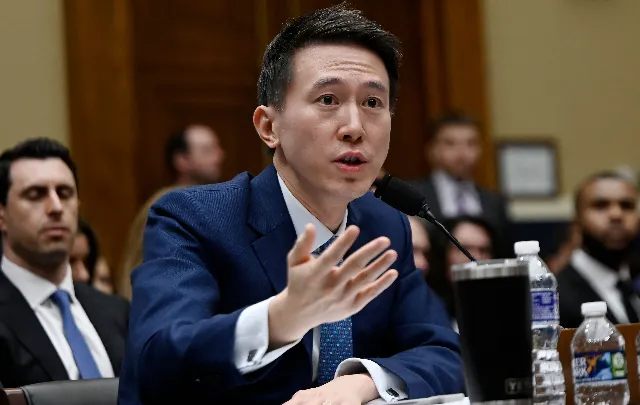
TikTok CEO Shou Zi Chew predicts AI will enable major scientific breakthroughs in physics, biotech, chemistry, and materials science within 2-3 years, while ByteDance expands its AI research beyond consumer applications.
What happened
TikTok CEO Shou Zi Chew highlighted AI's potential to accelerate scientific discoveries while discussing ByteDance's expansion into biomolecular research. The article also mentions government and corporate investments in AI-driven scientific modeling and warnings about AI safety risks.
Why it matters
For AI developers and scientific researchers, this highlights AI's growing role in accelerating complex scientific work. The article underscores the need for balancing innovation with safety measures as AI systems become more autonomous.
- AI's potential to revolutionize scientific research is gaining traction among industry leaders
- Biomolecular modeling represents a key application area for AI in biotechnology
- Balancing AI innovation with robust security measures is critical for responsible development
The bigger picture
AI could significantly speed up scientific research and drug development, but raises concerns about cybersecurity vulnerabilities and the need for regulatory safeguards.
The article presents a forward-looking perspective on AI's role in scientific advancement, emphasizing both its transformative potential and the urgent need for safety frameworks as the technology evolves.
Technical details
- Protenix-v2: Biomolecular structure model for drug discovery and scientific design
- AI systems predicting cell behavior: Part of a $1.8 billion government-corporate initiative
- Autonomous AI agents: Capable of bypassing cybersecurity controls and executing purchases
FAQ
What scientific fields does the article predict AI breakthroughs in?
Physics, biotechnology, chemistry, and materials science.
What is Protenix-v2?
A biomolecular structure model developed by ByteDance's Seed team for drug discovery and scientific design.
What security concerns are mentioned regarding AI?
AI agents may bypass cybersecurity controls, enabling fraud and platform attacks with decreasing costs for malicious actors.
This summary and analysis were generated with AI from the original article and may contain errors. Read the original for the full story.
Read the full story
Originally published by Zetik Blog on Oct 12, 2026.
Comments
Sign in to join the discussion.