
US Genesis Mission backs digital twin to predict fusion plasma in under 20 minutes
A new US Department of Energy-backed project aims to predict the behavior of plasma inside...
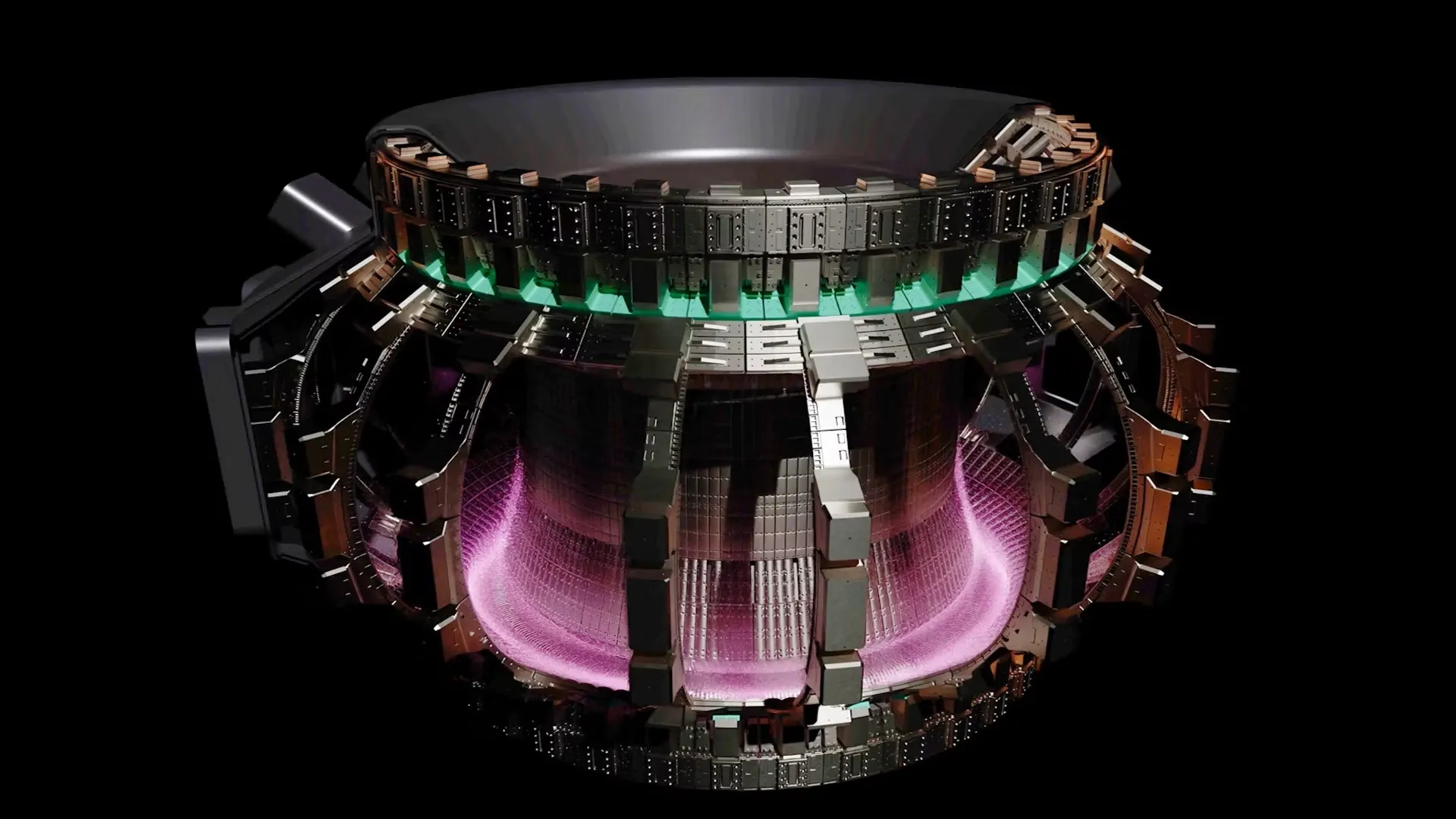
A US Department of Energy-backed project is developing a digital twin to predict plasma behavior in fusion reactors, aiming to reduce prediction time to under 20 minutes using advanced computing and AI.
What happened
A new US Department of Energy-backed project is developing a digital twin of the SPARC fusion device to predict plasma behavior in under 20 minutes, using advanced computing and AI techniques.
Why it matters
This project could significantly enhance the efficiency of fusion research by enabling faster analysis and adjustments between experiments, accelerating the development of commercial fusion energy.
- Digital twins can enhance fusion research by enabling rapid plasma predictions.
- Collaboration between national labs, companies, and universities is key to advancing AI-driven fusion technologies.
- Surrogate models and high-performance computing are essential for efficient simulation and analysis.
The bigger picture
The digital twin could improve the accuracy and speed of plasma predictions, aiding in the design and optimization of fusion reactors, which is critical for advancing commercial fusion energy.
The US Department of Energy-backed project aims to develop a digital twin for SPARC to predict plasma behavior in under 20 minutes, leveraging AI and advanced computing to accelerate fusion energy research.
Technical details
- Digital twin technology connected to a physical SPARC device for real-time data updates.
- Physics simulation codes: M3D-C1, TRANSP, and XGC.
- Surrogate models trained on large datasets to approximate complex calculations.
- High-performance computing resources from PPPL and other institutions.
FAQ
What is a digital twin in the context of this project?
A digital twin is a virtual replica of the SPARC fusion device that uses physics simulations, experimental data, and AI to predict plasma behavior in real-time.
What are the key components of the digital twin project?
The project includes physics simulation codes, surrogate models, high-performance computing resources, and collaboration between national labs, universities, and companies.
How will the digital twin benefit fusion research?
The digital twin allows for faster prediction of plasma behavior, enabling quicker analysis and adjustments between experiments, which can accelerate the development of commercial fusion energy.
This summary and analysis were generated with AI from the original article and may contain errors. Read the original for the full story.
Read the full story
Originally published by Interesting Engineering - Robotics on Oct 12, 2026.
Comments
Sign in to join the discussion.