
Watch a Bee’s Stinger Keep Pumping Venom After the Bee Is Gone
Scientists have recorded the intricate mechanisms of a honeybee sting frame-by-frame.
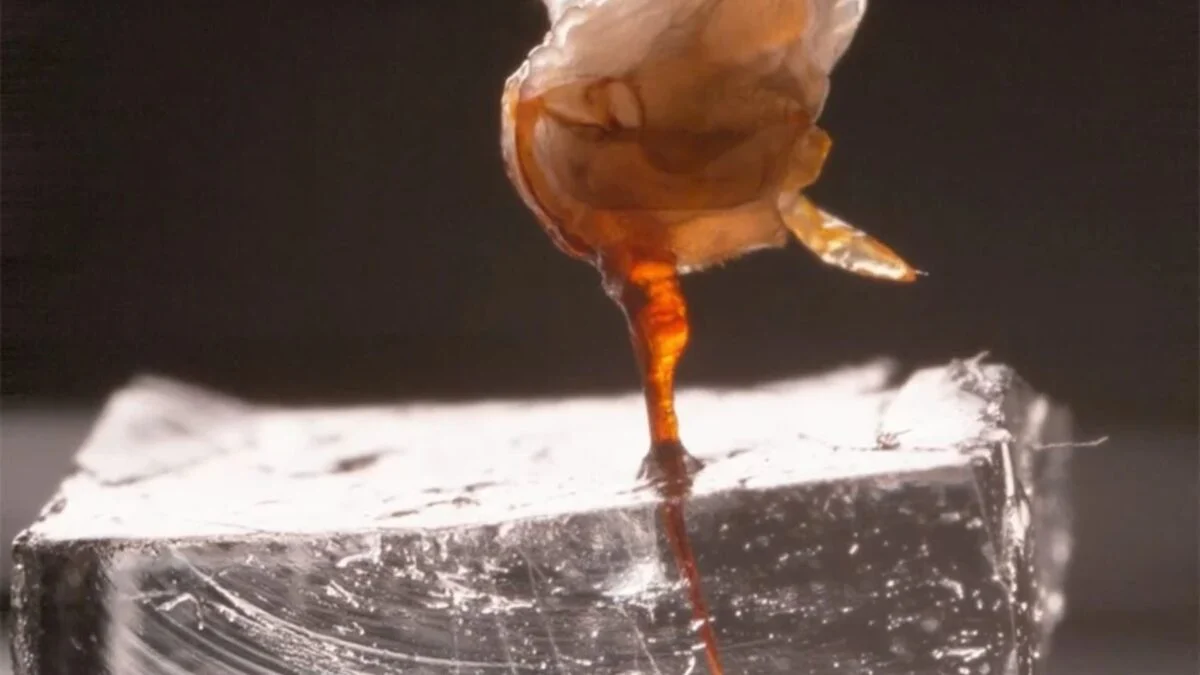
Scientists have captured the intricate mechanics of a honeybee's stinger using high-speed cameras, revealing a unique dual-piston mechanism that allows the stinger to pump venom independently after it has detached from the bee.
What happened
Researchers in Australia used high-speed cameras to capture the detailed mechanics of a honeybee's stinger, revealing a unique dual-piston mechanism that allows the stinger to pump venom independently after detachment. They observed how the valves function as alternating pistons, enabling continuous venom delivery. The findings could inspire the development of new medical or micro-pumps.
Why it matters
The unique pumping mechanism of the honeybee's stinger could lead to advancements in medical device design, particularly for applications requiring continuous liquid flow. This research highlights the potential for biomimicry in engineering and could inspire innovations in micro-pump technology.
- The honeybee's stinger uses a unique dual-piston mechanism for venom delivery.
- The stinger's valves function as alternating pistons, enabling continuous flow.
- The findings could inspire new medical or micro-pump designs.
- Biomimicry from nature can lead to innovative engineering solutions.
The bigger picture
The research could lead to the development of more efficient and continuous liquid delivery systems, such as medical devices or micro-pumps. It also demonstrates the potential of biomimicry in engineering and technology.
The study of the honeybee's stinger has revealed a unique mechanism that could inspire new technologies in medical and engineering fields, highlighting the potential of biomimicry in innovation.
Technical details
- High-speed cameras were used to capture the stinger's mechanics.
- The stinger's valves function as alternating pistons.
- The dual-piston mechanism operates independently of the bee.
- The stinger's pumping chamber includes valves and lancets.
FAQ
What did the researchers discover about the honeybee's stinger?
The researchers discovered that the honeybee's stinger uses a dual-piston mechanism that allows it to pump venom independently after detachment from the bee.
How did the researchers capture the stinger's mechanics?
Researchers used high-speed cameras to record the stinger's mechanics in detail, using clear gel to mimic human skin.
What are the potential applications of this research?
The findings could inspire the design of new medical or micro-pumps that require continuous liquid flow.
What is the significance of the stinger's dual-piston mechanism?
The dual-piston mechanism allows for continuous venom delivery and could lead to advancements in fluid delivery systems.
Where was the research published?
The research was published in the journal PNAS.
This summary and analysis were generated with AI from the original article and may contain errors. Read the original for the full story.
Read the full story
Originally published by Gizmodo — AI on Oct 13, 2026.
Comments
Sign in to join the discussion.