
YMTC PC550 Review: A PCIe 5.0 SSD Built for Cool, Compact PCs
PCIe 5.0 SSDs are no longer a new category. There are already many drives that can deliver very fast read and write speeds. The harder part is putting that level of performance into a laptop, mini PC, or other compact system without creating new problems with heat and power consumption.
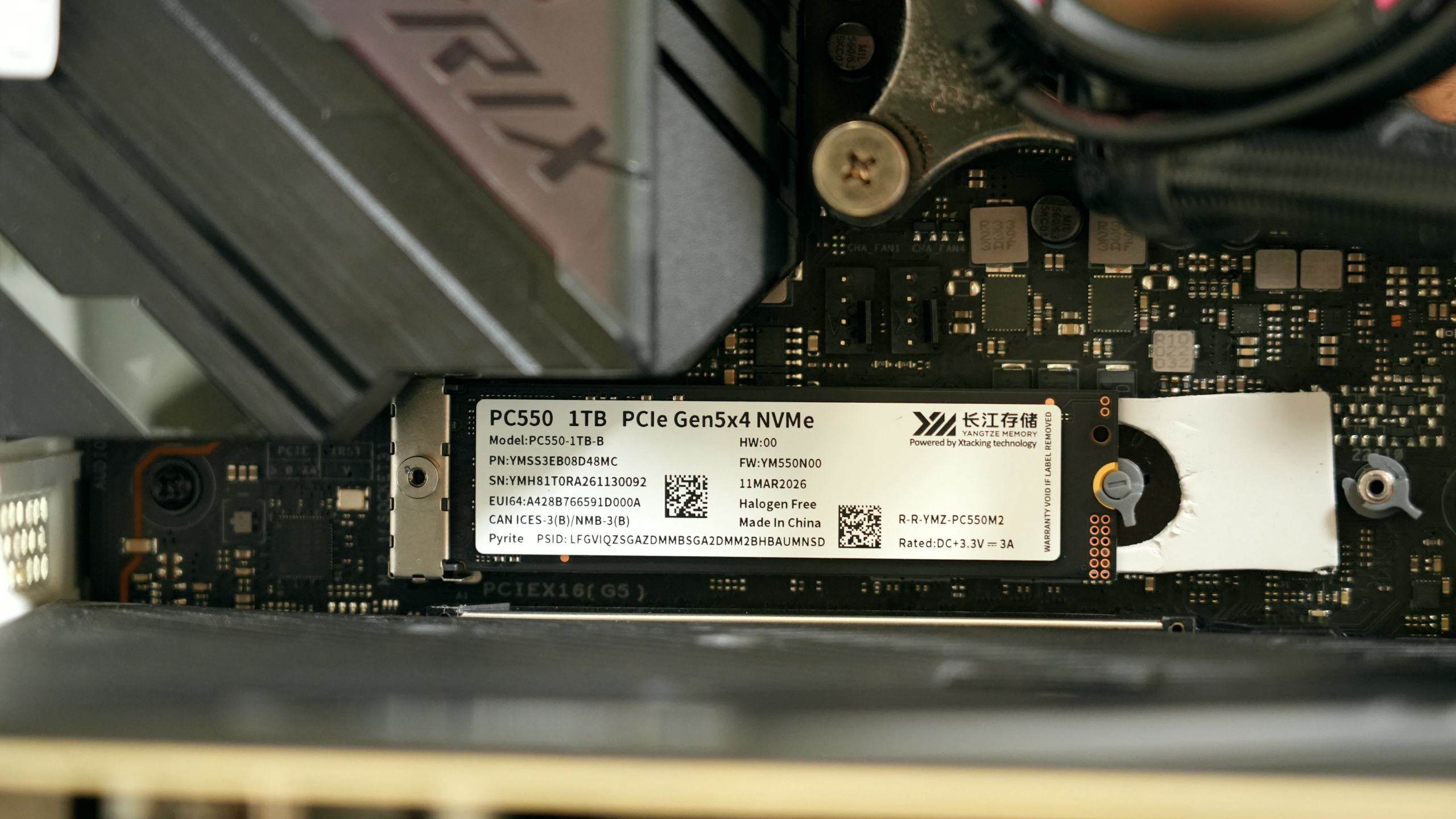
This article reviews the YMTC PC550 PCIe 5.0 SSD, focusing on its performance, thermal management, and suitability for compact systems. It highlights how the drive balances speed with heat control, particularly in AI and gaming workloads.
What happened
The YMTC PC550 PCIe 5.0 SSD was tested for performance, thermal behavior, and real-world workloads. It demonstrated superior sequential and random IOPS, sustained write speeds, and maintained sub-50°C temperatures during stress tests, outperforming PCIe 4.0 drives in specific scenarios.
Why it matters
For users building compact PCs or AI workstations, the PC550 offers high-speed storage without excessive heat or power demands, making it suitable for space-constrained systems requiring reliable performance.
- PCIe 5.0 SSDs can achieve high performance without excessive heat if designed properly
- Thermal management is critical for compact systems with limited cooling capacity
- AI workloads benefit from fast storage to reduce model-loading bottlenecks
- Performance metrics should consider sustained workloads, not just peak benchmarks
- The PC550 offers a practical balance of speed, power, and thermal efficiency
The bigger picture
The PC550 provides a viable PCIe 5.0 solution for compact systems, addressing thermal and power constraints while maintaining high performance for demanding tasks like AI and gaming.
The YMTC PC550 demonstrates that PCIe 5.0 SSDs can deliver high performance while managing heat effectively, making it a suitable choice for compact systems requiring reliable storage for AI, gaming, and large file operations.
Technical details
- PCIe 5.0 interface with sequential read/write speeds up to 10,500MB/s and 9,500MB/s
- 4K random read/write IOPS of 1,300K and 1,300K (measured 1,403K and 1,789K)
- Sustained write speed of 2,002.69MB/s during 1TB sequential-write test
- Thermal sensors maintained 42-48°C under combined workload
- Supports AI model loading (Qwen2.5 7B) with 2.07-second average load time
FAQ
How does the PC550's performance compare to PCIe 4.0 drives?
The PC550 outperformed a PCIe 4.0 reference drive by 1.34 seconds in a game-loading test, demonstrating improved speed for real-world workloads.
What makes the PC550 suitable for compact systems?
It maintains sub-50°C temperatures under sustained load and consumes less than 6W, reducing thermal and power demands in space-constrained devices.
How does the PC550 handle AI workloads?
It enables fast model loading (2.07 seconds for Qwen2.5 7B) by leveraging PCIe 5.0 read speeds, reducing bottlenecks in AI workflows.
What benchmarks did the PC550 exceed?
It surpassed rated sequential read speeds by 11.5% (11,712.69MB/s vs. 10,500MB/s) and achieved 1,789K IOPS in 4K random writes, exceeding its 1,300K IOPS rating.
What is the significance of sustained write performance?
Sustained write speeds (2,002.69MB/s) reflect real-world performance during large file transfers, unlike short burst benchmarks that only show peak capabilities.
This summary and analysis were generated with AI from the original article and may contain errors. Read the original for the full story.
Read the full story
Originally published by TechNode - China AI on Oct 10, 2026.
Comments
Sign in to join the discussion.