

v0.7.0
LLM inference in C/C++. Contribute to ggml-org/llama.cpp development by creating an account on GitHub.
llama.cpp11 min read
Stay updated with the latest developments in Artificial Intelligence
LLM inference in C/C++. Contribute to ggml-org/llama.cpp development by creating an account on GitHub.


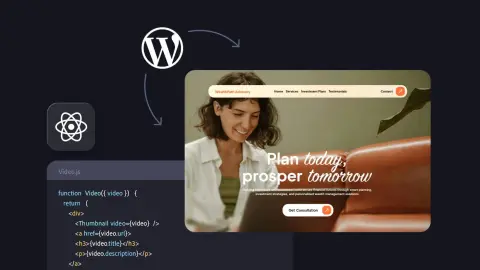
Most leading agentic site-building tools output React. That output lands without friction on Vercel, TanStack Start, Wix, and Webflow. However, most of the web does not live there. It lives on WordPress. 10Web has been a WordPress company since we started.
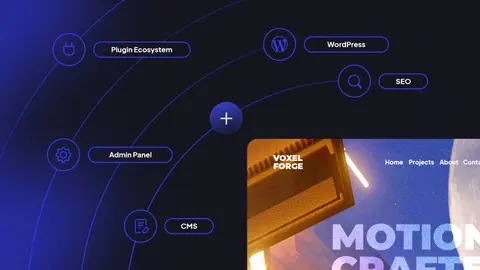
Vibe coding builders are built for a different job. Vibe coding builders solved the generation problem. A website is mostly an operation problem. Those are different problems, and solving one doesn’t move you any closer to solving the other.
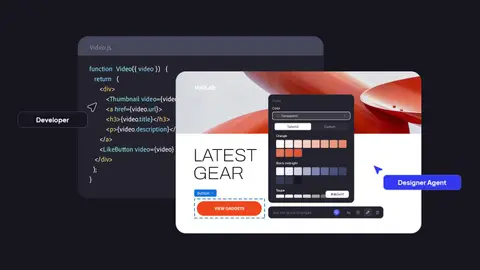
When a user clicks a hero section and changes the font size, what they see is simple. What has to happen is not: the browser knows what they clicked, but the React source code the agent wrote has no native concept of which element that DOM click corresponds to.
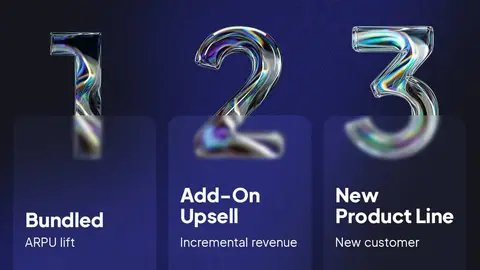
You’ve seen the pattern. WordPress provisions in 90 seconds. The welcome email goes out. Then nothing. No first login, no DNS change, no support ticket. Just a cancellation notice 72 hours later. You’re not losing that customer on uptime or price.
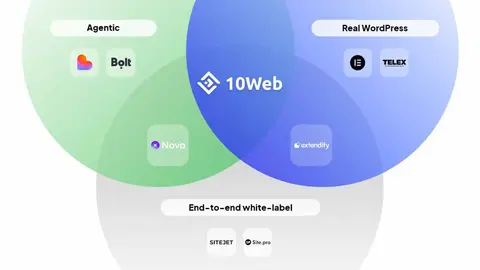
We do three things. Agentic generation. Real WordPress. End-to-end white-label. Lots of companies do one of those. A few do two. No one else does all three. This is something we know by heart internally. It comes up in every customer call, every partner pitch, every Monday strategy meeting.

Thirty engineers. One year. That is what it took to solve a single technical problem: generating production-ready WordPress sites from a prompt. We mention it not to boast, but because it is the cleanest answer to the question we hear in almost every conversation with hosting companies: “Why…

10Web and Duda target the same buyer: web professionals and agencies. Both offer AI-powered site building, white-label capability, multi-site management, and bundled hosting. On a feature checklist, the comparison produces a near-tie. The real difference is architectural.
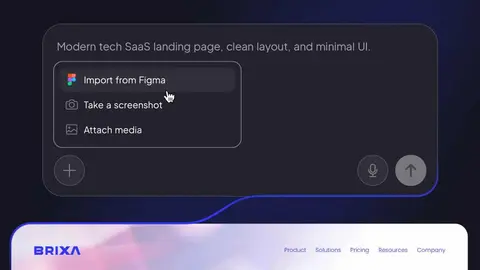
Figma and WordPress do not speak the same language. Figma stores a design as structured data: vectors, components, and auto-layouts expressed as JSON. WordPress renders pages from PHP templates and database content assembled at request time. These are not different file formats.
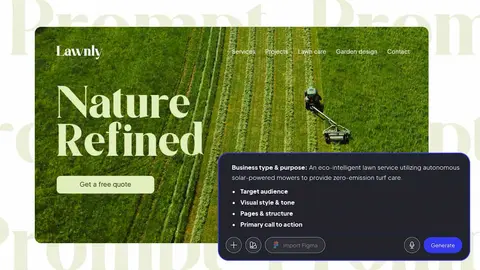
If your site is off target and generic, it’s most likely your prompt, not the tool. Every AI website builder reads your input and generates a site based on what you described. If the description is thin, the output defaults to the statistical average for your industry.
The difference between template-first and Agentic website builders is not a set of features. It is a fundamental architectural gap between a platform that starts with a fixed layout and one that starts with your business.

Thirty seconds and a text prompt is a remarkable way to produce something that looks like a website but still isn’t one. That gap between what AI generates and what a business can actually run is the defining problem in AI website building right now. The tools have gotten faster.

You found a site that looks like what you want to create. The structure and composition is just the way you’ve been imagining yours to be. So you decide to clone it and use it as a base. Ten minutes later you’re reading about FTP transfers, database exports, and a file called wp-config.php.
Showing 12 of 12 stories
You're all caught up.
Get the top AI news and tools straight to your inbox every week.
Weekly · AI news from 10Web Blog
Join 15,000+ AI enthusiasts