Agents on live hardware: reason where you must, engineer everywhere else
Five million signals a day, down to five alerts. How we used agents two different ways on one anomaly detection problem, and where the line moves over time.
Stay updated with the latest developments in Artificial Intelligence

Five million signals a day, down to five alerts. How we used agents two different ways on one anomaly detection problem, and where the line moves over time.
The concept of recursive self-improvement (RSI) dates back to I. J. Good (1965), where he defined an “ultraintelligent machine” as a system that can surpass humans in all intellectual activities and design better machines to improve itself.
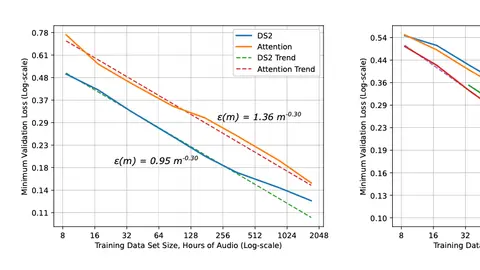
Scaling laws are one of the most critical empirical findings in deep learning. The observation is simple in form: the training loss $L$ decreases predictably as we scale up model size $N$, dataset size $D$, and compute $C$, following a power-law curve, which appears as a straight line on a log-log…
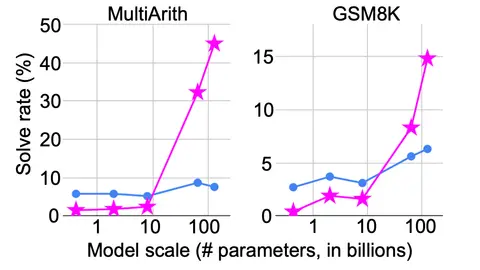
Special thanks to John Schulman for a lot of super valuable feedback and direct edits on this post. Test time compute (Graves et al. 2016, Ling, et al. 2017, Cobbe et al. 2021) and Chain-of-thought (CoT) (Wei et al. 2022, Nye et al.
Reward hacking occurs when a reinforcement learning (RL) agent exploits flaws or ambiguities in the reward function to achieve high rewards, without genuinely learning or completing the intended task.
Hallucination in large language models usually refers to the model generating unfaithful, fabricated, inconsistent, or nonsensical content. As a term, hallucination has been somewhat generalized to cases when the model makes mistakes.
Diffusion models have demonstrated strong results on image synthesis in past years. Now the research community has started working on a harder task—using it for video generation.
[Special thank you to Ian Kivlichan for many useful pointers (E.g. the 100+ year old Nature paper “Vox populi”) and nice feedback. 🙏 ] High-quality data is the fuel for modern data deep learning model training.
The use of large language models in the real world has strongly accelerated by the launch of ChatGPT. We (including my team at OpenAI, shoutout to them) have invested a lot of effort to build default safe behavior into the model during the alignment process (e.g. via RLHF).
Building agents with LLM (large language model) as its core controller is a cool concept. Several proof-of-concepts demos, such as AutoGPT, GPT-Engineer and BabyAGI, serve as inspiring examples.
Prompt Engineering, also known as In-Context Prompting, refers to methods for how to communicate with LLM to steer its behavior for desired outcomes without updating the model weights.
Many new Transformer architecture improvements have been proposed since my last post on “The Transformer Family” about three years ago. Here I did a big refactoring and enrichment of that 2020 post — restructure the hierarchy of sections and improve many sections with more recent papers.
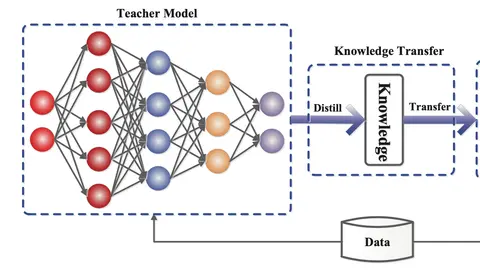
[Updated on 2023-01-24: add a small section on Distillation.] Large transformer models are mainstream nowadays, creating SoTA results for a variety of tasks. They are powerful but very expensive to train and use.
Neural networks are well known to be over-parameterized and can often easily fit data with near-zero training loss with decent generalization performance on test dataset.
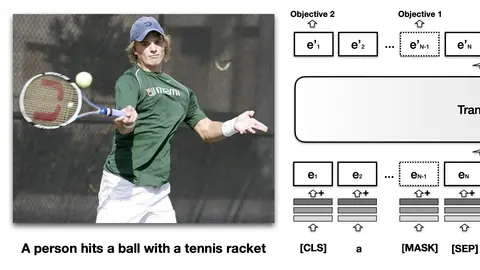
Processing images to generate text, such as image captioning and visual question-answering, has been studied for years. Traditionally such systems rely on an object detection network as a vision encoder to capture visual features and then produce text via a text decoder.
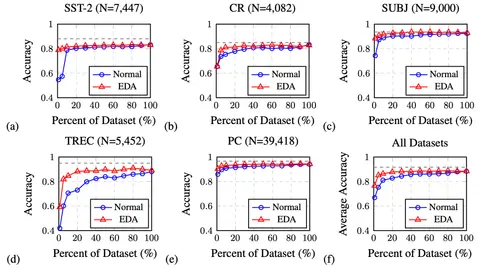
Here comes the Part 3 on learning with not enough data (Previous: Part 1 and Part 2). Let’s consider two approaches for generating synthetic data for training. Augmented data.
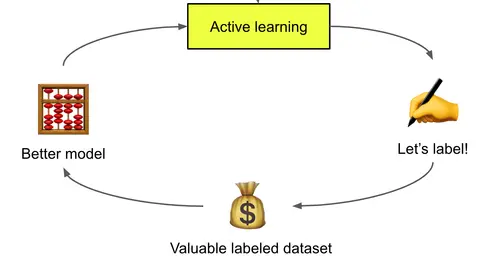
This is part 2 of what to do when facing a limited amount of labeled data for supervised learning tasks. This time we will get some amount of human labeling work involved, but within a budget limit, and therefore we need to be smart when selecting which samples to label.
When facing a limited amount of labeled data for supervised learning tasks, four approaches are commonly discussed.
[Updated on 2022-03-13: add expert choice routing.] [Updated on 2022-06-10]: Greg and I wrote a shorted and upgraded version of this post, published on OpenAI Blog: “Techniques for Training Large Neural Networks”
Showing 18 of 30 stories
Load more storiesGet the top AI news and tools straight to your inbox every week.
Weekly · AI news from Lil'Log (Lilian Weng)
Join 15,000+ AI enthusiasts