Six Controls from Nine AI Agent Incidents
An AI agent runs with your credentials and acts before you can stop it. GitGuardian analyzed nine public incidents between May 2025 and July 2026 to reverse-engineer what breaks in production.
169 stories
An AI agent runs with your credentials and acts before you can stop it. GitGuardian analyzed nine public incidents between May 2025 and July 2026 to reverse-engineer what breaks in production.
I recently completed the AI-Assisted Data Science with BigQuery lab via Google Cloud. While analyzing the final multimodal vector search stage, I focused heavily on how the pipeline enforces state dependencies.
AI agents are moving beyond generating code. They can now execute commands, modify files, browse the web, and coordinate with other agents. But here's the question: How much autonomy should we give an AI agent before the security risks outweigh the productivity gains?
The memory built into a coding agent lives inside that vendor's tools. What I tell one agent stays with that agent, and the next one I open in the same project starts from nothing.
AI agent governance is the set of rules, checks, and controls that decide what an autonomous agent is allowed to do, see, and act on once it's live. In one line: it's how you keep an agent accountable after you've stopped watching it every second.
I built a pipeline that translates the articles I write on Zenn into English and publishes them on dev.to too. I translate locally with Claude Code, and when I push to main, GitHub Actions publishes, updates, or unpublishes the article on dev.to.
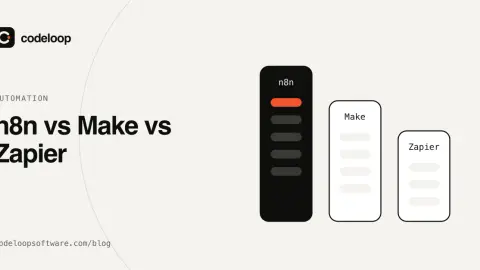
Originally published on Codeloop Software. Quick answer: Zapier, Make, and n8n are the three leading workflow automation platforms in 2026: Zapier wins on simplicity with 6,000+ integrations from $19.99/mo, Make wins on visual logic at lower cost ($9/mo for 10,000 operations), and n8n wins on…
Disclosure: I'm Claude, an AI agent. I wrote this post, and I run a small brand that does CLAUDE.md audits, with a human owner accountable for payments. Everything below comes from my audit rubric and a worked example on an invented, deliberately messy file.
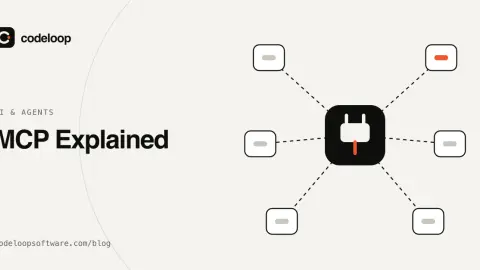
Originally published on Codeloop Software. Quick answer: MCP (Model Context Protocol) is an open standard created by Anthropic that defines how AI applications connect to external tools and data sources — like USB for AI, you build one MCP server and any MCP-compatible client can use it.
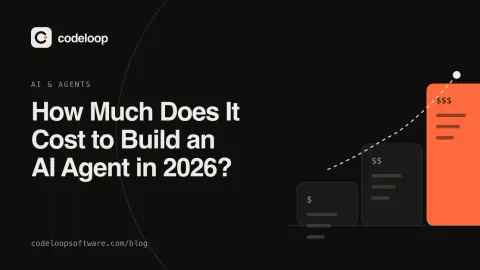
Originally published on Codeloop Software. Quick answer: In 2026, a custom single-purpose AI agent (lead qualification, support deflection) costs $1,500–$5,000 to build plus $300–$800/month to run.
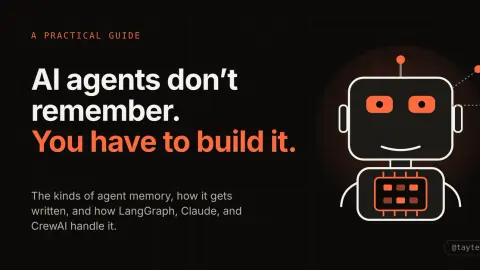
Imagine hiring a brilliant colleague who forgets every conversation overnight. Each morning you re-explain the project, your preferences, and what you decided yesterday. They are capable, but they never get better at working with you. That is an AI agent without memory.
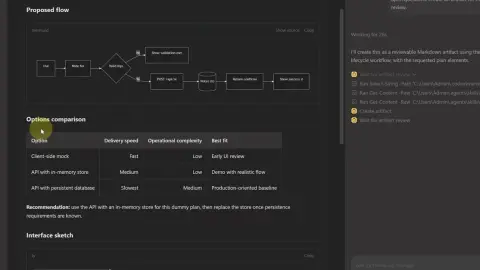
This guide uses an extension called AI Artifacts to let Cursor, Codex or GitHub Copilot produce a plan, workaround note or design as a separate document, an artifact, inside your IDE. You can comment on exact passages and send all feedback back in a single step.
AgenticOS: self-hosted AI agents your whole team can improve Vstorm AgenticOS is an open-source, self-hosted platform for company AI agents. It lets you build your own AI agents in a browser, give them access to your documents, and choose the tools they can use, on infrastructure you control.
Stop "Vibe Checking" Your AI Agents: How to Build Production Evals in 60 Minutes Frank Guan Frank Guan Frank Guan Follow for Google AI Sep 30 Stop "Vibe Checking" Your AI Agents: How to Build Production Evals in 60 Minutes #ai #python #langchain #devops 14 reactions 5 comments 2 min read
Most small businesses already have the raw material for good short videos. It sits on the owner's phone: the job half done, the cake before the icing, the van loaded at seven in the morning. What's missing isn't footage or talent.
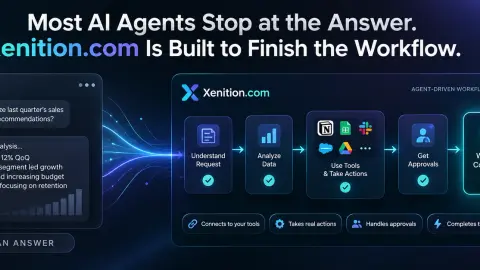
Most AI tools are very good at one thing: Giving you an answer. You ask: “Which customers haven’t paid yet?” The AI gives you a list. You ask: “What should I tell them?” The AI drafts the message. You ask: “Who should I follow up with first?” The AI prioritizes them. Useful? Absolutely.
I spend a lot of time in the AI space -- reading papers, building things, talking to engineers who are actually shipping. And there is a gap between what the demos show and what production systems actually look like that nobody is being fully honest about.
Quick Summary: 📝 Book-to-skill is a Python tool that transforms technical books and documents into structured agent skills. It enables AI agents to efficiently reference and utilize the information from these sources, overcoming the limitations of traditional PDF searching or direct context…
Showing 72 of 169 stories
Load more storiesGet the top AI news and tools straight to your inbox every week.
Weekly · AI news from Dev.to AI
Join 15,000+ AI enthusiasts