

Too Many MCP Tools? How to Fix MCP Token Bloat
Too many MCP tools can burn tens of thousands of tokens before your first prompt. Audit your MCP token usage and fix context bloat with four steps.
localskills.sh Blog9 min read
54 stories
Too many MCP tools can burn tens of thousands of tokens before your first prompt. Audit your MCP token usage and fix context bloat with four steps.

Learn how to build an MCP server in TypeScript: define tools with Zod schemas, add resources and prompts, test with MCP Inspector, and deploy over Streamable HTTP.

MCP transports compared: stdio for local servers, Streamable HTTP for remote, and what the SSE deprecation means — with a decision tree and migration steps.

Set up a private skill registry for your team's internal agent skills: compare git, self-hosted, and hosted options with SSO, roles, and audit logs.

Learn how to share Claude skills with your team: git repos, plugin marketplaces, and hosted registries, plus versioning, rollout, and usage analytics.

Build a private Claude Code plugin marketplace with marketplace.json in a git repo: setup, authentication, versioning, and a hosted alternative.

Stop MCP config drift. Learn how to share MCP servers across your team with version-controlled .mcp.json, safe secrets, and server allowlists.

Debug an MCP server fast with MCP Inspector: launch it against stdio and remote servers, test tools interactively, read MCP logs, and catch failures in CI.
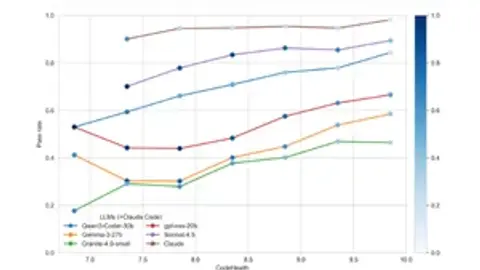
Healthy code works better for both agents and humans 1. Healthy code is more AI-friendly: it is easier for coding agents to analyze, modify, and extend without introducing unintended side effects. High-quality code has never been more important than in the AI era.2.
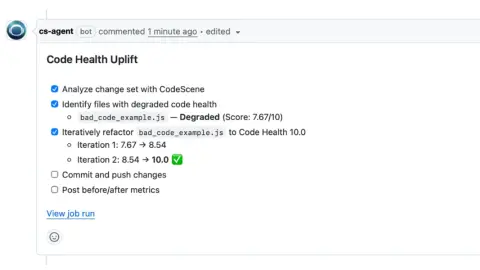
CodeScene’s new PR Refactoring Agent analyzes the branch using deterministic Code Health data, performs targeted refactorings, and commits improvements back to the PR. The result is code that’s easier to review, AI-friendly, and more token efficient.
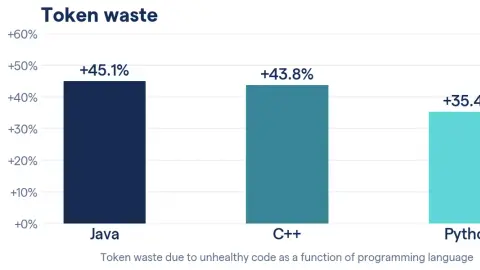
Our research across C++, Java, and Python shows that agents working on unhealthy codebases consume 35-45% more tokens to complete the same tasks. That’s in addition to the increased defect risk covered in earlier research. You're not just getting worse output.
Give coding agents separate workspaces, keep track of blocked tasks, and review changes while other agents keep working.
Create separate workspaces for coding agents, review their diffs, and merge changes. Learn what Git worktrees isolate and which resources remain shared.
Right now at Superset, we're able to reliably manage 5-7 coding agents in parallel - whether that's Claude Code, Codex, etc. - at a time. Our goal is to be able to manage 100 coding agents in parallel each by the end of 2026.

I ran out of technical content to write for the blog so here is something I am interested in instead.
Git worktrees have been around since 2015. For most of that time, they were a curiosity. Now they're having a moment. This is the story of how they came to be and why they suddenly matter.
How we built a process-isolated terminal host that survives app restarts, handles backpressure gracefully, and enables cold restore from disk.
Trae Cue gets its biggest monthly update with major improvements to model performance and speed.
Showing 54 of 54 stories
You're all caught up.
Get the top AI news and tools straight to your inbox every week.
Weekly · AI news
Join 15,000+ AI enthusiasts