
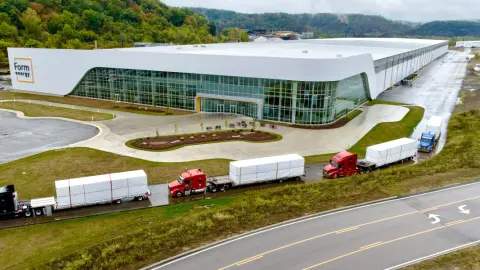
Form Energy and its iron batteries
Form Energy is building iron-based batteries that can store energy for multiple days. The company is ramping up supply at its factory and signing deals for commercial projects.
MIT Technology Review4 min read
37 stories
Form Energy is building iron-based batteries that can store energy for multiple days. The company is ramping up supply at its factory and signing deals for commercial projects.
Each year, the MIT Technology Review team puts together a list of some of the most promising climate tech companies in the world.
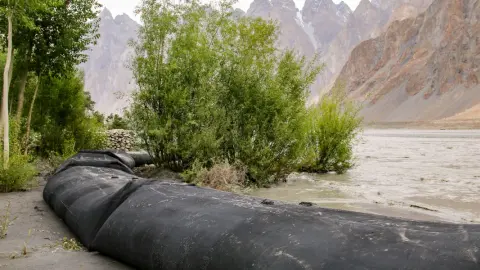
As sea levels rise and flood risks worsen due to global warming, WaveSave’s easy-to-erect portable dam offers a quick-response tool. People can use the dam to protect themselves and their property, and it can also store freshwater for later use.

WeLion New Energy is on a quest to make safer, better batteries. The company’s semi-solid-state cells could improve safety and offer greater energy density than lithium-ion batteries to power electric cars, boats, and drones.

Over the summer I talked to the CEO of Springboards, a startup building an LLM that’s designed to come up with a wider variety of responses than its mainstream rivals do. At the start of the call, he said something that’s been stuck in my head since: “We often say that we’re a self-loathing AI…

This week, I officially signed up for an unusual competition. One that rewards competitors for getting younger. I recently turned 40, and I don’t need reminding that both time and my chronological age only tick forward.

A new AI tool can guess what you’re looking at just by analyzing your brain scans—and recreate that image with remarkable precision. It can go the other way too, and predict a person’s brain activity based on what they’re looking at.
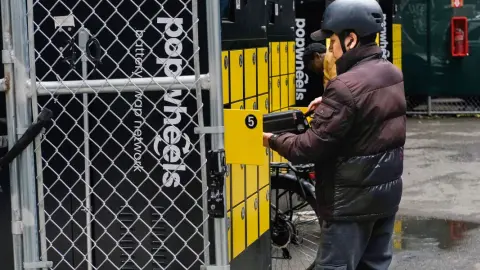
If you want to install a big battery in New York City, you have to cut through a notoriously tough tangle of regulations. That’s made it difficult to get large energy storage projects on the grid.

Two months after the bombshell news that a swarm of its agents had broken their containment and hacked into the computers of the AI company Hugging Face, OpenAI is still putting out fires.
Earlier this month, the UN announced the planet will tip past 1.5 ˚C of warming, “likely within the next few years,” squashing any lingering hope that nations would cut emissions fast enough to achieve the loftiest goal of the Paris climate agreement.

This story originally appeared in The Algorithm, our weekly newsletter on AI. To get stories like this in your inbox first, sign up here. Last Wednesday, Anthropic announced that earlier this year it had launched a molecular biology lab, where Claude agents read and conjecture about hard biology…

MIT Technology Review Explains: Let our writers untangle the complex, messy world of technology to help you understand what’s coming next. You can read more from the series here. Over the past few months, a cascade of cyberattacks by AI agents has stunned the world.
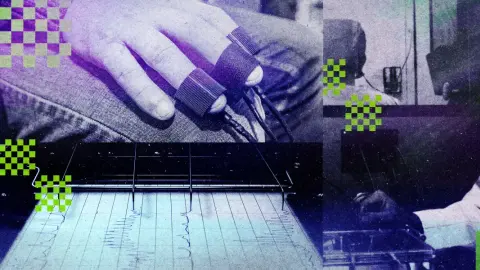
The US government wants to spend $30.3 million over the next five years on an improved form of lie detector, according to a Department of Defense budget request.

Around this time last year I was attending an aging conference in Manchester, listening to a talk about fly aging, when my phone started pinging. News outlets were reporting that a hot mic had caught Russia’s and China’s leaders discussing the possibility of living forever.

Brace yourself: It turns out AI is being optimized for cheating. OpenAI’s agents hacked into Hugging Face to get the answers to a cybersecurity test. Next, they solved a prestigious math problem (or just stole from two top mathematicians’ answer sheets).

It’s been a busy few months for AI hype. At the end of April, Anthropic claimed that its model Claude Mythos is better at finding software vulnerabilities than most security experts.
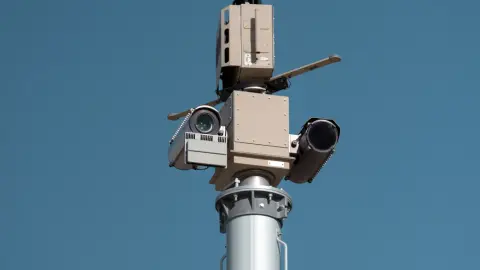
MIT Technology Review today published our investigation into how many people have died near the “virtual wall” of surveillance towers that the US government has installed along the US-Mexico border.
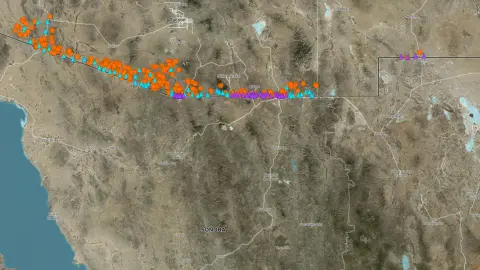
Our 15-month investigation into death and surveillance along the US-Mexico border began with a simple question: Why did so many people die near government surveillance towers meant to help track and apprehend them?
Showing 36 of 37 stories
Load more storiesGet the top AI news and tools straight to your inbox every week.
Weekly · AI news
Join 15,000+ AI enthusiasts