
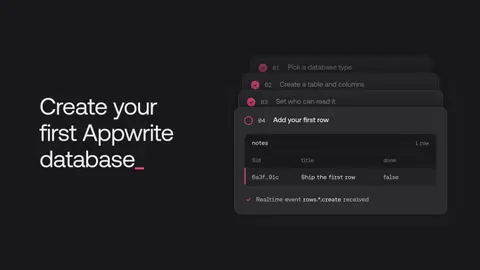
Create your first Appwrite database and add your first row
Create a TablesDB database in Appwrite, add a table with typed columns, choose who can read and write, then add your first row and use it from your app.
Appwrite Blog5 min read
67 stories
Create a TablesDB database in Appwrite, add a table with typed columns, choose who can read and write, then add your first row and use it from your app.
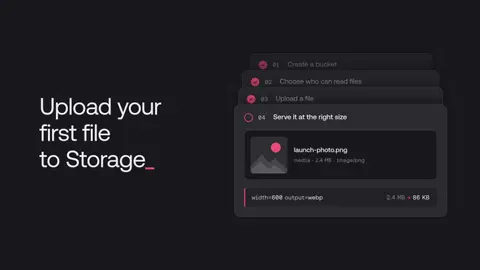
Create an Appwrite Storage bucket, choose who can upload and see files, then upload a file from your app and show it to your users.
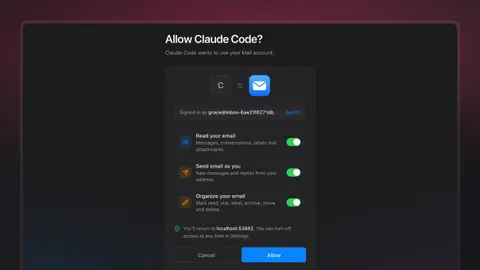
We built an email client on Appwrite to test a new feature, then asked an agent for a remote MCP server with OAuth 2.1. It was in production in under a minute.

Appwrite Functions can now execute when an email arrives. Each function has a built-in email address, and you can connect a custom domain with MX and TXT records.

Appwrite and Entire are partnering. Entire joins Appwrite's Git providers, so every push to an Entire repository builds and deploys Sites and Functions.
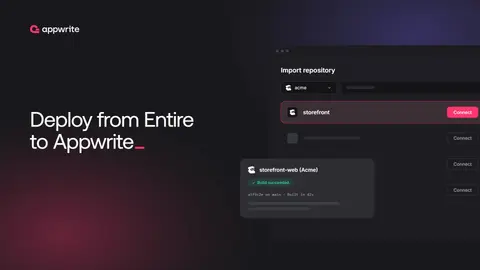
Connect an Entire repository to Appwrite and deploy a site and a function on every push, with private branch previews and path filters for your monorepo.

TanStack Redact 0.2.0 swaps React's browser runtime at build time, cutting bundles by up to 70.5% across TanStack Start, Vite, Vinext, and Next.js.
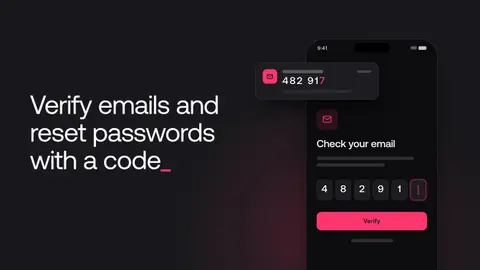
Appwrite Auth can email a 6-digit code for email verification and password recovery, so mobile and desktop apps can handle both without a redirect page or a deep link.
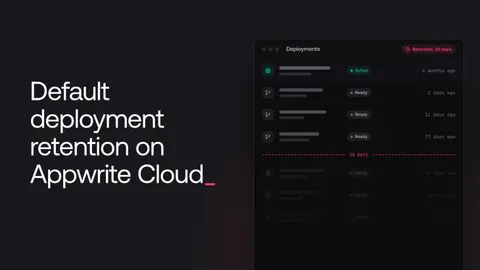
From November 5, 2026, inactive deployments on Appwrite Cloud are cleaned up after 30 days by default, so they stop counting toward your storage. Your active deployment always stays.

PHP2Shell, CVE-2026-109618 and CVE-2026-109619, doesn't affect Appwrite because it runs on Swoole. Here's why, and what PHP Functions users should check.
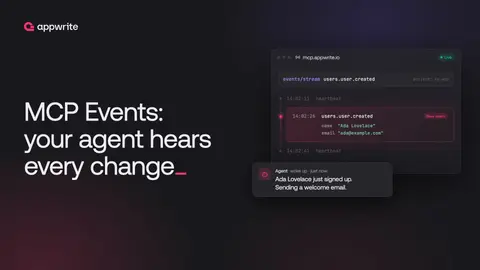
The Appwrite MCP server now supports MCP Events. Agents can subscribe to new users, failed function executions, finished deployments, new rows, and uploaded files, and react the moment they happen.
Build something new with Appwrite Databases from October 19–31, compete for prizes, and show us what you can create.
Appwrite Auth now supports OAuth2 login with Hugging Face, Resend, Cloudflare, TikTok, Kakao, and Webflow. See what each returns and how to add it to a server-side app.
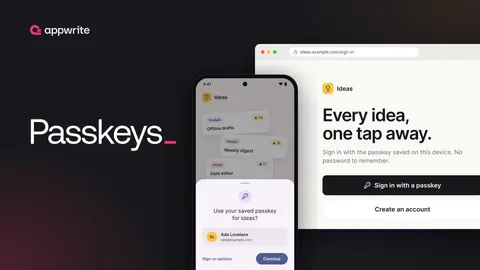
Appwrite Auth now supports passkeys. Users sign up and sign in with Face ID, Touch ID, a fingerprint, or the device PIN, and one passkey works on your website and in your Android and iOS apps.
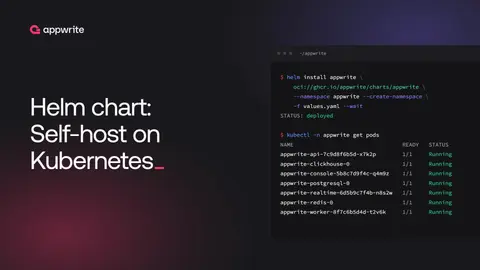
Self-host Appwrite on Kubernetes with the official Helm chart, using built-in or managed PostgreSQL, Redis, and ClickHouse, S3, and Functions and Sites.
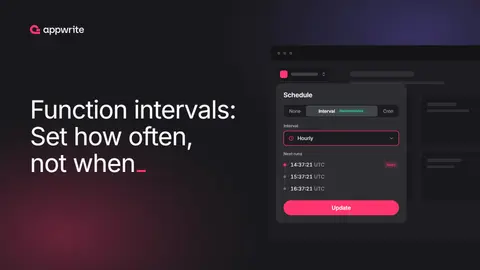
Appwrite Functions can now run on an interval as an alternative to cron. Set how often a function runs, and Appwrite picks when within each interval it starts.

Deno Deploy shuts down in six months. Appwrite is open source. Cloud and self-hosted stay independent, so you can keep writing Deno without a vendor host.

Appwrite now serializes key-value cache entries in a binary format instead of JSON. Cached list responses consume up to 69% less memory, and cached list throughput increases by up to 29%.
Showing 36 of 67 stories
Load more storiesGet the top AI news and tools straight to your inbox every week.
Weekly · AI news
Join 15,000+ AI enthusiasts