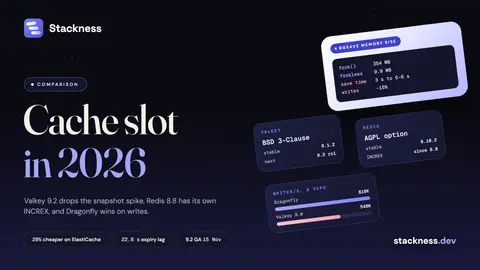
Valkey vs Redis vs Dragonfly in 2026: forkless BGSAVE, INCREX and which one takes the cache slot
For a new cache in October 2026, Valkey 9.1 is the default: BSD-licensed and 20% cheaper on ElastiCache. Its forkless BGSAVE and INCREX are still rc1.
7 stories
For a new cache in October 2026, Valkey 9.1 is the default: BSD-licensed and 20% cheaper on ElastiCache. Its forkless BGSAVE and INCREX are still rc1.
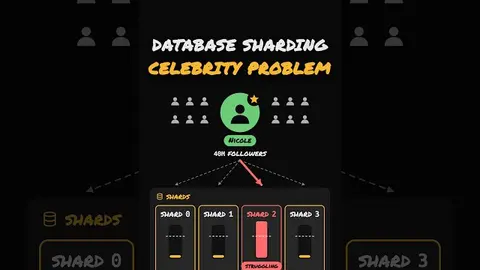
The Celebrity Problem in Database Sharding 🔥 A pop star with 40 million followers posts, and the one shard holding her data takes every single read. That overload is a hotspot. Every other user on the same shard slows down while the remaining shards stay quiet.
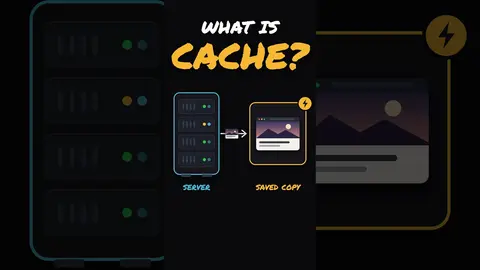
Ever swipe away phone apps thinking it saves battery? You’re actually breaking the single greatest cheat code in computing: caching. Caching simply means saving completed work so you don't have to redo it later.
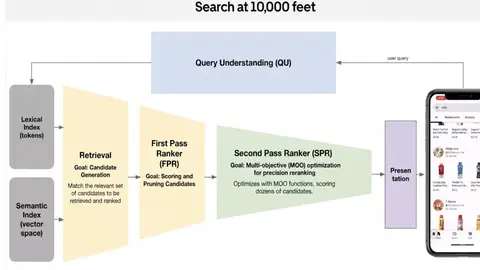
Uber has rebuilt major parts of the Uber Eats search pipeline, reporting a 50% reduction in end-to-end latency. Changes include Above-the-Fold measurement, reduced retrieval work, parallel hydration, advertising data redesign, infrastructure optimizations, and an agentic coding workflow.
Prompt caching reads a repeated prompt prefix at a tenth of the price on Anthropic, OpenAI and Gemini. How it works, what silently breaks it, when to compress.
Redis exact-match caching cuts LLM API spend at scale. Working Node.js middleware, 30-minute TTL trade-off, and when semantic search is worth the overhead.
Memory Tiers in Qdrant: What to Use and When A growing vector collection eventually outgrows the RAM it started with: Qdrant handles that by letting you assign dense vectors, the HNSW graph, quantized vectors, payloads, and payload indexes each to whichever memory tier that structure supports,…
Showing 7 of 7 stories
You're all caught up.
Get the top AI news and tools straight to your inbox every week.
Weekly · AI news
Join 15,000+ AI enthusiasts