How to Speed Up CI in the Age of AI-Written Code
Coding agents now write code faster than most CI pipelines can check it. In April 2026, GitHub COO Kyle Daigle said that his platform was handling 275 million commits a week, on pace for 14 billion in
25 stories
Coding agents now write code faster than most CI pipelines can check it. In April 2026, GitHub COO Kyle Daigle said that his platform was handling 275 million commits a week, on pace for 14 billion in
Capybara flaky tests come from one-time reads, leaked state, browser drift and parallel workers. Reproduce them, then fix Rails system tests in CI with code.
Vercel wants to eliminate long-lived API keys from its ecosystem, and it is giving Marketplace vendors until January 2027 to The post Vercel moved to kill static credentials. Then developers spotted its own deployment token. appeared first on The New Stack.
Nearly a year into the agentic coding explosion, many teams now use AI to write software as their de facto The post Scripted tests can’t keep up with AI-written code. Datadog is betting agents can. appeared first on The New Stack.
Atlassian spent 150,000 developer hours on flaky tests. That's insane. It's time to kill Selenium and switch to AI computer use.
How we moved Logfire's million-minute CI workload to RunsOn and used ARM, Spot, caching, and right-sized EC2 instances to cut our monthly CI bill by roughly two-thirds.
Hackers accessed roughly 1,900 GitHub accounts, then used them to slip credential-stealing workflows into more than 30,000 repositories. The malicious The post Hackers hijacked 1,900 GitHub accounts. Then they went after 30,000 repos. appeared first on The New Stack.
This week, Anthropic revealed it built an in-house version control system to handle exploding code merges. It says Claude was both part The post Anthropic built its own git replacement for AI-scale coding. But you can’t have it. appeared first on The New Stack.
AI-driven development is outpacing traditional security workflows. Snyk’s Agentic AppSec uses security agents to find, fix, and verify vulnerabilities continuously, while humans set the bar.
Chainguard has launched an AI-powered security harness that uses frontier models, including Anthropic’s restricted Claude Mythos 5.1, to find and The post 66% of billion-dollar companies leave critical bugs unpatched — the part the AI bug-hunting hype leaves out appeared first on The New Stack.
How to fix CVE-2026-97229: upgrade GitLab to 19.4.2, 19.3.5 or 19.2.8. No-login code execution via CI/CD regex on self-managed GitLab, plus 23 other fixes.
Connect your TypeSafe key once and let Jev answer one typed question per run: a score, a choice or a yes/no that the next action can branch on. With four guides to try it on.
Three posts landed in September that I think engineering leaders should read together. Anthropic’s engineering team wrote that their continuous The post Agents have made CI the bottleneck. Faster pipelines are the wrong fix. appeared first on The New Stack.
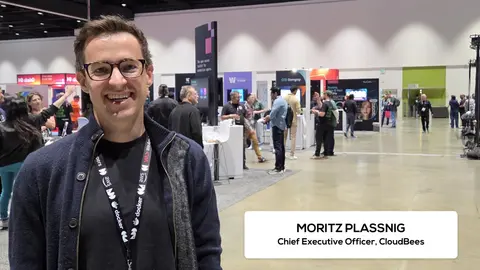
When new CloudBees CEO Mo Plassnig took the job earlier this year, his board of directors handed him a mandate The post CloudBees just committed to an AI-first pivot. Here’s why it matters for enterprise DevOps teams appeared first on The New Stack.
GPT 6 Astra beats GPT 5.6 Sol on Java benchmarks with higher pass rates, less code, fewer bugs, and a shifting critical risk profile.
SonarQube Cloud automatic analysis for GitLab scans code for security issues and bugs with zero configuration and no CI pipeline setup required.
Buddy now has a native ClickHouse target. Store the connection once, then run queries, schema migrations, and post-deployment data checks from any pipeline.
Connect Claude Code, Cursor or Codex to Buddy over MCP. Your AI agent reads the failed pipeline log, fixes the bug and re-runs the build with scoped access.
Showing 18 of 25 stories
Load more storiesGet the top AI news and tools straight to your inbox every week.
Weekly · AI news
Join 15,000+ AI enthusiasts