Does Jev make AI code review more efficient?
An extra AI check earns its place by verifying behavior the existing workflow missed. I evaluated Jev, TypeSafe’s structured-judgment model, alongside selected automated checks and Qodo code review.
13 stories
An extra AI check earns its place by verifying behavior the existing workflow missed. I evaluated Jev, TypeSafe’s structured-judgment model, alongside selected automated checks and Qodo code review.
Patrick Debois discusses how to manage, evaluate, distribute, and observe context using proven software engineering practices. He shares how treating context like code - complete with testing, CI/CD, package managers, and security scanning - enables engineering leaders to reliably scale AI coding…
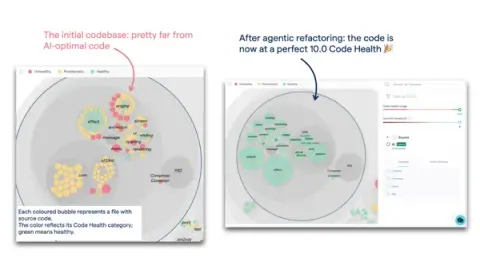
CodeScene has published a case study in which coding agents refactored 300,000 lines of C over three weeks for roughly $4,000 in tokens, verified by a frame-by-frame replay harness. The agents built a playbook of codebase-specific recipes along the way.
Ryan chats with David Burns, Head of Developer Advocacy and Open Source at BrowserStack, about the value of professional skepticism in an AI-driven world, applying test-driven development to agentic engineering, and why fixing flaky tests comes down to managing application state.
A legacy uplift that would traditionally have been a 12–18 month, high-risk engineering project was completed in three weeks of part-time work for roughly $4,000 in AI costs.
SonarQube adds native R support with centralized quality gates, security analysis, coverage, and auditable governance for regulated enterprises.
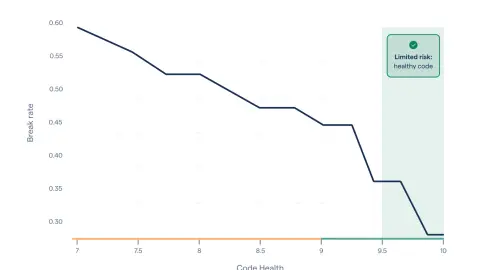
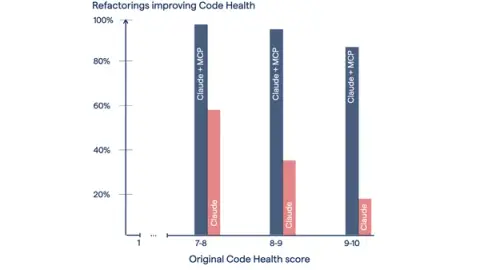
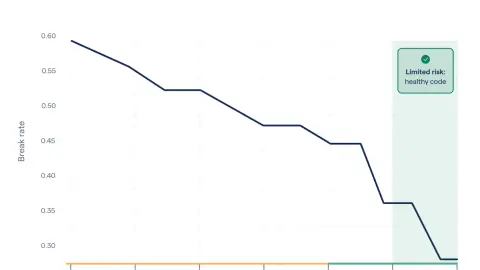
CodeHealth is an aggregated metric based on 25+ factors scanned from the source code. The code health factors correlate with increased maintenance costs and an increased risk for defects, and predicts whether AI agents will introduce defects or not.
Code generation is only one part of software delivery. These skills make the planning, testing, workflow safety, developer experience, and documentation around the code more explicit. AI coding agents are good at responding to concrete implementation requests.
Part 1 of this series described the Context Engine, the knowledge layer that gives review agents a verified picture of the system a change lands in: repository structure, pull request history, cross-repository relationships, and the requirements behind the work. Context answers what is there.
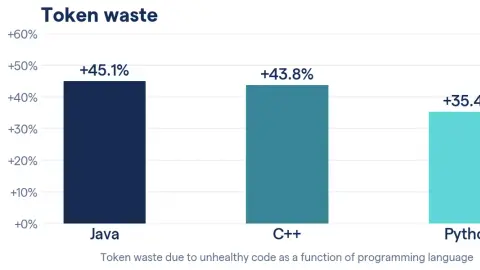
Our research across C++, Java, and Python shows that agents working on unhealthy codebases consume 35-45% more tokens to complete the same tasks. That’s in addition to the increased defect risk covered in earlier research. You're not just getting worse output.
Most enterprises are now on a trajectory towards agentic AI. The general assumption is that faster coding will translate into increased productivity across the board.However, there’s a potential clash between expectations and reality: The Code Health benchmarks show that the average Hotspot Code…
This year has marked an interesting and fundamental shift. I’ve been coding for almost 40 years, 30 of those professionally, and yet I’m now at a point where 100% of my production code is written and maintained by AI agents.
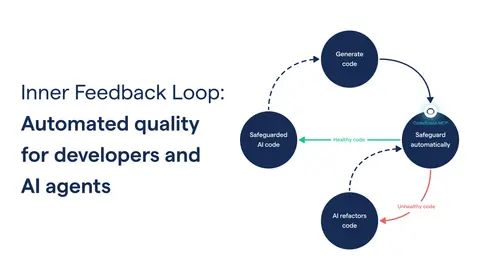
What if AI could accelerate development without leaving a trail of complexity, defects, and hard-to-reason-about code that even your own AI agents fail to understand? That’s the promise of a well-designed inner developer loop: a feedback system that keeps AI productive and predictable.
Showing 13 of 13 stories
You're all caught up.
Get the top AI news and tools straight to your inbox every week.
Weekly · AI news
Join 15,000+ AI enthusiasts