
Introducing Confident Voice
Your voice agents take more calls than anyone has time to listen to. Confident Voice listens to every one of them and surfaces the issues you would otherwise miss.
Confident AI (DeepEval)4 min read
34 stories
Your voice agents take more calls than anyone has time to listen to. Confident Voice listens to every one of them and surfaces the issues you would otherwise miss.
Export TrueFoundry AI Gateway traces to Confident AI over OpenTelemetry and score every model call with online evals, without adding tracing code to your applications.
You may already have millions of AI traces from your agents, but what's actually broken? Confident AI Monitor classifies and grades every trace as it lands, turns failures into ranked issues, and hands you the root cause, the evidence, and a tested fix.
Soon, agents will be doing your work for you on Confident AI, on their own. We thought you'd like to meet them first.
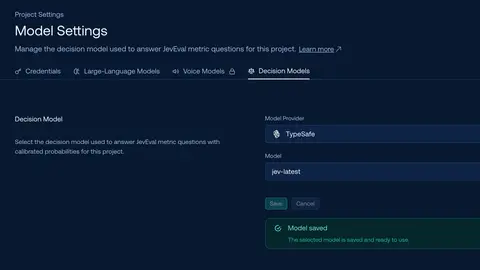
Most teams sample 1% of production traffic for online evals and classification because every judge call costs money. Jev-as-a-Judge makes those decisions fast and cheap enough to run on 20%, 50%, or more of your traces, so every workflow on Confident AI has more data to work with.
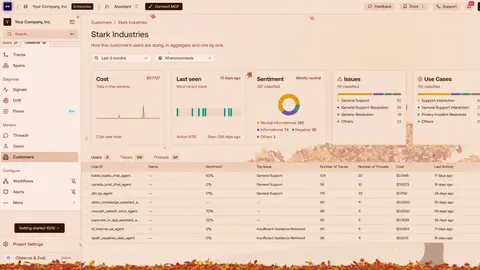
PMs should be able to understand how every account experiences their AI agent. Customer Monitoring groups users into the customers they belong to and shows each account's sentiment, issues, use cases, usage, and cost, all backed by traces and evals.
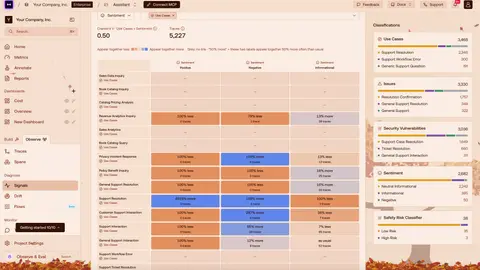
Filters only answer the combination you thought to ask. Category Correlation analyzes every pair of classifier labels across your incoming traces and threads, surfaces the relationships that matter, and links them back to the evidence.
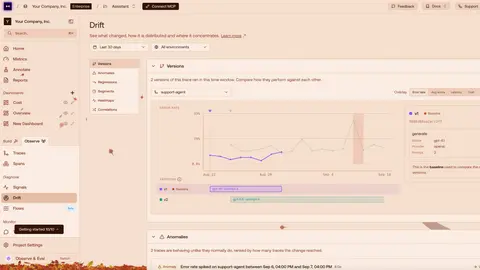
Finding a production issue should not mean hours filtering traces. The Drift page automatically versions each agent configuration, surfaces anomalies and regressions, and shows exactly where each change is concentrated.

Voice AI teams should not need one tool for audio testing and another for general AI evaluation and observability. Voice AI Evals bring both together on Confident AI, from persona-based testing to deterministic audio metrics.

confident-trace is our new Python and TypeScript SDK for tracing production AI applications. Here's why we're separating it from DeepEval and what that means for your stack.
The right evals start with real production failures, not a list of generic metrics. Here is a practical workflow for discovering issues, validating them with humans, and turning them into durable evaluation coverage.
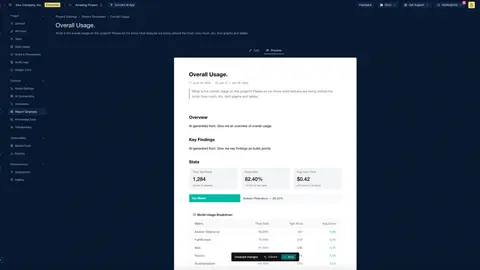
Report Templates let you customize the reports Confident AI generates for your team. Build daily reports that dig into traces, identify where your AI agent is underperforming, summarize common usage patterns, and show the exact pages and sections you care about.
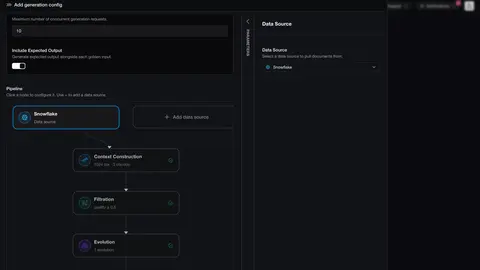
Many teams already had great synthetic data generation pipelines running locally, but consolidating that work on one platform usually meant giving up flexibility.

Everything you need to know about AI agent observability in 2026 — traces, spans, and threads; online and offline evals; production monitoring; and closing the feedback loop so failures never repeat.
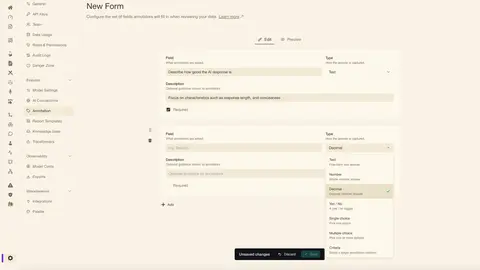
Human review only helps if everyone captures the same thing. Annotation Forms let you define the exact set of fields reviewers fill in — text, numbers, scales, yes/no, single and multiple choice, and scored criteria — so every annotation comes back structured, consistent, and ready to act on.
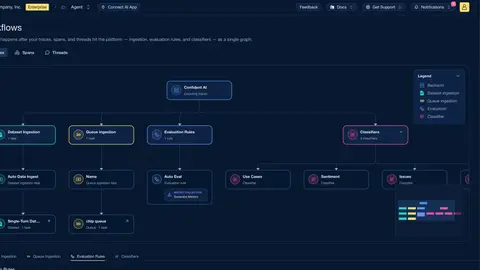
Dataset ingestion, queue ingestion, evaluation rules, and classifiers have lived on Confident AI for a while — but in separate corners of the product. Workflows brings them into one interface: a single graph of your post-ingestion pipeline, with a tab to configure each task. Here's how it works.
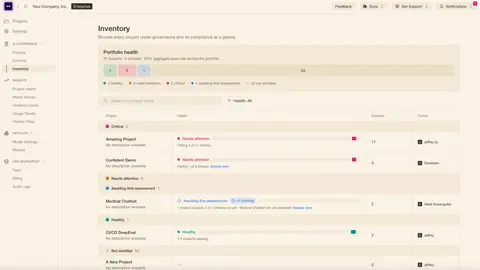
As AI spreads across an org, every team evaluates differently and no one can answer 'is this ready to ship?'. AI Governance is the layer on top of the evals, observability, and red teaming your teams already run — turning those signals into one standard, enforced at deploy time.
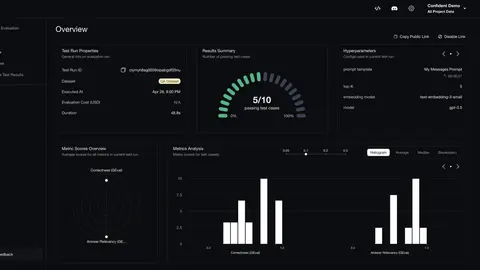
A practical guide to LLM product manager workflows, built around the two things PMs can finally do without waiting on engineering: build on the AI product by editing prompts, running evals, and comparing variants, and monitor quality with dashboards, signals, and shareable evidence.
Showing 18 of 34 stories
Load more storiesGet the top AI news and tools straight to your inbox every week.
Weekly · AI news
Join 15,000+ AI enthusiasts