Canon Keeper: Reconciling Troublesome Lore
This is a submission for the Sanity Challenge, Path One: Ship an Agent That Queries Real Content What I Built CanonKeeper is an AI-powered Fictional Universe Lore & Canon Resolution Engine.
1,108 stories
This is a submission for the Sanity Challenge, Path One: Ship an Agent That Queries Real Content What I Built CanonKeeper is an AI-powered Fictional Universe Lore & Canon Resolution Engine.
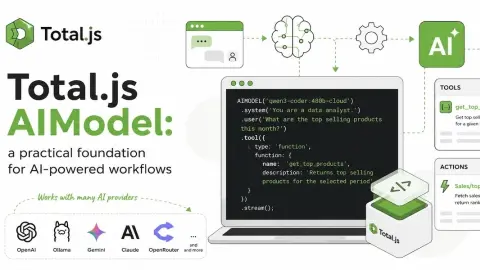
La IA se está convirtiendo en una parte habitual del software empresarial. No como un chatbot aislado, sino como una funcionalidad integrada dentro de flujos de trabajo reales: generación de código traducciones automatización del soporte resúmenes asistentes internos análisis de monitorización…
Quick answer: MarketerHire's MH-1 module is the better fit for a B2B SaaS company that wants SEO and AEO in one month-to-month offer with unlimited pillar and programmatic pages and five-engine tracking its page calls daily.
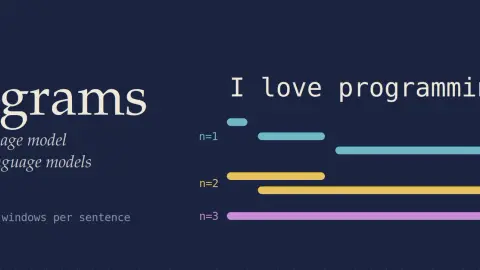
Before transformers, before word embeddings, before anyone said "attention is all you need", autocomplete worked. Your phone guessed the next word. Search engines finished your query. Spell checkers knew that "definately" was wrong and "definitely" was right. All of that ran on counting.
The Ghost in the Machine: My Robot Vacuum's Existential Crisis (and Ours) My robot vacuum, Bartholomew, has started avoiding the rug in the living room. Not all the time, just on Tuesdays.
AI phone agents went from obviously robotic to occasionally indistinguishable from a person in about two years. The reason is not one breakthrough. It is that three separate components got good at the same time, and the engineering problem of connecting them got solved well enough.
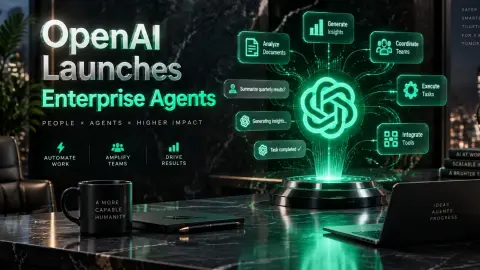
OpenAI just dropped a massive hint at what the future of everyday office work actually looks like. Meet Dots. Dots is OpenAI's newly unveiled enterprise-focused agentic product, seamlessly embedded right inside the familiar ChatGPT interface.
Step-by-Step Walkthrough: Building a 30-Day Autopilot Video Queue on Shadow 1. The Core Bottleneck Most creators hit the same wall by week three. They script, render, caption, schedule, then repeat. The bottleneck is not creativity.
GPT-6.1 Sol dan Claude Sonnet 5.5 sama-sama berharga $2 per juta token input dan $10 per juta token output. Keduanya juga dirilis selisih satu hari: Sonnet 5.5 pada 28 September 2026, lalu GPT-6.1 Sol pada 29 September.
Untuk memanggil API GPT-6.1 Sol, kirim permintaan POST ke https://api.openai.com/v1/responses dengan "model": "gpt-6.1-sol" dan token Bearer Anda. Harga standar tetap $2 untuk input dan $10 untuk output per juta token, tetapi input yang di-cache turun dari $0,20 menjadi $0,10.
Breaking news from the chip world: DeepSeek and Huawei just joined forces, and the target is nothing less than one of tech's biggest fortresses. Here's the simple version. To train any AI model, you basically need CUDA, a programming layer that's essentially owned by Nvidia.
Để gọi API GPT-6.1 Sol, gửi yêu cầu POST đến https://api.openai.com/v1/responses với "model": "gpt-6.1-sol" và API key dưới dạng Bearer token. Giá niêm yết giữ nguyên ở mức 2 đô la đầu vào và 10 đô la đầu ra cho mỗi triệu token như GPT-6 Sol, nhưng đầu vào đã cache giảm từ 0,20 đô la xuống 0,10 đô…
Most people think building an AI coding mentor on a budget Android phone means cutting corners. They're wrong. Constraints force ruthless optimization. I recently stress-tested KODA against nine industry challenges from Anthropic, OpenAI, DeepSeek, and SpaceX/Grok. The result?
Para chamar a API GPT-6.1 Sol, envie uma requisição POST para https://api.openai.com/v1/responses com "model": "gpt-6.1-sol" e sua chave como token Bearer. O preço permanece em US$ 2 de entrada e US$ 10 de saída por milhão de tokens, como no GPT-6 Sol.
GPT-6.1 Sol y Claude Sonnet 5.5 cuestan $2 por millón de tokens de entrada y $10 por millón de tokens de salida. Se lanzaron con un día de diferencia: Sonnet 5.5 el 28 de septiembre de 2026 y GPT-6.1 Sol el 29 de septiembre. Ningún proveedor los ha comparado directamente.
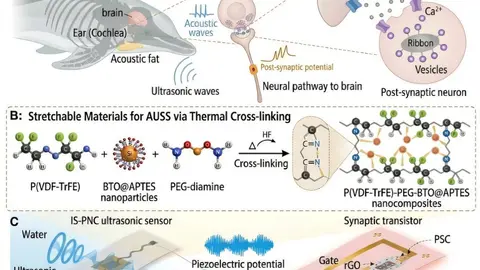
A research team led by Nae-Eung Lee, a professor at the School of Advanced Materials Science and Engineering at Sungkyunkwan University (SKKU), has developed a material that can stretch like rubber while generating electricity.
Rice University researchers in the departments of Chemical and Biomolecular Engineering, Chemistry and Materials Science and Nanoengineering and at the Rice Advanced Materials Institute have developed a relatively soft, flexible material that can selectively transport lithium ions.
To develop batteries that last longer on a single charge, more energy must be stored without increasing their size or weight. A research team led by Dr. San Moon and Dr.
Showing 882 of 1,108 stories
Load more storiesGet the top AI news and tools straight to your inbox every week.
Weekly · AI news
Join 15,000+ AI enthusiasts