
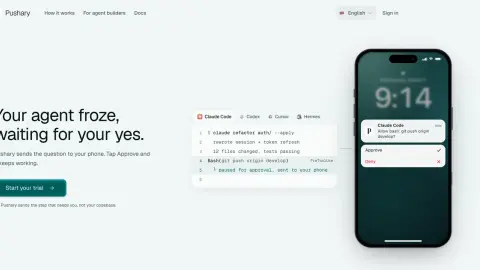
Build vs buy: the real cost of a human-in-the-loop approval loop
What it actually takes to build agent approvals in-house: delivery, enrollment, pending state, fail-closed timeouts, recovery, and audit, itemized honestly.
Pushary Blog5 min read
1,108 stories
What it actually takes to build agent approvals in-house: delivery, enrollment, pending state, fail-closed timeouts, recovery, and audit, itemized honestly.
An agent approval that assumes yes on timeout is an approval in name only. The case for fail-closed defaults, and what it takes to implement them.
Notification APIs consider the job done at delivery. An agent approval's job starts there: hold the agent, collect the answer, fail closed, keep the record.
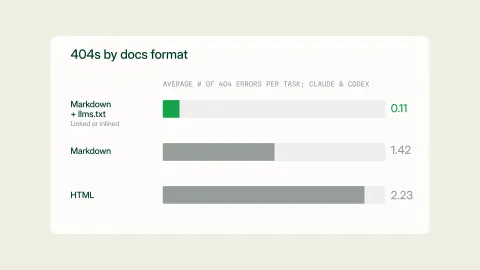
We benchmarked four ways to serve documentation to AI agents (HTML, plain markdown, markdown linking to llms.txt, and markdown with llms.txt inlined) across 2,400 runs on 20 Mintlify docs sites, and found that a single link to llms.txt eliminates most agent 404s at no added cost.

What a user's full GitHits MCP trace revealed about slow indexing, excessive tool calls, JSON overhead, missing visibility, and what we're changing.
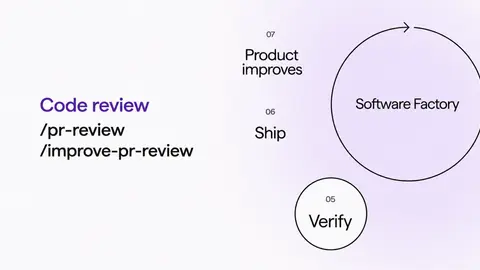
I'll describe how to build a code review agent, and how to have the quality of reviews it produces automatically improve over time as part of a cloud software factory.
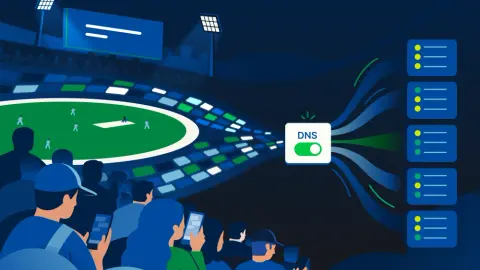
When onboarding a customer serving live T20 World Cup cricket matches, bitdrift had to support surges to millions of concurrent gRPC connections in seconds.
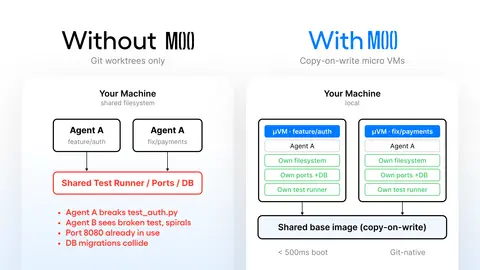
git worktree isolates your files. Moo isolates the database, ports, and services, saved per commit. Together, they give your agents fully isolated machines. Learn how to use Moo, the benefits, and why your agents need it.
We mentioned a bug in a meeting on Tuesday. This morning, Claude Code suggested fixing it the moment I opened my terminal — and twenty minutes later there was a PR. Here's how ari-hooks wires Ari into Claude Code, and why we don't use a ticketing system anymore.
When customers rely on you, minutes matter in an incident. Here's the process Fin's engineers follow to detect, mitigate, and learn from every one.
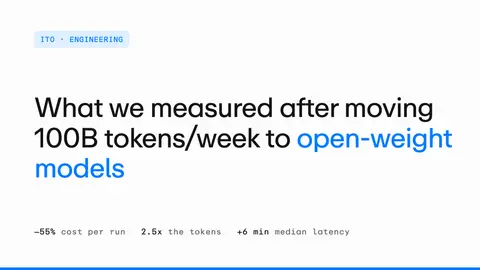
Ito moved production QA agents from GPT-5.3-codex to open-weights. Here's what we saved, why inference providers matter as much as models, and what to check.

Pointing an AI at raw kubectl works, badly. Radar's built-in MCP server gives Claude, Cursor, and friends a token-optimized, RBAC-aware view of your cluster.
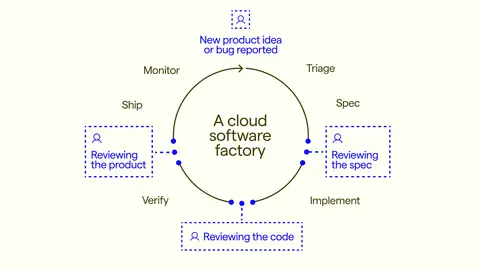
Software development is shifting from interactive coding agents to cloud software factories — systems that automate major parts of the SDLC while improving security, compliance, and measurable ROI.
A container keeps your agent off the disk. It does nothing once the agent reaches past it. Here is the line worth drawing, plus the classifier code that enforces it.
Substantially reduce JVM allocations on common Android logging paths by removing map-shaped work from SDK internals and improve runtime along the way.
Static analysis, framework fingerprints, and the messy middle where code and spec disagree.
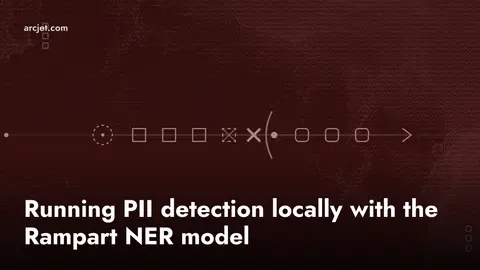
How Arcjet added an optional on-device model backend for sensitive information detection: a pluggable rule interface, deterministic recognizers for structured data, offset reconstruction for token-classification output, and local ONNX inference in the request path.
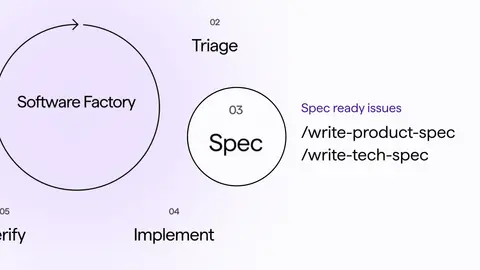
This is my second post in a series on how to build out a fully automated cloud software factory. In this post, I’ll show how you can add spec-driven development for issues that are too complex or ambiguous to one-shot. The goal of these posts is to build a fully working...
Showing 1,044 of 1,108 stories
Load more storiesGet the top AI news and tools straight to your inbox every week.
Weekly · AI news
Join 15,000+ AI enthusiasts