MIT Called It a Second Brain. We Built One: Memoket Gem
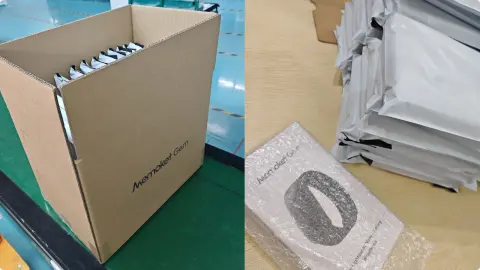
MIT’s Fluid Interfaces group built a wearable that augments human reasoning in real time. It never became a product. Here’s what we took from their research — and what we built instead. More
15 stories
MIT’s Fluid Interfaces group built a wearable that augments human reasoning in real time. It never became a product. Here’s what we took from their research — and what we built instead. More
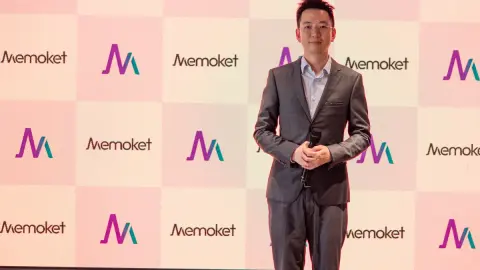
Japan found Memoket before Memoket found Japan. Here's what happened at our official Tokyo launch event — and what comes next.More
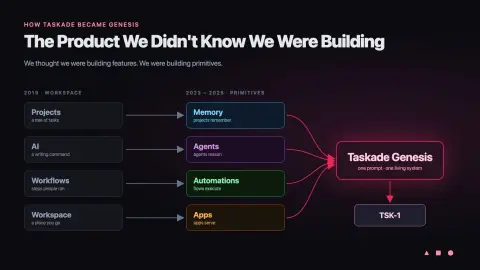
Taskade joined Y Combinator in 2019 as a collaborative workspace. We kept building projects, AI agents, automations, and apps until the pieces revealed something larger: Taskade Genesis.
Everyone is talking about decision models, so I measured one on my own inbox. One line of context got Franz level with it, and here's where Jev still wins.
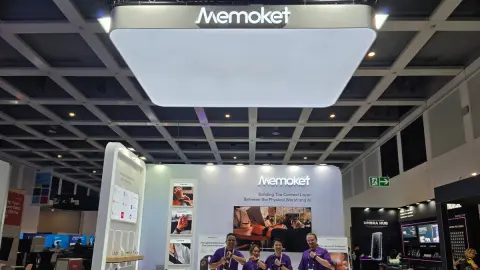
Our European debut at IFA Berlin 2026. Memoket Gem won an IFA Innovation Award and was recognized by Digital Trends, Techlicious, and Home Technology Review.
Rule five: solve the problem people won't say out loud. Before Memoket was a company, before it was even a properly fleshed-out idea, I spent a long time using other people's note-taking devices. Some of them were genuinely good.
When people talk about go-to-market strategy in Shenzhen, they're usually talking about the same playbook. It's a good playbook. It has been refined over decades by some of the smartest operators in consumer electronics, and it works with remarkable consistency for the right kind of product.
It was a cloudy, windy morning in March and the three of us were crammed into a meeting room that was meant for two people. That was the whole office, really. Twenty people sharing a space that kept shrinking as the team kept growing.
People outside China have a version of Shenzhen in their heads that is half right. They know it's where things get made. They know it's fast. They know that if you need a component, a supplier, a factory tour, a prototype run, you can make it happen here in days that would take weeks or months…
There's a shift that happened in the technology world over the last few decades that most people lived through without fully noticing. It started in garages. Literally. Apple in Los Altos. HP in Palo Alto.
There's a device that sticks to the back of your iPhone with a magnet. It records meetings, transcribes them, summarizes them. It does exactly what it says it does.
For most of my career, I kept a notebook. Not a fancy one. Just whatever was sitting on the desk — lined pages, a pen that actually worked, and enough discipline to write down what mattered before I forgot it. In my years at Anker, I must have filled dozens of them. Meeting agendas. Action items.
Adding a calendar to Franz was easy. Making it belong was the hard part. Why I waited until messaging, email, and the AI layer were in place.
Why long-time free users now share the same Franz 6 plan as everyone else, what still works in Franz 5, and why paid users keep Franz alive for the next decade.
Franz turns ten this year. Franz 6 ships now. A founder's note on a weekend prototype, a fundraise we skipped, and why one person is the point.
Showing 15 of 15 stories
You're all caught up.
Get the top AI news and tools straight to your inbox every week.
Weekly · AI news
Join 15,000+ AI enthusiasts