Do testing instructions improve coding agent correctness? What 30 conditions on one Zstd task measured
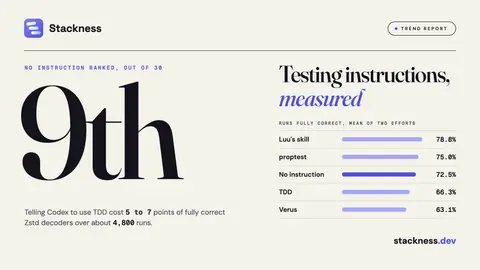
In a 30-condition eval, telling Codex to use TDD cut fully correct Zstd decoders by 5 to 7 points. No testing instruction clearly beat none.
77 stories
In a 30-condition eval, telling Codex to use TDD cut fully correct Zstd decoders by 5 to 7 points. No testing instruction clearly beat none.
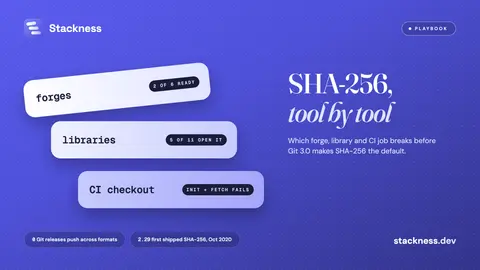
No released Git can push or fetch between SHA-1 and SHA-256. Five steps to find which forge, library and CI job in your stack breaks before Git 3.0.
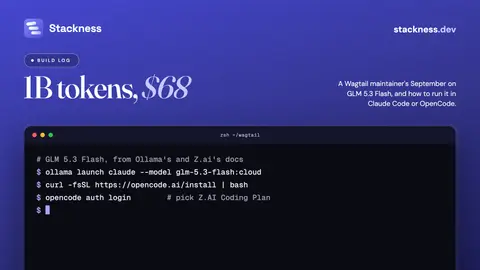
A Wagtail maintainer ran 1B tokens of GLM 5.3 Flash in September for $68 and kept it as the default for 95% of tasks. The costs, the setup and what breaks.
Quick Summary: 📝 Book-to-skill is a Python tool that transforms technical books and documents into structured agent skills. It enables AI agents to efficiently reference and utilize the information from these sources, overcoming the limitations of traditional PDF searching or direct context…
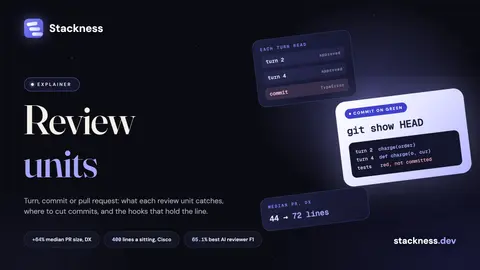
Commit on green, keep every caller with its change, and stack small pull requests. The diff-size numbers behind it, and the hooks that enforce it.
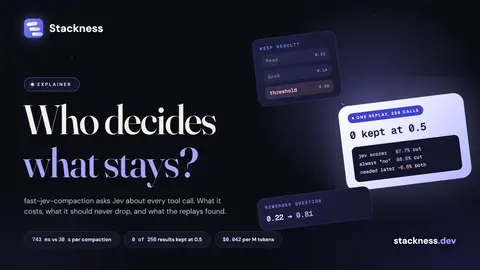
fast-jev-compaction prunes in a second, not 30. At its default threshold it keeps almost no tool results, and a scorer that always says no cuts as much.
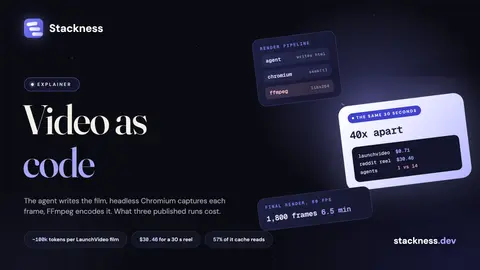
The agent writes the film as code, headless Chromium captures each frame, FFmpeg encodes. LaunchVideo spends 100k tokens a film; a 14-agent reel cost $30.46.
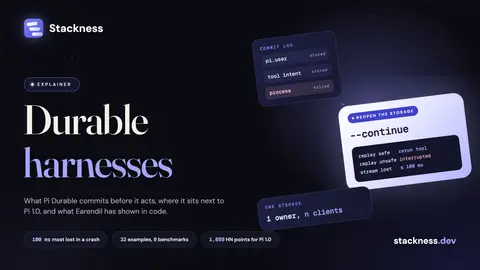
A durable harness commits every step of an agent run to storage, so a crash resumes mid-turn. What Pi Durable shipped on 1 October, and what is only claimed.
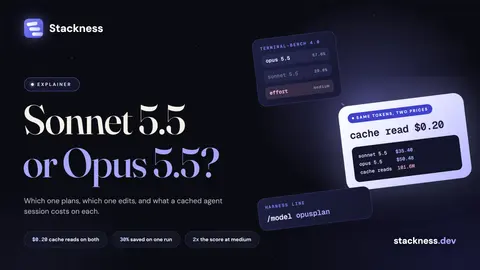
Sonnet 5.5 costs half of Opus 5.5 per token, but cache reads cost $0.20 on both. Which model plans, which one edits, and what one metered run saves.
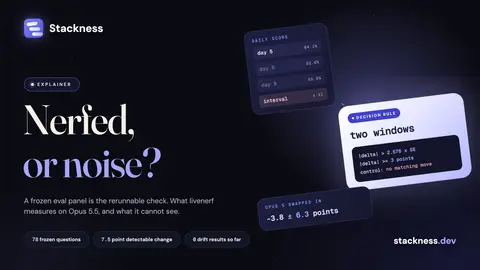
A frozen eval panel is the only rerunnable way to tell whether a hosted model got worse. What livenerf measures on Opus 5.5, and how to size your own.
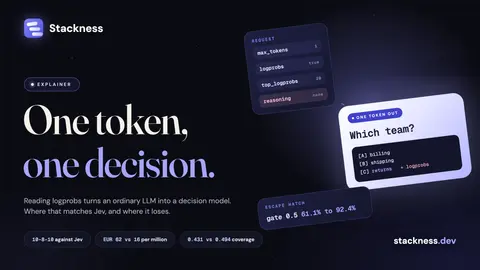
You can get Jev-style typed decisions from an ordinary LLM by forcing one output token and reading its logprobs. Where that matches Jev, and where it loses.
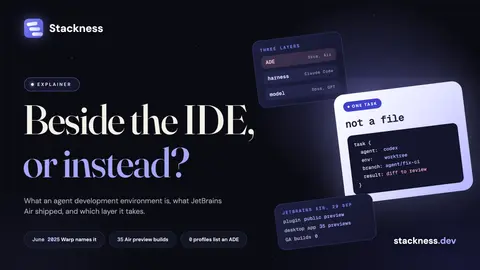
An ADE is an app built around tasks that coding agents run, not files you edit. What JetBrains Air shipped, and whether an ADE replaces your IDE.
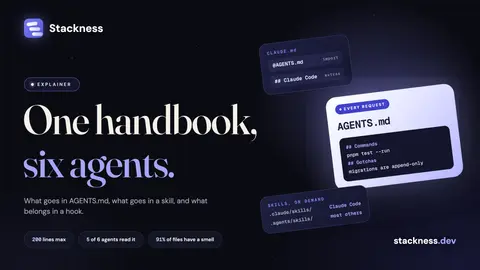
Facts every session needs go in AGENTS.md, procedures go in skills, and rules that must hold go in hooks. How to share one handbook across six agents.
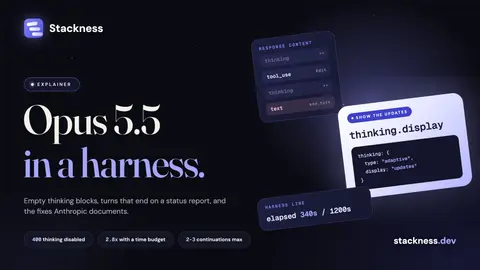
Opus 5.5 sends its between-tool notes as empty thinking blocks and ends some turns early. What breaks in an agent harness, and the documented fixes.
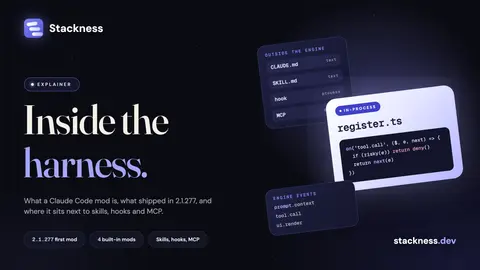
A Claude Code mod is a plugin whose TypeScript hooks module runs inside Claude Code. What shipped in 2.1.277, what is only announced, and when to use one.
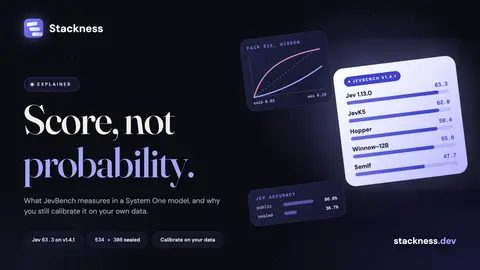
JevBench scores System One models on accuracy, calibration, speed and cost, and puts Jev first at 63.3. Why calibration still needs your own data.
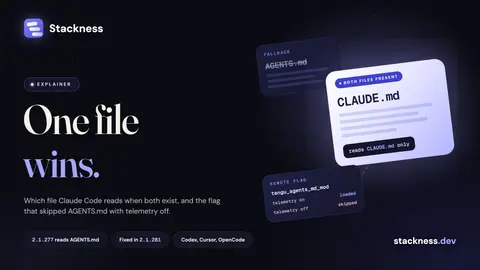
Since 2.1.277, Claude Code reads AGENTS.md only when no CLAUDE.md or CLAUDE.local.md is on the path. Before 2.1.281, telemetry off skipped it silently.
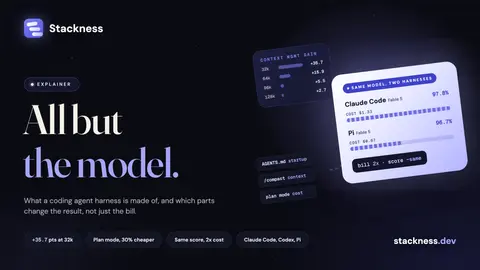
A harness is everything in a coding agent except the model. On strong models, two September 2026 studies found it moves the bill more than the pass rate.
Showing 72 of 77 stories
Load more storiesGet the top AI news and tools straight to your inbox every week.
Weekly · AI news
Join 15,000+ AI enthusiasts