Know a great AI tool or AI news source? Submit it to AiByts

KodeKloud

68 stories

Stories

← Back to the latest stories
  • Interview: How Does File Compression Work?🗃️

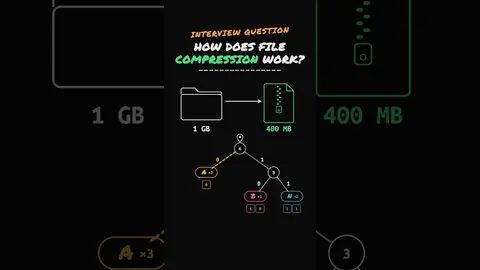
    How Zip Files Shrink Without Losing Data! A 1 GB folder zips down to 400 MB and unzips back to the full 1 GB. The method behind it is Huffman coding. In the word BANANA, A appears three times, N twice and B once, yet a computer spends 8 bits on every letter, 48 bits in total.

    KodeKloud
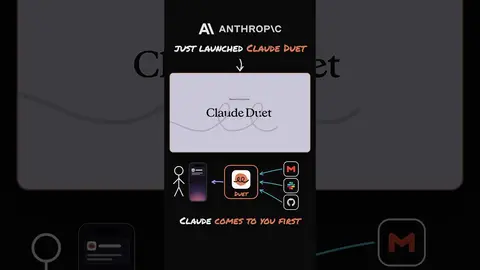
  • What is Claude Duet?

    Claude Duet Messages You First! Claude Duet is Anthropic’s new mode where Claude starts the conversation. It reads your connected apps, sends a short morning brief to your phone, then checks back every few hours and pings you only when something needs your attention.

    KodeKloud
  • Apache Kafka Explained in 6 Mins

    Apache Kafka explained through one letter posted from Dubai to Berlin, and why that trip maps so closely onto how events move through a Kafka cluster. Producers, topics, brokers, consumers and acknowledgements usually show up as a wall of jargon.

    KodeKloud
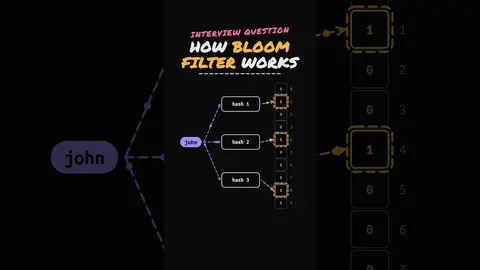
  • Interview: What Is a Bloom Filter?🧠

    Bloom Filters Explained With a Username Check!🧠 An app with 500 million users can’t afford a database query every time someone types a username. A Bloom filter handles most of those checks in memory.

    KodeKloud
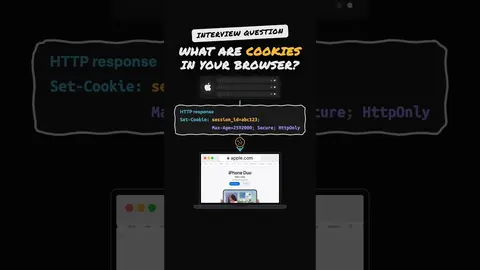
  • Interview: How Browser Cookies Actually Work🍪

    How Websites Remember You After You Close the Browser! Browser cookies are why you stay signed in and your cart stays full when you come back the next day. At login, the server creates a random session ID, saves it next to your account, and sends it to your browser in a Set-Cookie header.

    KodeKloud
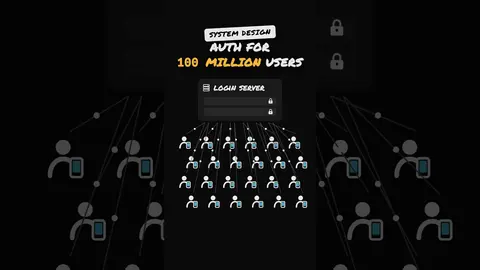
  • System Design: Building an Authentication System

    How Apps With 100M Users Recognize You Without Your Password! After login, a phone calls the servers hundreds of times. A session ID checked in Redis on every request adds a million extra lookups per second at peak, and every service stalls when Redis slows down.

    KodeKloud
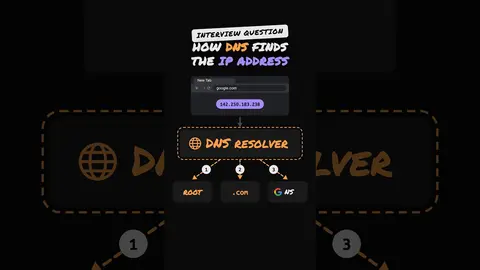
  • Interview: How DNS Finds a Website’s IP Address

    Many people assume DNS is a single massive database containing every website's IP address, but it is actually a global distributed hierarchy. When you type google.com, your computer first checks your browser's cache and your operating system's shared cache.

    KodeKloud
  • Interview: How TCP, TLS and HTTP Actually Work Together

    When you type a website URL into your browser, several networking protocols must coordinate in a precise order before any webpage can load. First, your browser performs a DNS lookup to translate the domain name into an IP address.

    KodeKloud
  • Base 64 Encoding Explained!🔓

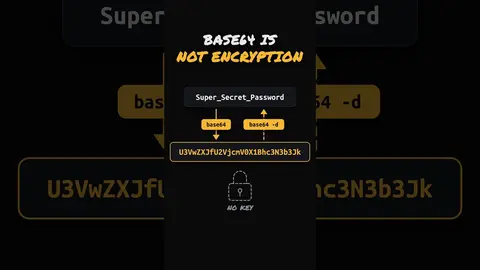
    How Base64 Turns Binary Into Text! Base64 is a binary-to-text encoding. It takes input in 24-bit blocks, splits each block into four 6-bit values, and maps each value (0 to 63) to a character in the standard table. Decoding runs the same table in reverse, so the original bytes come back exactly.

    KodeKloud
  • How a Buffer Overflow Attack Actually Works

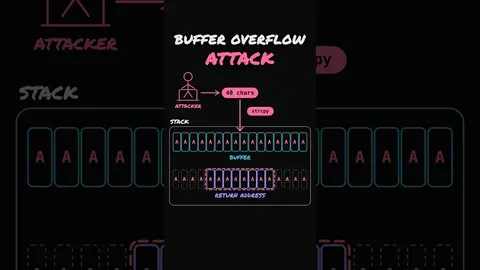
    When a program reserves a fixed block of memory on the stack, like a 16-byte variable for a username, functions like strcpy in C copy user input without checking its size.

    KodeKloud
  • Tricky Software Interview Question!

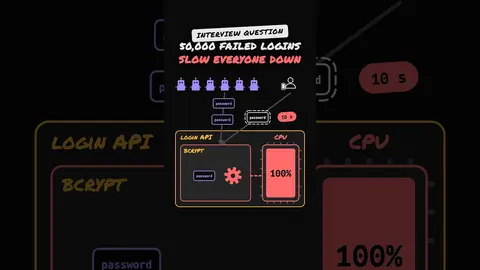
    When bots flood a login endpoint with 50,000 failed attempts across 30,000 IP addresses, legitimate users suddenly face ten-second delays. The bottleneck isn't the network—it’s bcrypt.

    KodeKloud
  • Why Git Wasn’t Enough for Anthropic!

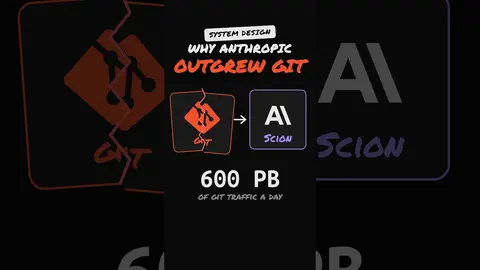
    Anthropic’s AI agents merge over 30,000 code updates every single day, triggering a staggering 25 million automated testing jobs. Under standard Git, every single test machine had to clone gigabytes of repository history just to verify a one-file bug fix, generating an unsustainable 600 petabytes…

    KodeKloud
  • What Is System Design?

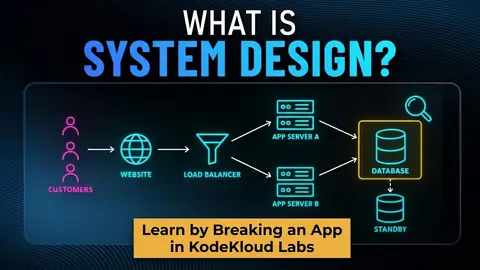
    System design explained through one small online shop, and the day its first promotion broke ordering. A shop app that passed every test starts failing the moment traffic spikes.

    KodeKloud
  • System Design: How YouTube Knows Where to Resume

    If your Wi-Fi drops while uploading a massive 20GB video, YouTube doesn't force you to restart from zero. While basic network protocols like TCP retransmit lost packets during an active stream, a total disconnect wipes that connection memory completely.

    KodeKloud
  • NGINX vs HAProxy: Which Load Balancer Should You Use?

    NGINX vs HAProxy, Picking the Right Load Balancer! NGINX and HAProxy both spread traffic across your servers, but they are built for different jobs. NGINX is a web server and a load balancer in one.

    KodeKloud
  • The Celebrity Problem in Database Sharding 🔥

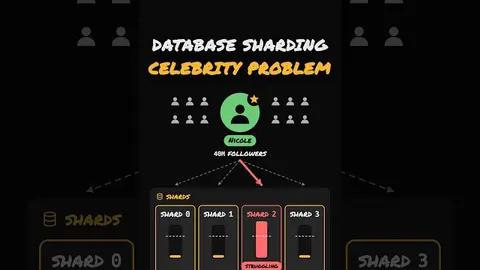
    The Celebrity Problem in Database Sharding 🔥 A pop star with 40 million followers posts, and the one shard holding her data takes every single read. That overload is a hotspot. Every other user on the same shard slows down while the remaining shards stay quiet.

    KodeKloud
  • YouTube Video Transcoding Pipeline | System Design Interview

    Why Your Video Plays Blurry Right After Upload! 🤔 That first 360p version isn’t an accident. YouTube cuts every upload into 5-second chunks and hands them to hundreds of workers, one chunk and one resolution at a time.

    KodeKloud

Showing 54 of 68 stories

Load more stories
AiByts Weekly Brief

Get the top AI news and tools straight to your inbox every week.

Weekly · AI news

Join 15,000+ AI enthusiasts