ChatGPT Is Forging Cartoonists’ Signatures. OpenAI’s Own Checker Proves It.
I ran the forged New Yorker cartoons through OpenAI’s verification tool. All three carry a second, invisible signature: OpenAI’s.Continue reading on Towards AI »
359 stories
I ran the forged New Yorker cartoons through OpenAI’s verification tool. All three carry a second, invisible signature: OpenAI’s.Continue reading on Towards AI »
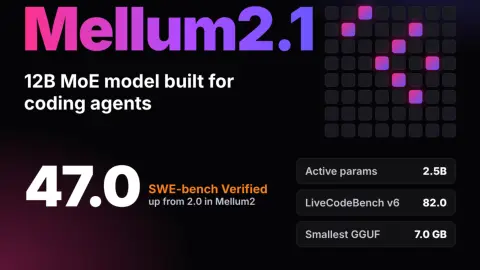
JetBrains released Mellum2.1, an Apache 2.0, 12B mixture-of-experts thinking model with 2.5B active parameters. RL in real repositories lifted its SWE-bench Verified score from 2.0 to 47.0. The post JetBrains Releases Mellum2.1: A 12B MoE Open Model for Coding Agents appeared first on MarkTechPost.
I audited the repository OpenAI dropped on 6 October. Most of the proofs are machine-checked. The mathematicians are worried anyway, and…Continue reading on Towards AI »
I'm developing a benchmark for a low resource language and I don't want it to be leaked and used for training when it is being used to get predictions. For locally run models it shouldn't be a problem, but for models that are only accessible via API, it is.
Courses, runnable projects, agent tutorials and production playbooks, all open source and freeContinue reading on Towards AI »
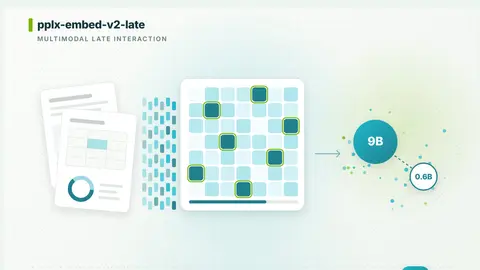
Perplexity's pplx-embed-v2-late comes in 2 sizes: a 0.6B model built to run on edge devices, and a 9B model for building high-quality indexes. Its best score is 92.4% on MADQA, and its weakest is 61.2% on ViDoRe v3 Markdown. Both are MIT-licensed and ready to self-host.
Here is the story: Nvidia has published this work (with source code available) called dreamDojo which is a world model for robotics based of their prior work Cosmos 2.5 which is cited about 100 times and got ICML’s spotlight.
Write-up + demo: https://drksci.com/labs-phosphene So this started as a bit of a gripe. Modern terminal renderers are seriously impressive and seriously complicated. GPU glyph atlases, texture caches, custom shaders, HarfBuzz shaping, ligatures, damage tracking, grid diffing, dirty-row uploads.
I've always been kind of into computers since I was young. And then when film started to move from analog film to digital, I became more interested in that aspect of it. And the visual effects workflow for many years has included machine learning.
As the title suggests I'm currently trying to make a modal to identify which app is being used. The thing is I don't have labelled data and generating it is out of question since that is a lot of work ( I need to detect like 3-5K apps give or take)
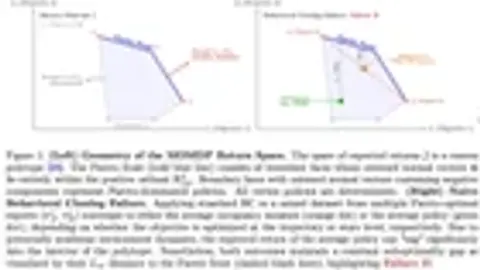
https://preview.redd.it/i2c0cdkg04uh1.png?width=2532&format=png&auto=webp&s=fdfed9fe7ed2cef8e45791110a5152ff163a0ce8 TLDR: The question we answer: how do you learn from experts with different objectives?
Anthropic's Claude Haiku 5.5 starts at $0.10 per million input tokens, keeps 1M context, scores 72.4% on OSWorld. The post Anthropic Releases Claude Haiku 5.5: A Small Model With 1M Context Priced at $0.10 per Million Input Tokens appeared first on MarkTechPost.
Neurips says that camera ready has to be submitted by editing original submission on open review. But no such edit option is visible to me. Is it same for other authors??
Microsoft on Wednesday unveiled a new class of Nvidia-powered Windows laptops, its latest effort to tie the operating system more closely to the AI boom.Why it matters: Microsoft is trying to carve out a high-end laptop category for people who want to run demanding AI workloads locally, rather than…
If you want to explore the data without downloading billions of rows, you can query my ClickHouse database directly. It includes:
The setup is roughly: humans take recent work from top-tier ML/AI conferences, turn part of it into a well-defined task with an evaluator, and then let an agent iteratively modify the solution and search for a better score.
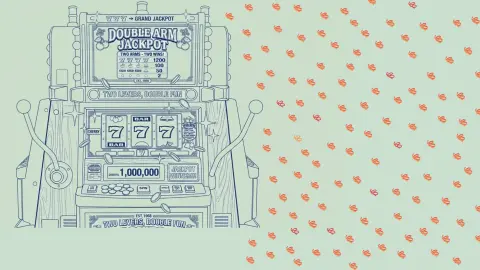
When machines learn by themselves The post Introduction to Reinforcement Learning: Multi-Armed Bandit Simulation in Python appeared first on Towards Data Science.
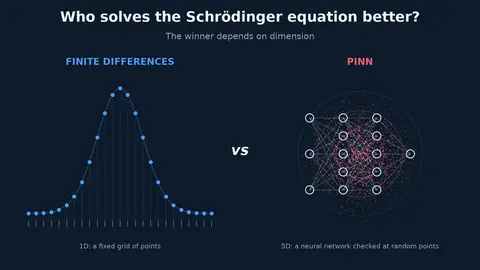
I put a physics-informed neural network up against a plain finite-difference solver twice: once in 1D and once in 5D. The winner changed. The post When Do PINNs Beat Classical Numerical Methods? A 1D vs 5D Experiment appeared first on Towards Data Science.
Showing 108 of 359 stories
Load more storiesGet the top AI news and tools straight to your inbox every week.
Weekly · AI news
Join 15,000+ AI enthusiasts