Local Embedding Models in 2026: Which to Run, What Hardware They Need, and What They Cost
A local embedding model turns your text into vectors on hardware you control, so no document or query leaves your machine to get embedded.
31 stories
A local embedding model turns your text into vectors on hardware you control, so no document or query leaves your machine to get embedded.
A Context Language Model is an existing model that rewrites its own context like a file. It manages working context inside a task better than summarisation, with less compute, and throws that context away when the task ends.
Every LLM call is stateless, and a model on its own cannot act; the software that turns it into an agent is the harness.
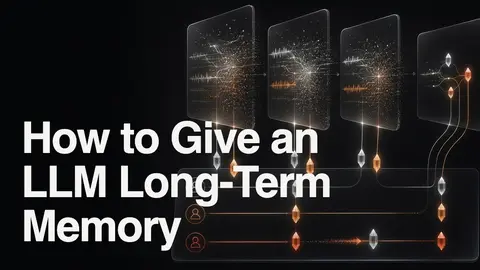
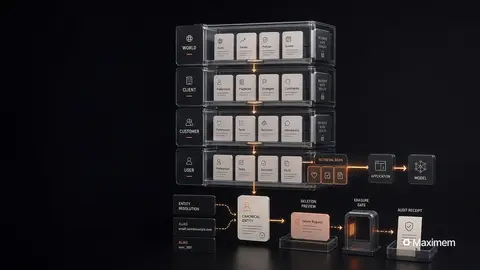
You give an LLM long-term memory by adding a layer outside the model that decides what is worth keeping from each conversation, stores it against the right person, updates it when a fact changes, and puts only the relevant slice back into the prompt on the next call.
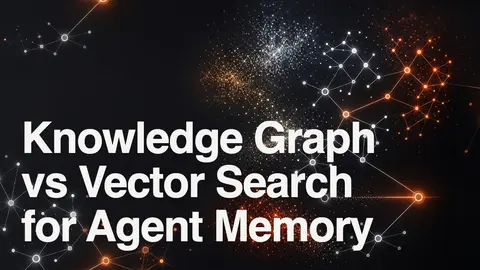
For agent memory, neither wins on its own: vector search finds past statements that mean something close to the current question, and a knowledge graph connects facts through the same person or company and tells which of two conflicting facts is current.
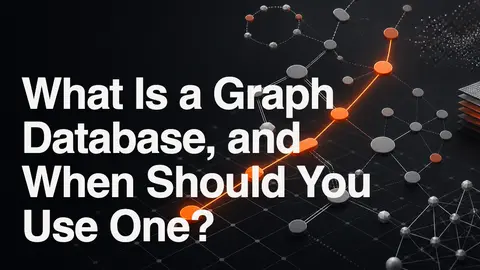
A graph database stores data as nodes and relationships and answers questions by following those relationships instead of joining tables; use one when your main questions are about paths across connected data, and keep a relational database for records and reporting.
As of 26 September 2026, the best open-source embedding model for most teams is Qwen3-Embedding, which is Apache 2.0, reads 32K tokens and ranks 5th on MTEB English v2 and 4th on MTEB Multilingual v2.
To add conversational memory to a LangChain app today, pass a checkpointer to create_agent and reuse one thread_id per conversation; to remember a person across conversations, add a LangGraph store or plug in Maximem Synap through the maximem-synap-langchain package.
RAG, short for retrieval-augmented generation, is a technique that lets a large language model answer from information it was never trained on: when a question arrives, the application searches a knowledge source for the most relevant passages, places them in the prompt next to the question, and…
Short-term memory in an LLM is whatever sits in the context window on the current call: the system prompt, the recent conversation, tool results and any retrieved text, all re-sent by the application on every request and gone when the request ends.
GPT-4o has a 128,000-token context window and can write at most 16,384 tokens in a single reply, with the reply counted inside the same 128,000.
A long conversation costs far more than its number of turns suggests, because every request carries the system prompt and the entire history again, so total input grows with the square of the number of turns.
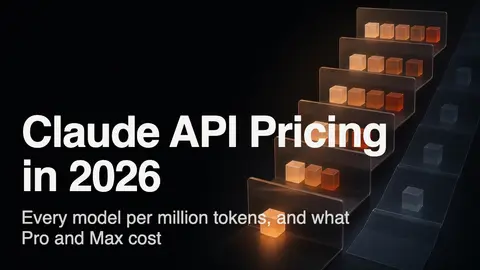
The Claude API costs between $1 and $10 per million input tokens and between $5 and $50 per million output tokens on Anthropic's current models.
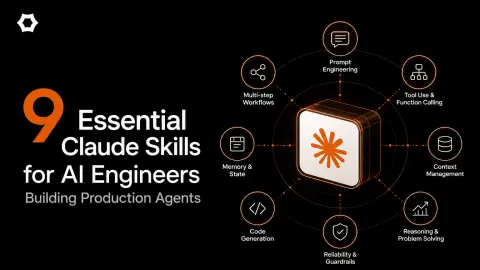
Nine Claude Skills we run in production, plus one bonus, with the install command for each and what it saves you. Updated September 2026.
The decision is per step, not per site: a page can expose a clean search tool and leave its account settings as ordinary DOM controls, so an agent that picks one mode per domain gets the worst of both.
The best chatbot memory layer plugin captures durable user information, stores it with the right scope, retrieves only the relevant part of it, and updates or deletes it reliably.
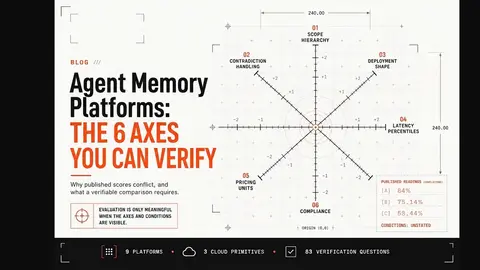
No single AI agent memory layer is best in 2026. The right one depends on tenant isolation, contradiction handling, where you can run it, and what a retrieval costs, all of which you can check in an afternoon.
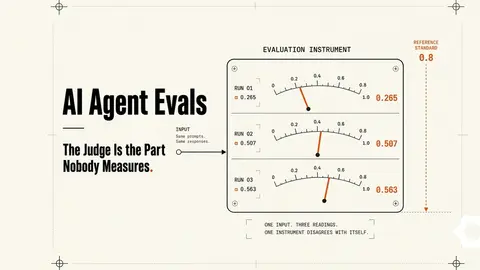
An LLM judge scoring the same agent output three times will often hand back three different answers, and almost no guide to agent evaluation asks whether the judge agrees with itself or what it costs to run on everything rather than a sample.
Showing 18 of 31 stories
Load more storiesGet the top AI news and tools straight to your inbox every week.
Weekly · AI news
Join 15,000+ AI enthusiasts