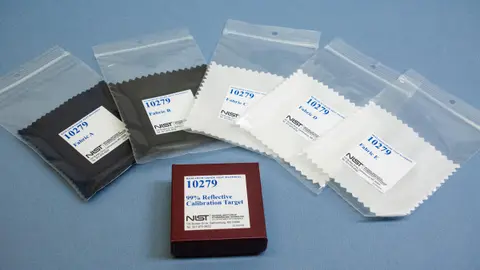
New Fabric Test Material Could Help Strengthen Domestic Supply Chain for Textiles and Clothing
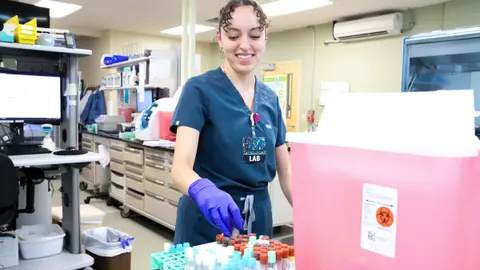
Researchers estimate that 56% of textiles can be recycled or recovered, but most don’t make it back into the domestic supply chain.
36 stories
Researchers estimate that 56% of textiles can be recycled or recovered, but most don’t make it back into the domestic supply chain.
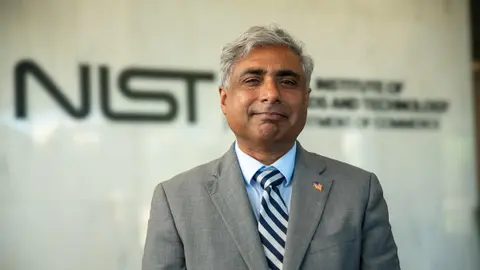
Raman comes to NIST from Purdue University, where he was the dean of engineering.
NIST has announced an agreement with SRI International to establish the Quantum Manufacturing Engineering Center (QMEC).
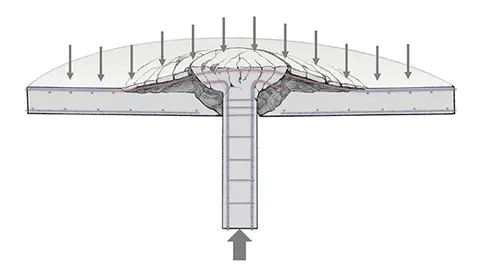
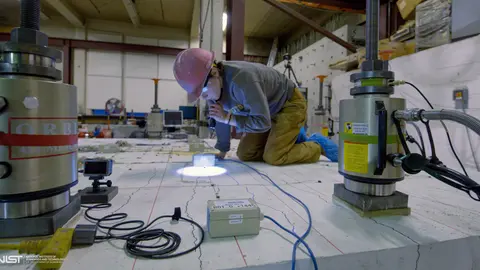
In an investigation that began just days after the tragedy, the team examined two dozen possible scenarios for where and why the collapse started.
The proof extends to AI the logic used by famed mathematician Kurt Gödel, whose incompleteness theorems have had a profound effect on math for nearly a century.
Researchers and manufacturers rely on the library to identify unknown compounds in food, drugs, cosmetics, the environment, body fluids, forensic evidence and even space rocks.
A NIST-led team has created a new AI model that can identify safe evacuation routes in a single-story floor plan during a fire, with a multilevel version in the works.
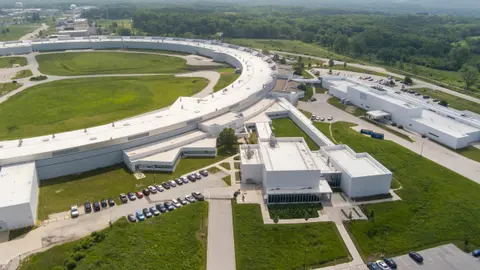
NIST also improved how X-rays are used to study the atomic structure of metals in real time during 3D printing, allowing researchers to observe how materials change under extreme conditions.
The consortium will focus on AI innovation and adoption, with six task groups concentrating on different aspects of AI measurement science and evaluation.
Lunar craters in permanent shadow could be ideal locations for building the most stable optical lasers ever made.
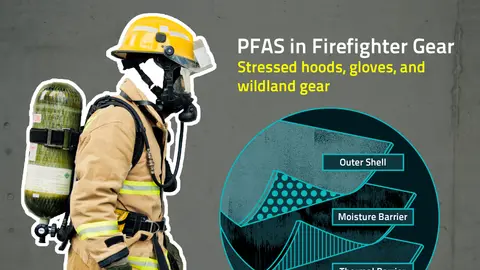
In the fourth of an ongoing series of reports, NIST shows that wear and tear increased the levels of PFAS found in hoods and gloves.
A NIST researcher has unveiled the results of a 10-year quest to measure the constant.
NIST scientists and collaborators have pioneered a way to make integrated circuits for light by depositing complex patterns of specialized materials onto silicon wafers.
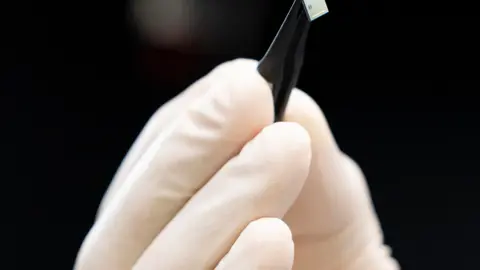
The advance could allow these technologies to operate in deep-space probes, inside nuclear reactors, in ultrahigh vacuum systems, and at temperatures both near absolute zero and in scorchingly hot industrial settings.
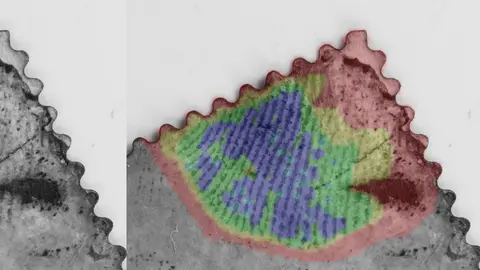
The new tools are an annotated collection of 10,000 fingerprints and a software program that can sort fingerprints according to their quality.
The report includes an overview of work completed on the Champlain Towers South investigation.
The award highlights organizations that focus on resilience.
The Initiative will ensure that the next generation of AI is widely adopted with confidence, can function securely on behalf of its users, and can interoperate smoothly across the digital ecosystem.
Showing 36 of 36 stories
You're all caught up.
Get the top AI news and tools straight to your inbox every week.
Weekly · AI news
Join 15,000+ AI enthusiasts