How to Give Your AI Agent a Prompt Injection Defense That Actually Works
A prompt injection defense that works assumes the model will lose. You can't reliably stop an LLM from following instructions hidden in an email or a web page.
150 stories
A prompt injection defense that works assumes the model will lose. You can't reliably stop an LLM from following instructions hidden in an email or a web page.
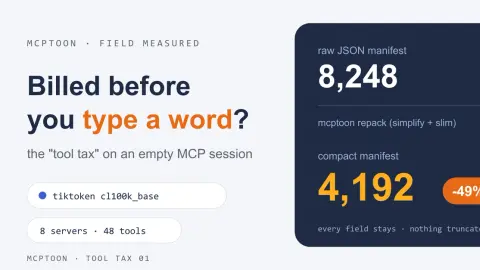
Everyone's started auditing the first bill. Almost nobody has found the second one. Here's what I mean. Open your agent's context and count what's already loaded before you type a single character. There are two line items, and they come from two different places: MCP tool schemas.
Keeping a model locally also lets you manage generation settings locally. But an output image and a model name do not tell you which workflow ran, with which parameters, on which environment.
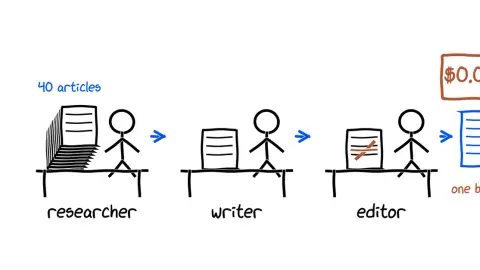
A CrewAI crew writes our daily pharma brief for three cents One daily Pharma brief from a three-agent CrewAI crew costs $0.030 on Claude Haiku 4.5 when the tool hands the model the news API's key sentences: 14,452 prompt tokens, 3,042 completion tokens, 4 LLM calls, 8 stories with 8 real links.
Nobody budgets for the runaway loop. Every AI SaaS has a line item for "expected LLM spend" and nobody has a line item for "the Friday night a bug turned our agent into a money printer." I've seen the second one. Here's the pattern that prevents it.
RAG stands for retrieval augmented generation. Strip the jargon and it is one idea: the model does not know your documents, so before you ask it a question, you look up the relevant passage yourself and paste it into the prompt. Retrieve, augment, generate. That is the whole trick.
Somewhere in your finance or ops team, someone is opening a bank statement PDF right now and typing numbers into a spreadsheet by hand. Maybe it is a reconciliation task. Maybe it is a lending application, and a human is scanning twelve pages of transactions looking for red flags.
Introduction Computers cannot read words. They only understand numbers. A word embedding turns a word into a list of numbers. Python example model = api.load("glove-wiki-gigaword-50")
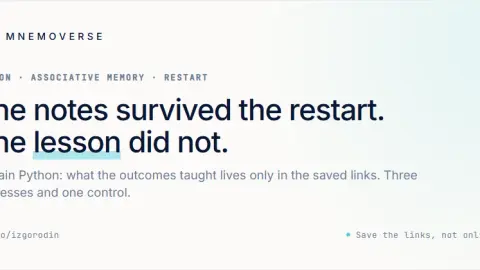
The associative half is easy to show in a few lines of Python. Store each note with the concepts it is about, count how often two concepts are written together, and let a read follow the strong pairs, so a question about timeouts brings back a note about backoff that never mentions a timeout.
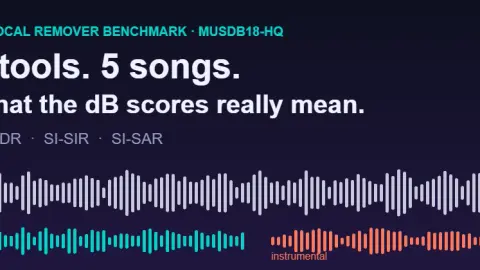
Disclosure: I work on NeuralSound, one of the three tools tested here. The method, the raw numbers and the caveats are all below, so you can judge them yourself or rerun the test. Every AI vocal remover says it's "studio quality". Almost none of them publish numbers.
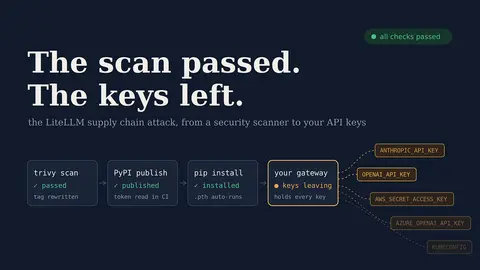
How a poisoned security scanner led to the LiteLLM supply chain attack, what stolen LLM keys cost via LLMjacking, and seven controls that limit the damage.
Article URL: https://lfm.xiffy.nl/ Comments URL: https://news.ycombinator.com/item?id=49903862 Points: 10 # Comments: 3
You know the feeling. Pager goes off at 2 AM. You stumble to your laptop, open the terminal, and stare at a PostgreSQL stack trace you've seen before — but can't remember exactly what fixed it last time. You dig through Slack threads, closed Jira tickets, and a half-finished runbook.
I've watched LLMs confidently recommend approving an invoice for an amount that doesn't appear in the purchase order, the invoice, or any past decision. They do it with high confidence and well-structured reasoning. The reasoning sounds right. The number is invented.
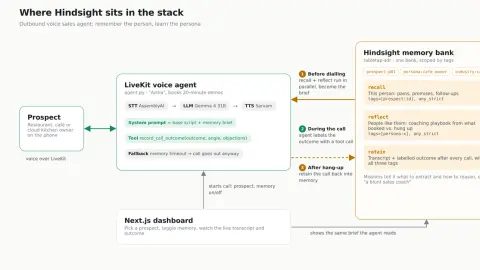
The worst call my voice agent ever made went like this: "Hi Imran, Aisha from TableTap. Our billing app starts at just nine hundred ninety nine rupees a month." Imran runs a cloud kitchen.
I built an incident-diagnosis agent that remembers every outage we've resolved. The interesting part isn't the diagnosis. It is the persistence boundary I ended up drawing, and how much of the system's value lives on one side of it.
For a long time, every invoice my agent saw was the first invoice it had ever seen from that vendor. It read the PDF, pulled out the fields, made a call, and forgot everything the moment the page reloaded.
Benchmarking the impact of fewer, larger files across three SQL workloads The post I Compacted 1,000 Apache Iceberg Files Into 6. Here’s What Happened to Query Performance. appeared first on Towards Data Science.
Showing 108 of 150 stories
Load more storiesGet the top AI news and tools straight to your inbox every week.
Weekly · AI news
Join 15,000+ AI enthusiasts