Fine-tuning vs RAG for customer support: why retrieval wins almost every time
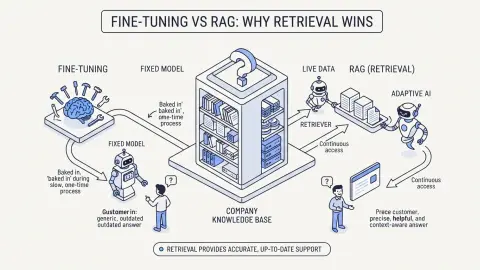
Fine-tuning vs RAG for support agents: the cost, staleness, and update-frequency arithmetic that makes retrieval the default choice for most teams.
524 stories
Fine-tuning vs RAG for support agents: the cost, staleness, and update-frequency arithmetic that makes retrieval the default choice for most teams.
The business world in 2026 demands fast execution. You don't have time to write repetitive code or manually process massive spreadsheets. The post 10 Best No Code AI Agent Builders in 2026 appeared first on Blog.
Chatbots are officially dead. By 2026, Gartner predicts that 80% of enterprises will run generative AI applications in production environments, up from less than 5% just three years ago. And they aren't just generating text anymore. They're taking autonomous action.
The retrieval layer that helps AI systems navigate, read, and verify information inside even the most complex documents
#AgenticAI #AIEngineer #AIRoadmap2026 🔗 Join the WhatsApp Community https://chat.whatsapp.com/ENnDGZ41lMYBHCApJIpzo6?mode=gi_t This is to bring together serious and like-minded learners who want to learn AI, share useful resources, discuss ideas, and grow together.
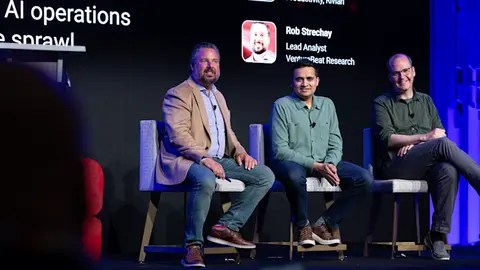
Rob Strechay, until recently managing director and principal analyst at theCUBE Research, has joined VentureBeat as our first Lead Analyst and a founding analyst of VentureBeat Research.
Your new AI product is live. Infra dashboards are all green. Latency is low, error rates are flat, and CPU/GPU utilization looks healthy. Yet your Slack channels are full of screenshots from users asking, “Why did it do this?” The same user goal and high-level prompt can still produce wildly…
Standing up an agent as a production service on Kubernetes means five YAML files, a few hundred lines between them, and (in most enterprises) a ticket in someone else’s queue. On the Workload API it means one spec file, one command, and about five minutes to a live URL.
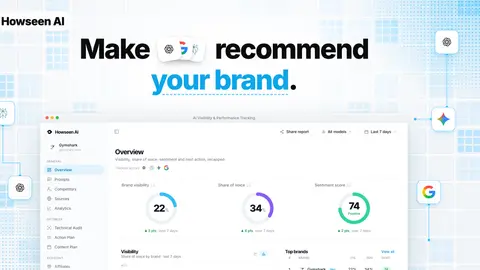
Learn how to optimize your website for AI search engine recommendations using proven GEO strategies, structured data, and Howseen AI tracking.
LLM applications are everywhere now, and they’re fundamentally different from traditional software. They’re non-deterministic. They hallucinate. They can fail in ways that are hard to predict or reproduce (and sometimes hilarious).
In this No Dumb Questions, Phoebe asks Stack’s Engineering Manager Doug Whitley and Product Manager Ash Zade everything she wants to know about AI context architecture. What exactly is it? Why is it so important? What makes for good AI context architecture? Why buy one when you can build your own?
Reducing Retrieval and Calls When a retrieval-augmented generation (RAG) agent runs, it often has to plan a search, check the evidence it gets back, and try again when that evidence falls short. Those inefficiencies compound.
Bayer is a global life sciences company operating at the intersection of two of the most consequential fields in human life: health and nutrition. Its pharmaceutical work supports drug discovery and patient care, while its crop science work supports food production at planetary scale.
Judges around the world have made headlines for illicitly using generative AI in their work. But in Pakistan, a large-scale trial of a specially designed AI tool for judges found the technology—together with appropriate training–boosted the number of cases resolved by 6.3 percent with no obvious…
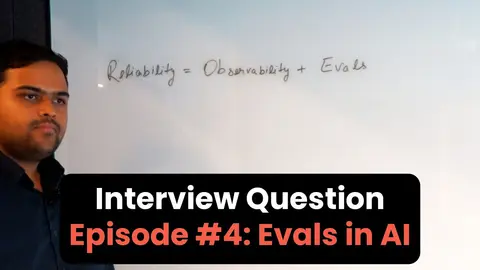
How do we evaluate RAG pipelines with LLMs? This is a real interview question from a big tech company, asked to a candidate in their technical interview round. The video explains the answer in roughly 11 minutes. To crack more questions, subscribe to the channel!
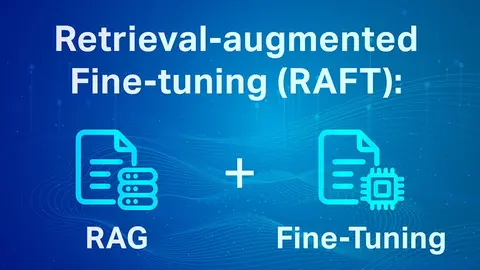
What is RAFT? RAG + Fine-Tuning In simple terms, retrieval-augmented fine-tuning, or RAFT, is an advanced AI technique in which retrieval-augmented generation is joined with fine-tuning to enhance …
NLP in 2026: Trends, Use Cases & Future of Language AI | Shaip Every day, your organization produces a mountain of words. Support tickets, contracts, clinical notes, customer reviews, emails, call …
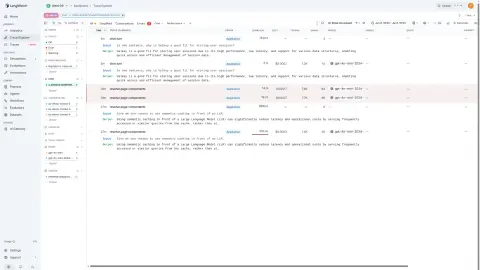
How BetterDB and LangWatch composed semantic-cache spans and LLM traces into one OpenTelemetry trace with zero integration code, and why OTel-native layers make it free.
Showing 360 of 524 stories
Load more storiesGet the top AI news and tools straight to your inbox every week.
Weekly · AI news
Join 15,000+ AI enthusiasts