

Google’s TPUs for AI workloads now run in Meta's data centers
Google’s TPUs now serve AI in production at Meta, through new open-source engines that run PyTorch models natively on the chips.
Tom's Hardware AI3 min read
87 stories
Google’s TPUs now serve AI in production at Meta, through new open-source engines that run PyTorch models natively on the chips.

Generative AI is an incredible business advance, giving companies the opportunity to handle a wide variety of knowledge work tasks with ever-changing, inconsistent input data. But what about ensuring the outputs remain consistent and are in-line with the business goals?
Proudly brought to you by SerpAPI: Today’s release covers a LOT of ground, but you can scrape all this into markdown for your agents! 50% token cost of JSON.
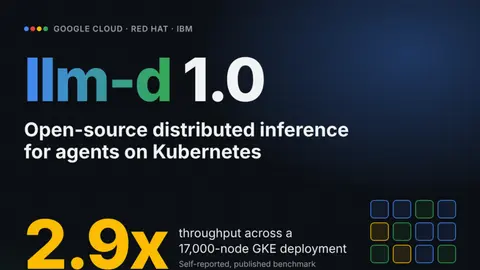
Google, Red Hat and IBM released llm-d 1.0, an open-source Kubernetes-native stack for distributed LLM inference. It adds multi-tenant flow control, zero-downtime upgrades and agent-aware routing across vLLM, SGLang, TPUs and GPUs.
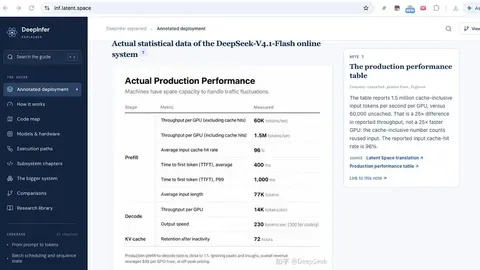
DeepInfer H100 support is not officially listed. Here is the verified hardware boundary and practical migration path for H100 and RTX teams.
A practical TorchTPU PyTorch TPU guide: install torch_tpu 0.2.0, verify a TPU, migrate CUDA code, and understand current limits.
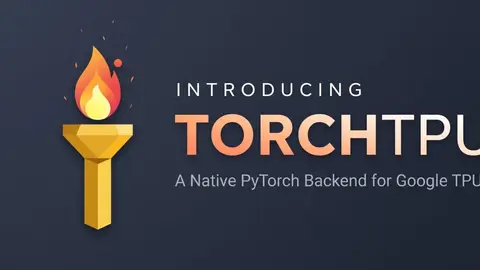
TL;DR TorchTPU is an open source collaboration between Google and Meta that introduces a native and principled PyTorch backend for Google TPUs. It enables seamless out-of-the-box model execution and TPU... The post Introducing TorchTPU appeared first on PyTorch.

Congrats to DeepSeek V4.1 Flash 1017, MiniMax M3.1 Flash, and Mercury 3 (details below) but they’re not going to be in super wide use just yet.

I tested LLM routing to understand why switching models mid-session can erase the savings promised by cheaper inference The post The Hidden Cost of LLM Routing: Why Switching Models Costs More appeared first on Towards Data Science.
DeepSeek DeepInfer is real open source, but its first release is an offline engine for narrow hardware—not a drop-in vLLM or SGLang replacement.
Set up Ming-3.0-TTS locally, choose the right checkpoint, verify the download, generate a WAV, and expose the SGLang speech API.
Ming-3.0 TTS review covering 0.5B vs Tiny, local setup, benchmarks, hardware limits, SGLang API behavior, and production readiness.
Original analysis: A bounded documentation review separates explicit support, deliberate exclusions and unanswered questions. Dynamo’s conflicting video guidance shows why a runtime’s general capabilities are not enough.
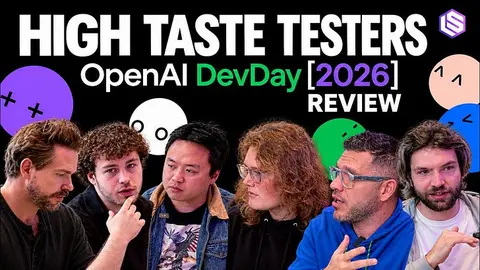
We are piloting a new show on Latent Space: High Taste Testers, a variant of our food show where we pull you in to a typical lunch conversation in San Francisco. All your favorite talking points, starting with Dev Day and going into the latest models and assistants, are here:

Reflection AI's Beam is an open-weight model for agentic coding and long-horizon tasks. This post shows how to deploy Beam on AWS: start with an Amazon SageMaker JumpStart real-time endpoint, or use Amazon SageMaker HyperPod Inference with JumpStart, SGLang, or vLLM for Kubernetes-native control…
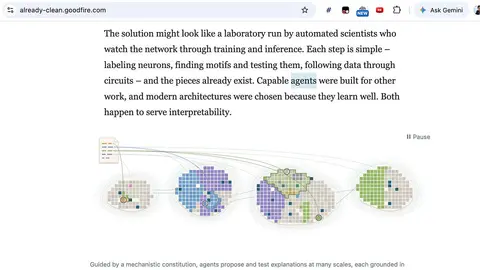
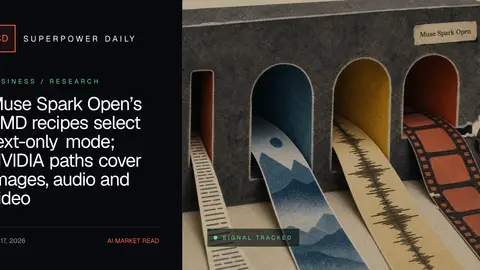
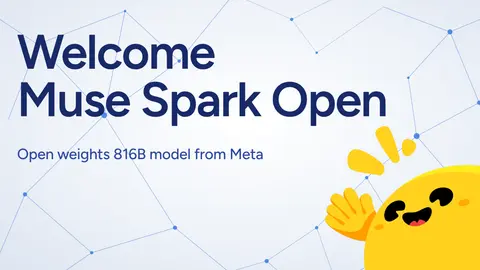
A version of Muse Spark Open was released today, fulfilling their original promise but with a model weaker than their Spark 1.3. It’s also worth watching the Tesla Roadster demo - not strictly AI but nothing cooler than real life flying cars.

A practical guide to self-hosting InclusionAI's Ling-3.1-flash MoE model with SGLang or vLLM, covering GPU requirements and server commands.
We’re on a journey to advance and democratize artificial intelligence through open source and open science.
Showing 54 of 87 stories
Load more storiesGet the top AI news and tools straight to your inbox every week.
Weekly · AI news
Join 15,000+ AI enthusiasts