
Context Management for Deep Agents
Learn how Deep Agents SDK manages context for long-running AI tasks through offloading, summarization, and filesystem abstraction to prevent context rot.
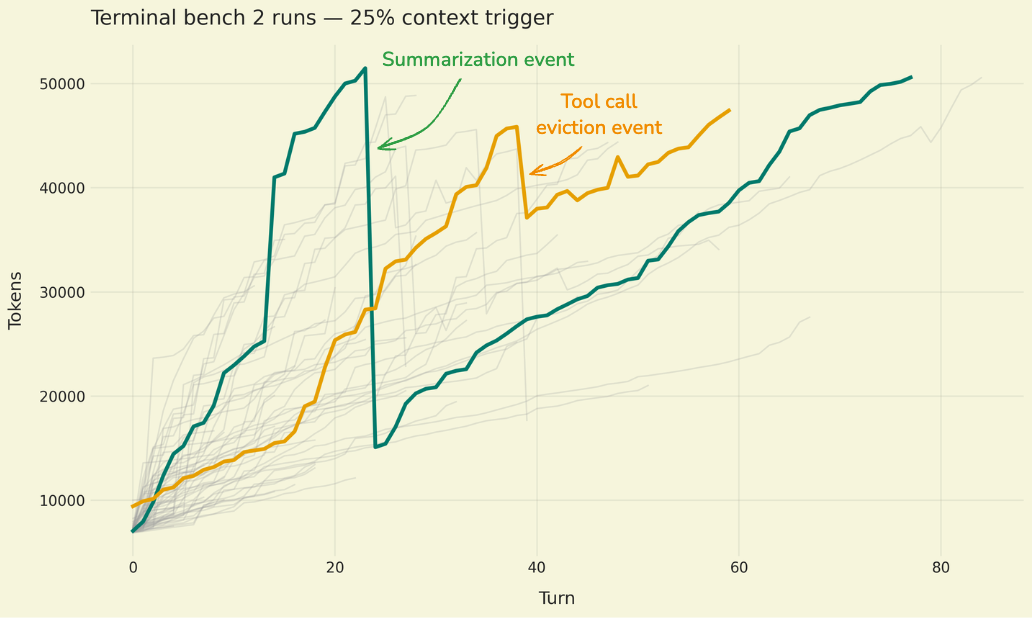
This article explains the context management techniques implemented in LangChain's Deep Agents SDK to address memory constraints and prevent context rot in long-running AI tasks.
What happened
The article describes the Deep Agents SDK's approach to managing AI agent context through three primary techniques: offloading large tool outputs to filesystems, truncating redundant input history, and performing structured summarization when needed. It also details validation methods to ensure these mechanisms work effectively.
Why it matters
Effective context management is critical for maintaining AI agent performance on extended tasks. This approach enables developers to build more reliable agents that can handle complex workflows without exceeding model memory limits.
- Implement offloading for large tool outputs to manage context size
- Use structured summarization to preserve task intent while compressing history
- Validate context management mechanisms with targeted evaluations
- Balance compression frequency with task requirements
- Maintain filesystem backups of full conversation records for recoverability
The bigger picture
The techniques enable more efficient use of language models for complex tasks, reducing memory overhead while maintaining task continuity and recoverability of critical information.
The Deep Agents SDK provides a comprehensive framework for managing AI agent context through multiple compression techniques, enabling more effective execution of complex, long-running tasks while maintaining critical information access.
Technical details
- Context compression techniques: offloading, summarization, and filesystem abstraction
- Token-based threshold triggers (20,000 tokens for outputs, 85% context window for inputs)
- Structured summarization with session intent, artifacts, and next steps
- Dual storage system: in-context summaries + filesystem preservation
- Targeted evaluation framework for validating compression mechanisms
FAQ
What triggers context compression in Deep Agents?
Compression is triggered when context size reaches specific thresholds (20,000 tokens for outputs, 85% of model window for inputs) or when summarization is needed after offloading.
How does the system preserve critical information after summarization?
The full conversation history is stored in the filesystem while a structured summary remains in context, allowing agents to recover details through filesystem search.
What are targeted evaluations used for?
They validate individual context management mechanisms by isolating specific failure modes and ensuring compression techniques don't disrupt task execution or information access.
How does offloading work for large tool responses?
Responses exceeding 20,000 tokens are stored in the filesystem with a reference, allowing agents to access the full content when needed through file operations.
What is the benefit of structured summarization?
It maintains task context through session intent, artifacts, and next steps while significantly reducing memory usage, enabling longer agent execution periods.
This summary and analysis were generated with AI from the original article and may contain errors. Read the original for the full story.
Read the full story
Originally published by LangChain Blog on Oct 13, 2026.
Comments
Sign in to join the discussion.