
The Most Common Questions About Agent Evals, Answered
Where to start with agent evals, offline vs online evals, evaluator types, LLM judges, benchmarks with Harbor, multi-turn evals, and keeping costs down.
LangChain Blog14 min read
160 stories
Where to start with agent evals, offline vs online evals, evaluator types, LLM judges, benchmarks with Harbor, multi-turn evals, and keeping costs down.
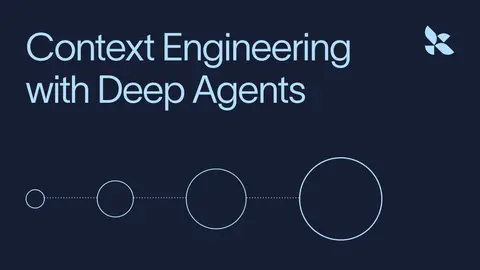
Long-running agents degrade as context piles up. Learn how offloading, summarization, skills, subagents, and memory keep your agent's context window focused.
Build a Python pipeline that answers questions from PDFs and links each answer to its page, then check the citations before you trust them.
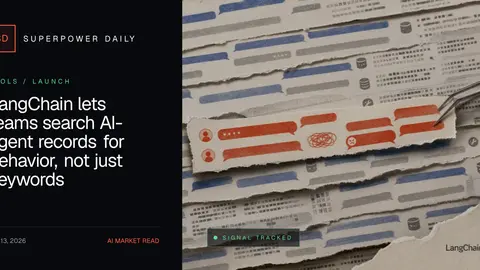
AI Search uses a model to check session records against plain-language questions. Its fixed reading budget favors conversations over tool output.
Learn how Orange Business used LangChain and LangSmith to build Live Intelligence, a governed AI platform for agents, evals, observability, and production scale.
Open models like GLM-5 and MiniMax M2.7 now match closed frontier models on core agent tasks — file operations, tool use, and instruction following — at a fraction of the cost and latency. Here's what our evals show and how to start using them in Deep Agents.
Stale code samples are a docs problem nobody prioritizes. Here's how we used the Deep Agents CLI to automate migrating inline code into testable, CI-ready examples
Built on Deep Agents and LangGraph, Open SWE provides the core architectural components for internal coding agents.
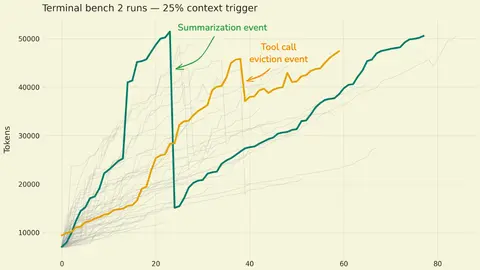
Learn how Deep Agents SDK manages context for long-running AI tasks through offloading, summarization, and filesystem abstraction to prevent context rot.
Today we’re launching Deep Agents deploy in beta. Deep Agents deploy is the fastest way to deploy a model agnostic, open source agent harness in a production ready way.
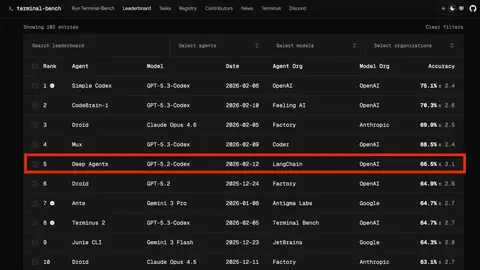
Harness engineering improved LangChain's coding agent from Top 30 to Top 5 on Terminal Bench using self-verification, tracing, and context optimization.

ChatGPT answers questions… but how do we build AI systems that can actually complete tasks? What should I explain next — Comment below! 👇 In this video, we're exploring LangChain from scratch using one practical real-world example.
AI Search in LangSmith is a new way to query traces using natural language. Describe the behavior you're looking for, and LangSmith returns the traces where it happened.
Use ScaleDown's constrained decoding models with LangChain and Deep Agents to summarize history, compress tool results, and extract data faster and cheaper.
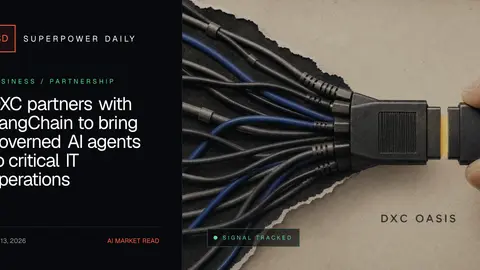
The partnership builds on DXC’s existing OASIS platform. DXC reports sharp reductions in incident-resolution time, while sensitive actions can pause for human approval.
Building RAG from Scratch: No Frameworks Needed Understand Retrieval-Augmented Generation by building it yourself — pure Python, zero dependencies. Introduction LangChain, LlamaIndex, Haystack — great tools, but they hide how RAG actually works.
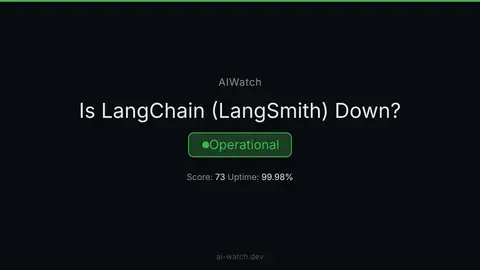
No — LangChain (LangSmith) is operational. Uptime: 99.98%. 3 incidents tracked (30d). Live status, updated every 5 minutes.
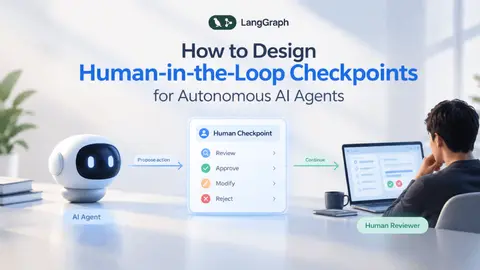
Autonomous AI agents can read requests, retrieve data, reason through options, and trigger actions in seconds. That speed is useful, but it also creates risk when the next step affects money, customer records, or external systems.
Showing 18 of 160 stories
Load more storiesGet the top AI news and tools straight to your inbox every week.
Weekly · AI news
Join 15,000+ AI enthusiasts