
EU AI Act compliance for AI agents: a practical engineering guide
Learn how agent traces, human oversight, production evaluations, and log retention support EU AI Act compliance with a practical credit-assistant example. The post EU AI Act compliance for AI agents: a practical engineering guide appeared first on Arize AI.
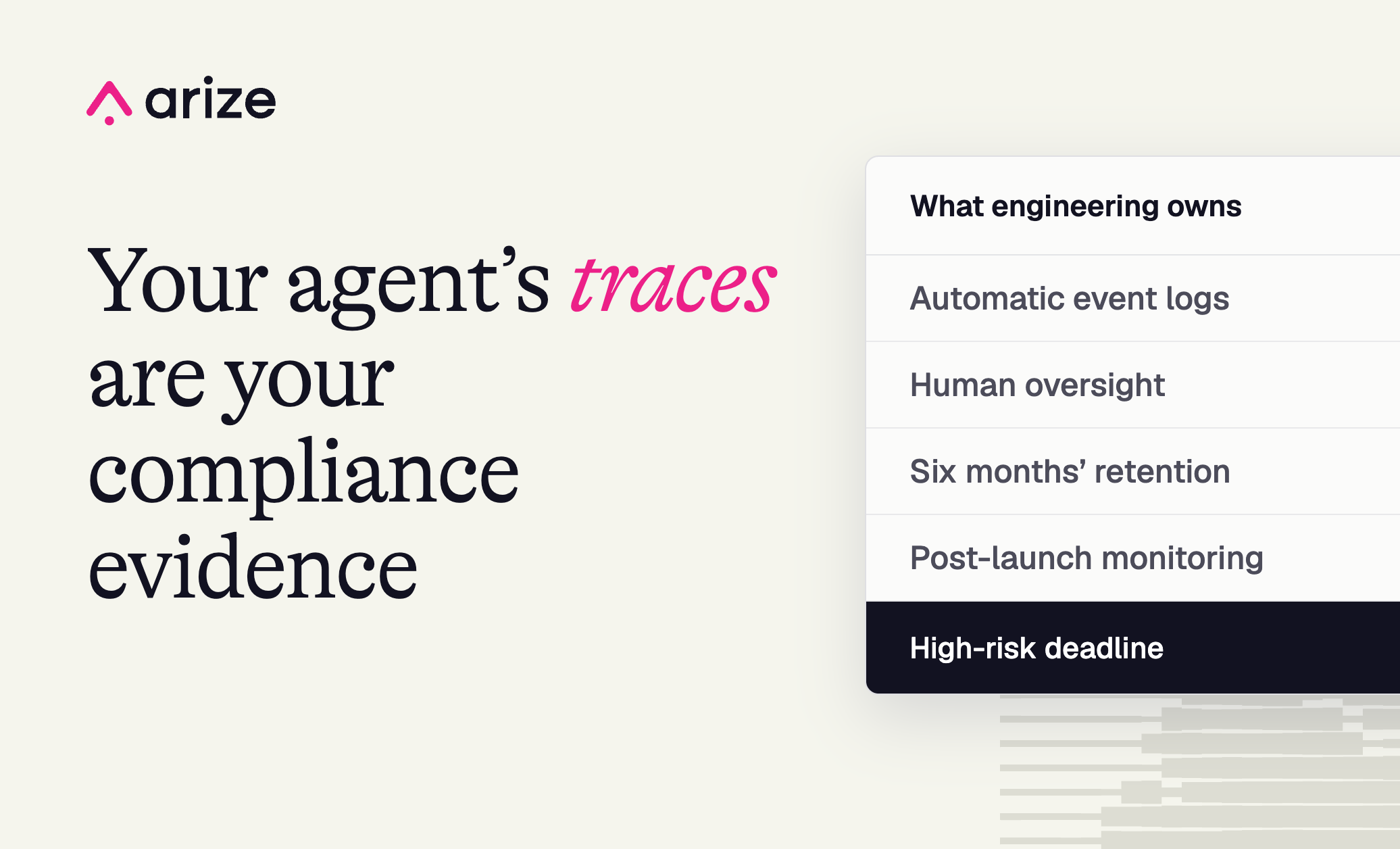
This article provides engineering guidance for achieving EU AI Act compliance for AI agents, focusing on practical implementation of requirements like agent tracing, human oversight, and log retention.
What happened
The article outlines how AI engineering teams can meet EU AI Act requirements for high-risk systems through technical implementations like agent tracing, log retention, and human oversight. It details collaboration between Arize and evroc to address compliance obligations, including data jurisdiction, supply chain agreements, and post-market monitoring.
Why it matters
Compliance with the EU AI Act is critical for organizations deploying high-risk AI systems (e.g., credit scoring, hiring) to avoid legal penalties and ensure transparency. Engineering practices like traceability and data control directly address regulatory requirements while improving system reliability.
- Start compliance efforts early due to tight deadlines (e.g., 2027 for high-risk systems)
- Use agent tracing to document decisions and meet evidence requirements
- Prioritize EU-based infrastructure to control data jurisdiction
- Implement post-market monitoring to detect policy violations in production
- Collaborate with legal teams to define provider/deployer roles and obligations
The bigger picture
The article helps engineering teams implement compliance workflows that align with EU regulations, reducing legal risks and improving transparency for high-risk AI systems. It highlights the importance of infrastructure choices and observability tools in meeting regulatory requirements.
The article provides actionable engineering guidance for EU AI Act compliance, emphasizing traceability, data control, and collaboration between technical and legal teams to meet high-risk system requirements.
Technical details
- Agent traces capturing model calls, prompts, and human reviews as evidence
- Self-hosted observability platforms (Arize Phoenix) for EU data jurisdiction
- Log retention policies (6+ months) with GDPR-compliant data minimization
- Supply chain agreements for infrastructure (evroc) and model hosting
- Online evaluations for post-market monitoring of production AI decisions
FAQ
What are the key deadlines for EU AI Act compliance?
High-risk systems must comply by 2 December 2027, with some obligations (e.g., transparency) already active as of 2025.
How does the EU AI Act define high-risk AI systems?
High-risk systems include credit scoring, hiring, education, and critical infrastructure applications, determined by use case rather than technology alone.
What role do agent traces play in compliance?
Traces document AI decisions, model calls, and human reviews, serving as evidence of compliance with requirements like logging, oversight, and explainability.
How do Arize and evroc support compliance?
Arize provides tracing and evaluation tools, while evroc offers EU-based infrastructure for data control, both addressing requirements like log retention and jurisdictional compliance.
What is the significance of data jurisdiction in compliance?
Data must be stored in the EU under the organization's control to meet GDPR and AI Act requirements, requiring infrastructure choices like evroc's sovereign cloud.
This summary and analysis were generated with AI from the original article and may contain errors. Read the original for the full story.
Read the full story
Originally published by Arize Phoenix on Oct 13, 2026.
Comments
Sign in to join the discussion.