
The Telo MT1 is a big truck trapped in a tiny truck’s body
I'm bouncing down the road in San Carlos, California, zipping past behemoth tech companies like EA and Oracle, in America's smallest electric truck. The Telo MT1 (which stands for "mini truck") unquestionably turns heads because it looks so remarkably different from everything else on the market…
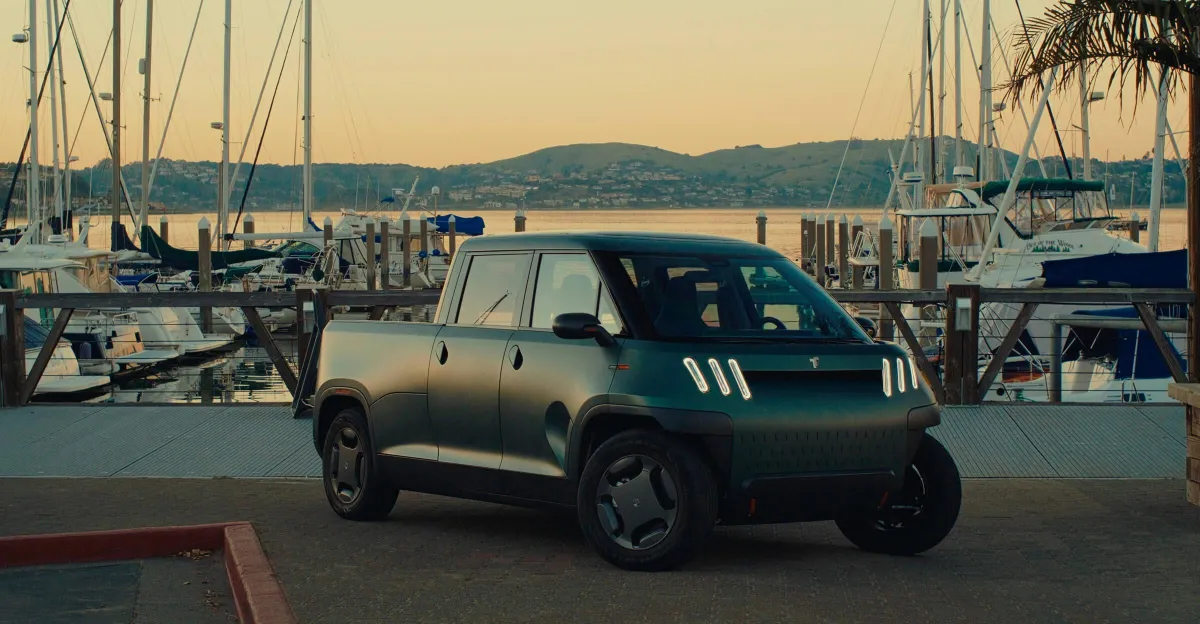
The article discusses the Telo MT1, a compact electric pickup truck developed by California startup Telo, highlighting its innovative design, AI-driven development processes, and potential impact on urban transportation.
What happened
The article reports on the development and features of Telo's MT1 electric pickup truck, including its design, AI-assisted engineering, battery technology, and market positioning as a compact alternative to large SUVs and trucks.
Why it matters
For AI developers, the article highlights AI's role in accelerating vehicle safety testing. For tech professionals, it demonstrates how AI and modular design can disrupt traditional automotive manufacturing. Businesses may find value in the MT1's urban-friendly design and potential to reduce traffic safety risks.
- AI is transforming vehicle safety testing by enabling cost-effective virtual simulations.
- Compact electric trucks can offer practicality and performance comparable to larger vehicles.
- In-house battery production allows startups to optimize energy density and reduce supply chain dependencies.
- Urban-focused design may address safety and space challenges posed by oversized vehicles.
- Modular design and AI tools are lowering barriers for hardware innovation in the automotive sector.
The bigger picture
The MT1 could influence urban EV design by proving that compact vehicles can match the utility of larger trucks. Its AI-assisted development model may inspire other startups to adopt similar cost-saving techniques.
The Telo MT1 represents a novel approach to electric vehicle design, combining AI-driven engineering with a compact, practical form factor to challenge traditional pickup truck dominance in urban markets.
Technical details
- Split 800V/400V battery architecture for compatibility with Tesla Superchargers and future high-power stations.
- AI-driven virtual crash testing with 1 test per hour, reducing reliance on physical prototypes.
- Passive thermal management system with active liquid cooling for battery longevity.
- Redesigned front hinge pillar consolidating multiple structural components into a single unit.
FAQ
How does Telo use AI in the MT1's development?
Telo uses AI for continuous virtual crash testing, running approximately one test per hour to optimize safety without relying on physical prototypes.
What makes the MT1's battery design unique?
The MT1 features a split 800V/400V architecture, enabling compatibility with existing Tesla Superchargers and future high-power stations, along with in-house thermal management for longevity.
How does the MT1 compare to traditional trucks?
Despite its small size (similar to a Mini Cooper), the MT1 offers 8,000lbs towing capacity, a full-size bed, and urban-friendly dimensions while using AI to meet U.S. safety standards.
What is the significance of the redesigned front hinge pillar?
The hinge pillar consolidates multiple structural components, reducing part count by 50% and enabling a safer, more efficient crash architecture compared to traditional designs.
Why is the MT1 targeting urban markets?
The MT1 addresses urban space constraints and safety concerns by offering a compact, practical alternative to oversized trucks that struggle in city environments.
This summary and analysis were generated with AI from the original article and may contain errors. Read the original for the full story.
Read the full story
Originally published by The Verge - All Posts on Oct 10, 2026.
Comments
Sign in to join the discussion.