
A new approach to sustainable AI: Offloading part of the computational burden onto light
As artificial intelligence technologies become increasingly widespread, the growing demand for processing power and energy is emerging as a global challenge.
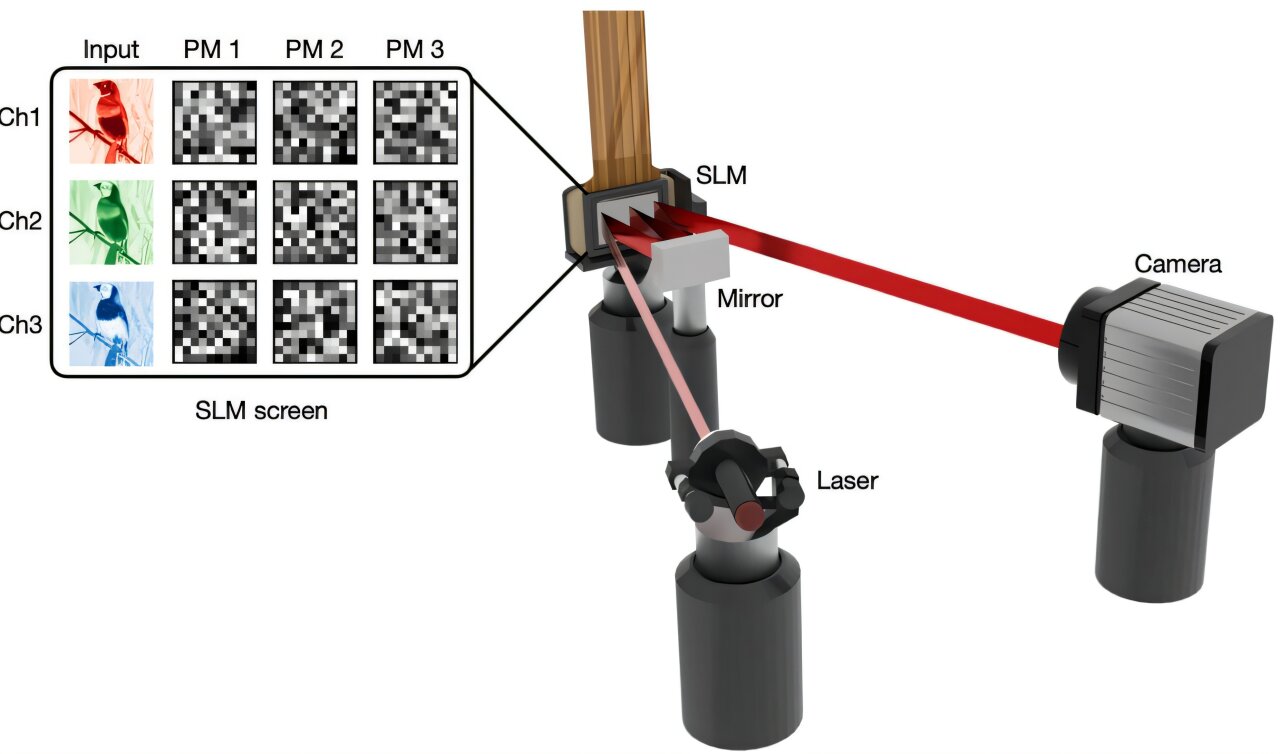
Researchers at Koç University have developed photonic computing systems that use light instead of traditional electronics to perform AI computations, aiming to create more energy-efficient and sustainable AI technologies.
What happened
Assistant professor Uğur Teğin and his team at Koç University introduced two photonic computing approaches for AI. The first uses light to process color images without losing chromatic information, while the second leverages multimode fiber lasers to perform computations through physical optical dynamics. Both systems demonstrated improved classification accuracy and energy efficiency compared to traditional electronic methods.
Why it matters
As AI systems demand more computational resources, these photonic approaches offer potential solutions for reducing energy consumption and improving processing efficiency, which is critical for sustainable AI development.
- Photonic computing can preserve color information during AI processing
- Optical systems adapt to hardware imperfections through experimental learning
- Fiber lasers can perform machine learning computations physically
- Light-based processing reduces reliance on electronic components
- These methods could significantly improve AI energy efficiency
The bigger picture
The research demonstrates that photonic computing can achieve high classification accuracy with reduced computational parameters, suggesting potential for future AI systems with lower energy requirements and improved hardware efficiency.
Koç University's research presents two photonic computing systems that leverage light for AI tasks, offering potential pathways to more sustainable and efficient artificial intelligence through optical processing techniques.
Technical details
- Programmable photonic neural networks for optical image processing
- Multichannel optical computing preserving RGB color data
- Fiber laser cavities as nonlinear optical processors
- Adaptive learning from experimental measurements
- Optical pattern recognition for classification tasks
FAQ
How do these photonic systems differ from traditional AI computing?
Traditional systems use electronic circuitry, while these systems use light to process information, enabling parallel computation and reduced energy consumption.
Why is preserving color information important for AI?
Color data contains critical features for accurate image classification, which is often lost in conventional grayscale processing methods.
How do the systems handle hardware imperfections?
They adapt through experimental measurements rather than relying on idealized computer models, improving real-world performance.
What types of data were tested with these systems?
The systems were tested on images of recyclable waste, weather data, satellite imagery, retinal scans, and skin lesions.
What are the energy efficiency benefits?
By shifting computation to light-based systems, the research suggests potential for reduced energy consumption compared to traditional electronic AI processors.
This summary and analysis were generated with AI from the original article and may contain errors. Read the original for the full story.
Read the full story
Originally published by TechXplore AI on Oct 10, 2026.
Comments
Sign in to join the discussion.