
Why dexterity is physical AI’s real bottleneck
The next major challenge in robotic dexterity is making the entire system reliable enough to turn capabilities into useful work. The post Why dexterity is physical AI’s real bottleneck appeared first on The Robot Report.
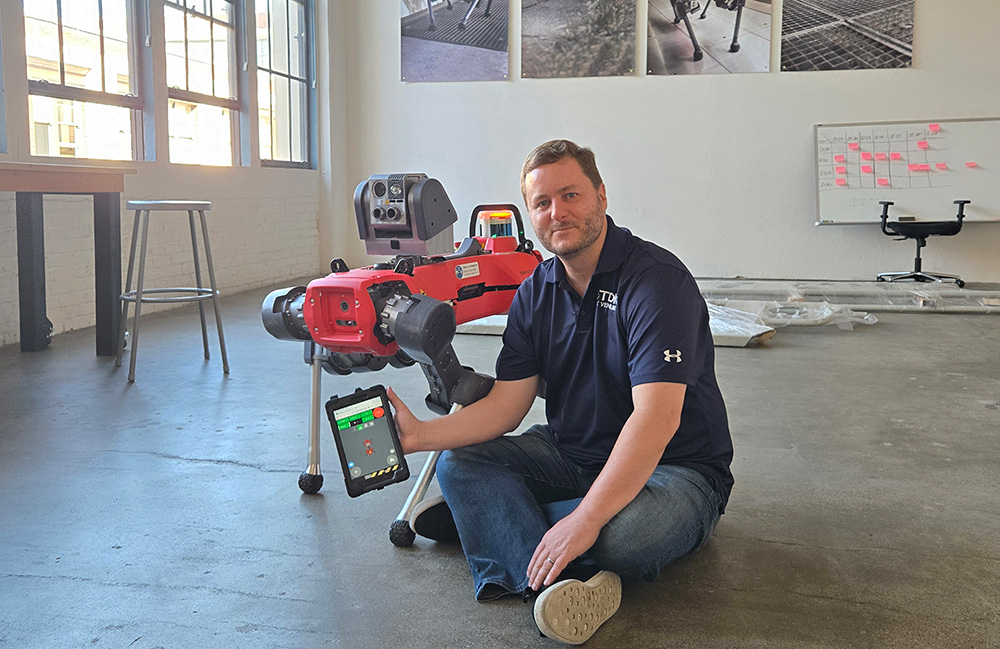
The article explores the challenges of achieving reliable robotic dexterity in real-world applications, emphasizing that system-wide reliability is more critical than individual task success rates.
What happened
The article discusses the limitations of current robotic dexterity, arguing that even robots with high individual success rates fail in real-world workflows due to reliability gaps. It highlights the need for system-level improvements in sensing, control, and recovery to enable autonomous operation.
Why it matters
For AI developers and businesses, achieving reliable robotic dexterity is critical for deploying robots in industrial, logistics, and hazardous environments. The article underscores that theoretical capabilities must translate into consistent, real-world performance to justify investment.
- Reliability across workflows, not individual tasks, defines practical dexterity.
- System-level integration of sensing, control, and recovery is critical for real-world success.
- Robot design should align with job requirements, not human-like aesthetics.
- Real-world deployment and iterative learning drive improvements in dexterity.
- Measuring workflow completion, not isolated demonstrations, is key to evaluating progress.
The bigger picture
The focus on system reliability and job-specific design could reshape robotics development, prioritizing practical deployment over hardware-centric metrics. This approach may reduce costs and improve trust in autonomous systems.
The article argues that robotic dexterity's next breakthrough lies in system-level reliability, emphasizing the need to prioritize real-world performance over isolated technical achievements.
Technical details
- Workflows with 100 sequential tasks require 99.9% success rates per step to achieve 90.5% overall reliability.
- Closed-loop systems integrating vision, force sensing, and recovery mechanisms are essential for dexterity.
- Examples of job-specific robot designs: Agility's Digit (logistics), ANYbotics' quadruped (industrial inspection), and Starship's delivery robots (urban environments).
FAQ
Why is system reliability more important than individual task success rates?
A 99% success rate per task leads to only 36.6% reliability for 100 sequential tasks, highlighting the need for higher reliability in real-world workflows.
How does the article define robotic dexterity?
Dexterity is a system combining vision, touch, force sensing, control, and recovery mechanisms, not just hardware capabilities like joints or fingers.
What role does real-world deployment play in improving dexterity?
Deployment reveals failures and provides data to refine software, hardware, and control systems, enabling iterative improvements in reliability.
This summary and analysis were generated with AI from the original article and may contain errors. Read the original for the full story.
Read the full story
Originally published by The Robot Report on Oct 10, 2026.
Comments
Sign in to join the discussion.