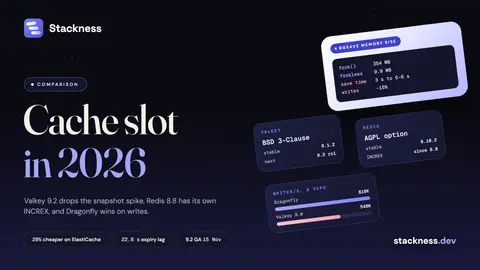
Valkey vs Redis vs Dragonfly in 2026: forkless BGSAVE, INCREX and which one takes the cache slot
For a new cache in October 2026, Valkey 9.1 is the default: BSD-licensed and 20% cheaper on ElastiCache. Its forkless BGSAVE and INCREX are still rc1.
33 stories
For a new cache in October 2026, Valkey 9.1 is the default: BSD-licensed and 20% cheaper on ElastiCache. Its forkless BGSAVE and INCREX are still rc1.
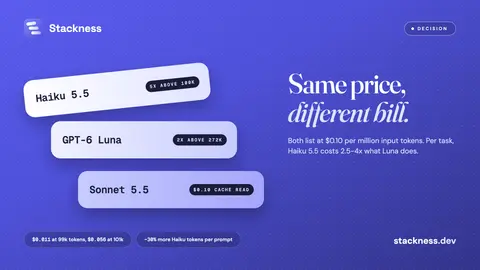
Haiku 5.5 and GPT-6 Luna list at the same price, but Haiku costs 2.5-4x more per task and 5x above 100k tokens. Which calls each one should take.
Meta Platforms Inc. today released Muse Wonder and Muse Wonder Full, two artificial intelligence models it says are its most capable yet at running agents that handle personal and professional tasks. Meta aimed the release at the longer, multistep jobs people hand off to an AI agent.
Training computer-use agents currently runs into a clean wall: native desktop applications are painful to spin up at scale, and browser toys lack workflow depth.
The best AI reviewer on GitHub's ReviewBench finds 26% of known issues. Six layers teams stack in place of reading every line, and what each one catches.
Article URL: https://fiveminutesforward.com/post/2026-10-04-telegraph-test/ Comments URL: https://news.ycombinator.com/item?id=49991580 Points: 16 # Comments: 7
How Clera benchmarked Supabase, Neon, PlanetScale and ClickHouse Managed Postgres on its real workload, then migrated 500+ tables from the EU to the US in one night. CPU went from days pinned at 100% to 10 to 20%.
CodeRabbit Security led three other systems in our vulnerability-detection benchmark. Here’s what we tested and how we scored it.
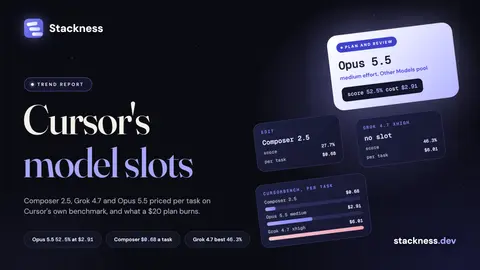
On Cursor's own benchmark, Opus 5.5 beats every Grok 4.7 setting for less, and Composer 2.5 is the cheap editor. Prices, plan burn and the break-even.
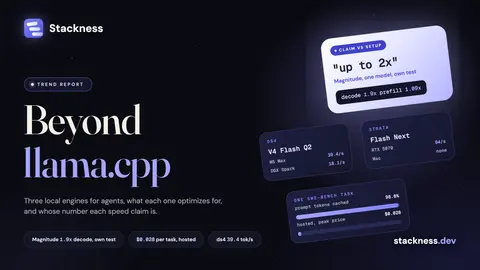
ds4 runs big MoE models on 96 GB Macs, Magnitude tunes kernels to your device, Strata puts one model on a gaming PC. Every speed claim is self-reported.
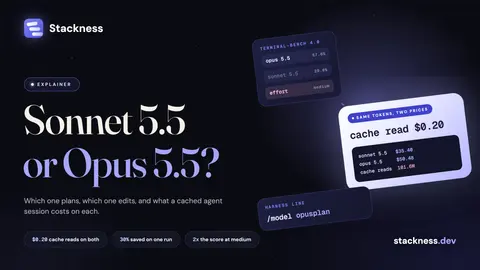
Sonnet 5.5 costs half of Opus 5.5 per token, but cache reads cost $0.20 on both. Which model plans, which one edits, and what one metered run saves.
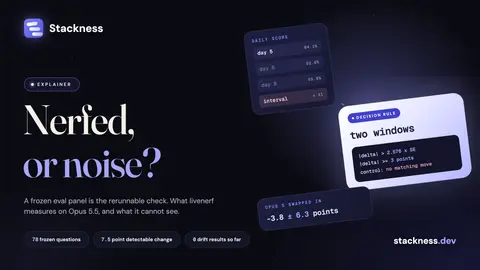
A frozen eval panel is the only rerunnable way to tell whether a hosted model got worse. What livenerf measures on Opus 5.5, and how to size your own.
Google LLC today began rolling out Gemini 4 Argon, a frontier artificial intelligence model that beats rival models from Anthropic PBC and OpenAI Group PBC on most of Google’s benchmarks, to vetted cybersecurity defenders.
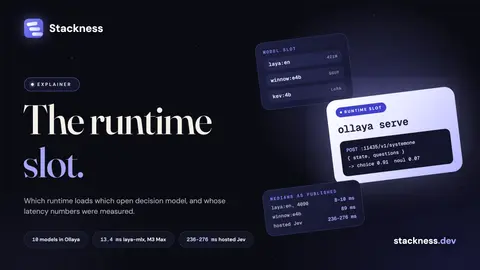
To run a System One model locally, pick a runtime too: Ollaya serves ten open model families, laya-mlx runs Laya on Apple silicon, and llama.cpp needs a shim.
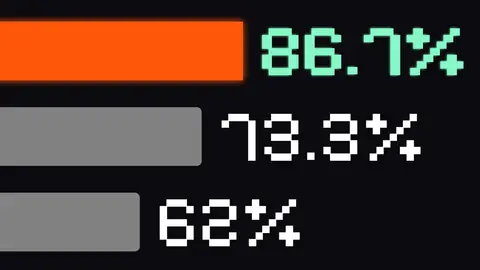
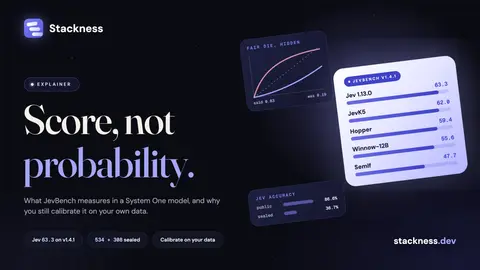
JevBench scores System One models on accuracy, calibration, speed and cost, and puts Jev first at 63.3. Why calibration still needs your own data.
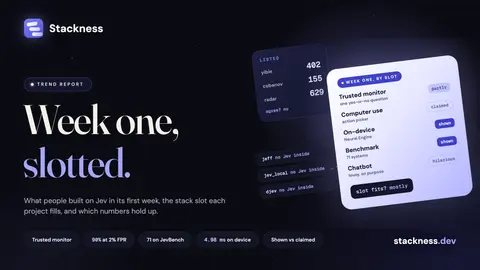
Jev's first week brought a trusted monitor, computer-use agents, self-hosted clones, a benchmark and a joke chatbot: the slot each fills and which numbers hold.
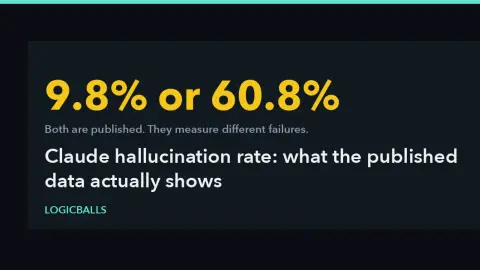
Three published measurements put Claude's hallucination rate at 9.8%, at 60.8%, and at 6% higher than the previous model. All three are correct, and none of them is the number.
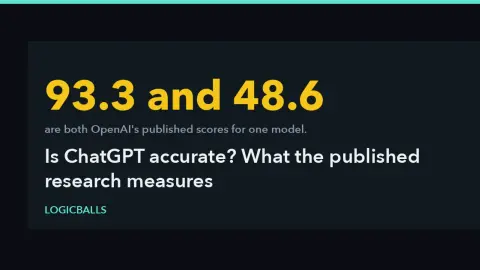
There is no single accuracy number. Published measurements for GPT-class models run from 7.6% to 62.5% on short-form facts and 3.1% to 23.3% on summary faithfulness, and each measures a different task.
Showing 18 of 33 stories
Load more storiesGet the top AI news and tools straight to your inbox every week.
Weekly · AI news
Join 15,000+ AI enthusiasts