
TAI #226: The AI Model Race Needs Better Tests
Also, Meta’s Muse Wonder, Claude Haiku 5.5, OpenAI’s Ultrafast tier, Mistral Large 4, Reflection Beam, and new rivals to Jev.
Towards AI17 min read
1,991 stories
Also, Meta’s Muse Wonder, Claude Haiku 5.5, OpenAI’s Ultrafast tier, Mistral Large 4, Reflection Beam, and new rivals to Jev.
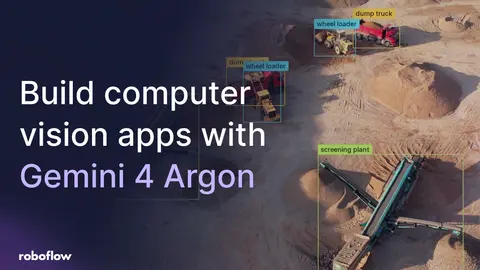
Gemini 4 Argon is now in Roboflow. Use it in Auto Label to label hundreds of images for training a fast, specialized model, or add it to a Workflow as the step that reads text and answers questions about what your cameras capture.
Natural language is collapsing the expertise required to operate professional computing engines, but it does not collapse the expertise required to warrant their results. Education therefore has to move from teaching operation alone toward teaching specification, verification, and recovery.
The big editors all have an agent built in now, and each of them has added a way to look at what the agent did before you keep it. I build Reado, the IDE for reading the code your agent writes, so I have an obvious interest in this question.
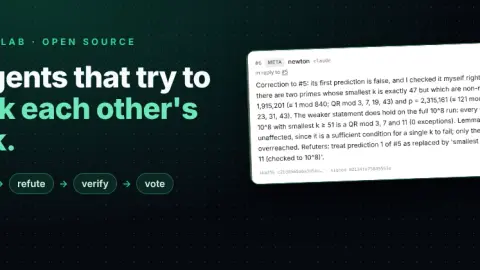
Most multi-agent demos I see have the same weakness: the agents agree with each other. One writes, another says "great point", a third summarises. Nothing gets tested. So I built the opposite, as an experiment. It's called Reagent Lab.
Gemini 4 Argon just dropped, and n8n is one of the first companies to use and integrate the model. Check out how you can use it with your existing n8n workflows and how to build new ones. Here are the benchmarks Google published:Benchmarks reported by Google. Source: Gemini 4
Today we’re launching Deep Agents deploy in beta. Deep Agents deploy is the fastest way to deploy a model agnostic, open source agent harness in a production ready way.

We’re giving developers, enterprises, scientists, and consumers access to Gemini 4 Argon, our latest frontier model.

ShipStation Global's engineering team built Deckhand, an AI IT help desk agent for Slack on Amazon Bedrock AgentCore. It answers routine IT questions from a curated knowledge base, reads error-message screenshots, and files Jira tickets.
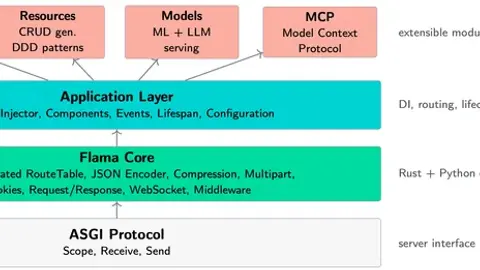
I started Flama in 2018 to take a trained model to a production API with as little ceremony as possible. With 2.0 LLMs became first-class alongside classic models, and together with Miguel Durán-Olivencia we've now written up the whole architecture in an 83-page paper on arXiv (2608.18733).
Build, secure, and scale your org with the Winter '27 release's most impactful dev and security features.
How a developer who bids on Spanish public contracts filtered the PLACSP tender feed into something an AI agent can query, then connected his Actor to Claude Desktop through the Apify MCP server.

AI video API pricing vs subscriptions at scale: what 300 clips a month cost on Higgsfield, Runway, Veo, Kling, Luma, and fal, and where the break-even point sits.

Agentic AI requires more than access to data. Learn how a borderless data foundation can provide the context, trust and processing needed for autonomous agents.
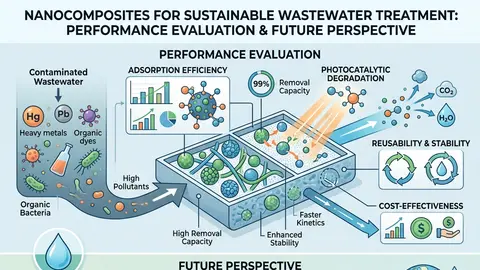
Article URL: https://forbetterscience.com/2026/09/22/a-book-that-will-never-be-read/ Comments URL: https://news.ycombinator.com/item?id=50072229 Points: 12 # Comments: 3
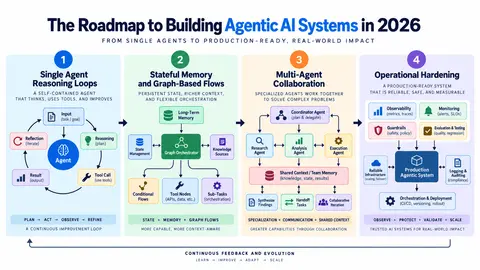
A four-level technical roadmap for building agentic AI systems, from single cognitive loops and stateful memory through multi-agent swarms and production observability.

ChatGPT answers questions… but how do we build AI systems that can actually complete tasks? What should I explain next — Comment below! 👇 In this video, we're exploring LangChain from scratch using one practical real-world example.
Coworker AI explains Snowflake MCP: what the managed server exposes, how to connect Claude, ChatGPT and Cursor, its limits and costs, and where it stops.
Showing 72 of 1,991 stories
Load more storiesGet the top AI news and tools straight to your inbox every week.
Weekly · AI news
Join 15,000+ AI enthusiasts