

Moxie Docs
Keeps GitHub docs up to date with code changes.
- Freemium· from $29/month
- Web
What is Moxie Docs?
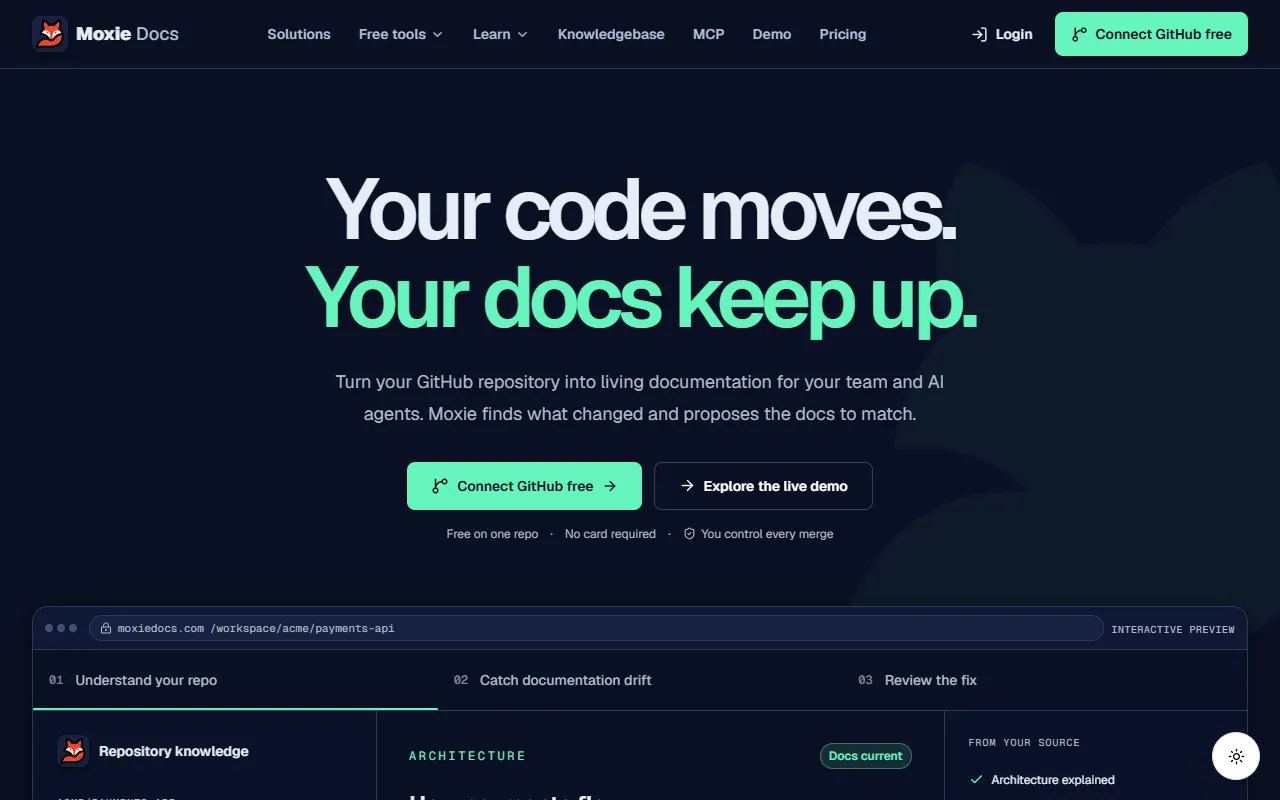
Moxie Docs is a Code Generation tool that keeps GitHub docs up to date with code changes. Moxie Docs is freemium: it has a free plan, and paid plans start at $29/month. A free trial of 14 days is available. It is available on Web App. It is aimed at developers and ai agents.
Moxie Docs keeps GitHub documentation current with code changes. It provides source-backed documentation, MCP context for AI agents, and reviewable Cleanup PRs. Users can start for free on one repository without a card.
Built for developers and ai agents.
Features
MCP Context for AI Agents
Provides context for AI agents using MCP.
Cleanup PRs
Reviewable pull requests for documentation cleanup.
Searchable Docs Workspace
A searchable workspace for documentation.
PR Checks
Checks pull requests for documentation alignment.
Drift Detection
Identifies documentation drift on merge.
Documentation Impact Flagging
Flags the impact of documentation changes.
Automated Setup
GitHub Integration
Indexing on Pull Requests
Documentation Alignment
Drift Catching
Use cases
- Keep documentation aligned with code changes
- Flag documentation impact during changes
- Detect documentation drift on merge
- Generate cleanup pull requests for documentation
- Provide searchable documentation workspace
- Ensure documentation alignment with code
Who it's for
Pros & cons
Pros
- Free plan available
- Paid plans from USD 29/month
- Integrates with GitHub
Cons
No documented limitations yet.
Pricing
Freemium — paid plans start at $29/month. Free trial of 14 days available.
| Plan | Price |
|---|---|
| Free plan (monthly) | Free |
| Free plan (annual) | Free |
| Starter plan (monthly) | $29 / month |
| Starter plan (annual) | $290 / year |
| Pro plan (monthly) | $79 / month |
| Pro plan (annual) | $790 / year |
| Team plan (monthly) | $199 / month |
| Team plan (annual) | $1,990 / year |
Integrations
Security & compliance
- SOC 2
- Encryption
- Data deletion
As stated on Moxie Docs's website — not independently verified by AiByts.
FAQ
What is Moxie Docs?
Moxie Docs is a Code Generation tool that keeps GitHub docs up to date with code changes. Moxie Docs keeps GitHub documentation current with code changes. It provides source-backed documentation, MCP context for AI agents, and reviewable Cleanup PRs. Users can start for free on one repository without a card.
Is Moxie Docs free?
Moxie Docs has a free plan; advanced features require a paid plan.
How much does Moxie Docs cost?
Moxie Docs offers 8 plans: Free plan (monthly) (Free), Free plan (annual) (Free), Starter plan (monthly) ($29 / month), Starter plan (annual) ($290 / year), Pro plan (monthly) ($79 / month) and Pro plan (annual) ($790 / year).
What platforms does Moxie Docs support?
Moxie Docs is available on Web App.
Who should use Moxie Docs?
Moxie Docs is built for developers and ai agents. Common uses: keep documentation aligned with code changes, flag documentation impact during changes, detect documentation drift on merge and generate cleanup pull requests for documentation.
What does Moxie Docs integrate with?
Moxie Docs integrates with GitHub.
What are the best alternatives to Moxie Docs?
Similar tools on AiByts include Superset, GitHub Copilot, CodeHealth MCP Server by CodeScene, Amazon Q Developer CLI and Blackbox AI.
Moxie Docs news & updates
How to Write a Runbook: A Field Guide for On-Call Engineers Who Will Read It at 3 a.m.
Most runbooks fail the moment they are needed: the command was renamed, the dashboard moved, the owner left. Learn how to write a runbook that a tired engineer can follow, a template you can copy, and how to keep it from rotting.
Moxie Docs Blog12 min read
How to Write a CONTRIBUTING.md: A Guide Humans and Coding Agents Actually Follow
Most CONTRIBUTING.md files are either a code of conduct with a link to the issue tracker or a wall of process nobody reads. A practical guide to writing one that gets a first pull request merged: what goes in it, what to leave out, how it fits next to AGENTS.md, and how to keep it true.
Moxie Docs Blog12 min read
How to Write a Pull Request Description: A Template Reviewers and Agents Can Both Use
Most pull request descriptions restate the title or the prompt. A practical guide to writing PR descriptions that speed up review and survive in git history: what to include, a copy-paste GitHub template, examples, and how to keep agent-written descriptions honest.
Moxie Docs Blog12 min read
AGENTS.md and CLAUDE.md in a Monorepo: Where Instruction Files Go and Which One Wins
Coding agents resolve nested instruction files differently: AGENTS.md uses the closest file, Claude Code stacks every CLAUDE.md from the root down. How to lay out instruction files in a monorepo, what goes at each level, and how to stop them contradicting each other.
Moxie Docs Blog10 min read
Documenting APIs for AI Agents: OpenAPI, llms.txt, and MCP, and When Each One Matters
AI agents now read your API docs before developers do. What OpenAPI, llms.txt, Markdown pages, and an MCP server each give an agent, which one to build first, how to write descriptions an agent can act on, and how to keep all of them in sync with the code.
Moxie Docs Blog10 min read
llms.txt Explained: How to Write, Validate, and Keep One Accurate
llms.txt is a small Markdown file that tells AI agents which pages on your site matter. What the v2 spec requires, a worked example, the mistakes validators catch, how to serve it, and why the file quietly goes stale.
Moxie Docs Blog12 min read
Docs as Code on GitHub: A Workflow That Keeps Docs in the Pull Request
Docs as code means writing documentation with the same tools and review process as code. A practical GitHub workflow: repo layout, the CI checks worth running, a docs-required gate, and the gap none of them close — docs that are reviewed but no longer true.
Moxie Docs Blog12 min read
Reviewing AI-Generated Pull Requests: What Changes When the Author Is an Agent
Agents write code faster than teams can review it, and agent PRs fail differently than human ones. A practical guide to reviewing AI-generated pull requests: the failure modes worth your attention, a review order that catches them, and how to move the work earlier so less of it lands on a human.
Moxie Docs Blog13 min read
Context Engineering for Coding Agents: A Field Guide
Coding agents fail on context, not capability. A practical guide to context engineering for a real repository: the four layers, a token budget you can reason about, how to diagnose which layer is failing, and how to keep it from going stale.
Moxie Docs Blog12 min read
Claude Skills vs. MCP Servers: How to Give a Coding Agent Repository Context
Skills, MCP servers, and CLAUDE.md all load context into a coding agent, but they are not interchangeable. A decision guide to picking the right one - static procedure vs. live data - without bloating the context window or shipping stale answers.
Moxie Docs Blog7 min read
AGENTS.md Explained: How to Write One File Every Coding Agent Can Read
AGENTS.md is the open standard for giving AI coding agents project context. Learn what it is, how it differs from CLAUDE.md and .cursorrules, and how to write one with a free generator.
Moxie Docs Blog8 min read
Developer Onboarding Documentation Review: Is MoxieDocs Worth It?
Struggling with slow developer onboarding? We tested MoxieDocs and found out if it cuts ramp-up time by 30%—plus its hidden perks for GitHub maintainers.
Moxie Docs Blog5 min read
MoxieDocs vs DeepDocs: Which Fits Lean Startup Teams Better?
Struggling to keep docs up-to-date with a tiny team? Compare MoxieDocs and DeepDocs to see which AI docs generator saves your engineers time without sacrificing clarity—so you can ship faster.
Moxie Docs Blog5 min read
MoxieDocs vs DocuWriter.ai: Best Living Docs for GitHub
GitHub documentation tools matter—especially for teams using docs as code. This comparison cuts through the noise to show which tool, MoxieDocs or DocuWriter.ai, keeps your docs in sync with your codebase *without* the hassle.
Moxie Docs Blog6 min read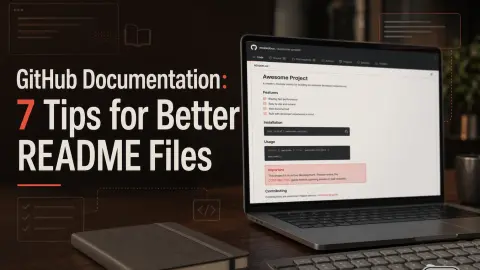
GitHub Documentation: 7 Tips for Better README Files
Your README is the first impression for contributors and users. Discover 7 actionable tips to make it clear, engaging, and functional—boosting adoption and collaboration on your project.
Moxie Docs Blog6 min read
What Is an Architecture Decision Record? A Complete Guide
An Architecture Decision Record (ADR) clarifies key technical choices for engineering teams. Learn how to document decisions that shape your system’s future—without endless meetings.
Moxie Docs Blog5 min read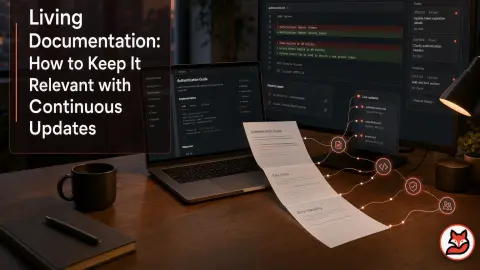
Living Documentation: How to Keep It Relevant with Continuous Updates
Outdated docs slow teams down. Discover how **living documentation tools** help engineering teams sync docs with code, reduce friction, and keep knowledge current—without the manual busywork.
Moxie Docs Blog5 min read
AI Documentation: A Comprehensive Review of the Top 5 Platforms
Discover the best AI documentation platforms tailored for software teams, technical writers, and AI developers. Find the ideal tool to improve clarity and collaboration in your projects.
Moxie Docs Blog6 min read
Details are compiled from Moxie Docs's website and public sources, last verified Oct 5, 2026. Features and pricing change — confirm on the official site before you buy.
Try Moxie Docs
Freemium · from $29/month
Tags
- Documentation Automation
- Code Documentation
- Documentation PR Check
- Docs Drift PR
- MCP Server
- Public Knowledgebase
- Developer Onboarding
- Software Architecture
- Documentation Gap Detection
- Documentation Drift Detection
Comments
Sign in to join the discussion.