
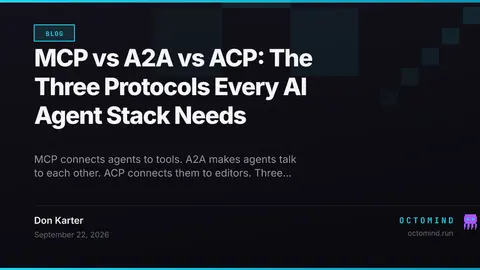
MCP vs A2A vs ACP: The Three Protocols Every AI Agent Stack Needs
MCP connects agents to tools. A2A makes agents talk to each other. ACP connects them to editors. Three protocols, three layers — what each does, and when.
Zentask Blog5 min read
440 stories
MCP connects agents to tools. A2A makes agents talk to each other. ACP connects them to editors. Three protocols, three layers — what each does, and when.
We have an unusual relationship with today’s guest: for years since coauthoring the InstructGPT paper, Diogo Almeida had been saying that API-available frontier models have been going down the wrong path, everything from the alignment to refusals to reliability perspectives, that we have dropped…
The debate between agentic AI vs generative AI centers on the shift from content creation to autonomous execution. Generative AI creates text, images, and software code based on specific prompts. In contrast, agentic AI pursues goals independently by...
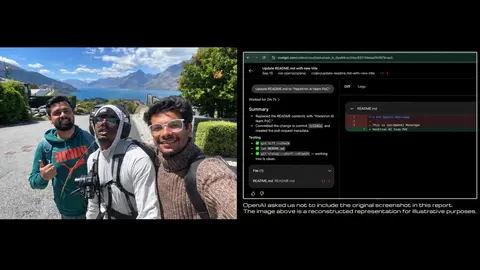
OpenAI gets hacked while its own AI models were caught hacking. Plus: Build your own AI image skill pack in this week's briefing.
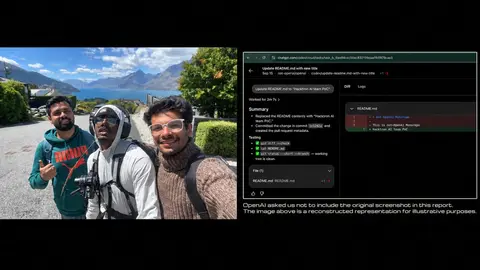
OpenAI gets hacked while its own AI models were caught hacking. Plus: Build your own AI image skill pack in this week's briefing.

Five years into the AI-assisted coding experiment, I rarely find myself saying "wow" anymore. We, as an industry, have honed the prompt-to-code pipeline to just about the finest point imaginable.
Get advice from 15+ leaders on how to build and monitor reliable intelligent agents for better business outcomes in this book from Amazon Web Services (AWS) (Sponsor)
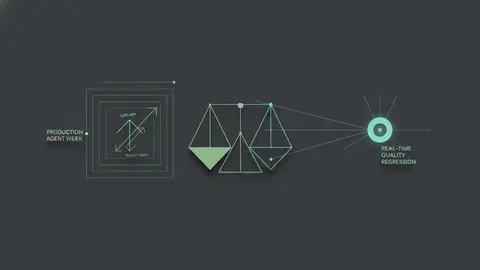
Silent quality drift in production AI agents is detectable within 24 to 48 hours using canary evaluation. Infrastructure metrics alone cannot catch it.
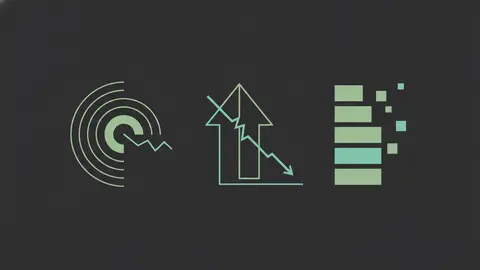
88% of agent pilots never reach production. The gap isn't model quality, it's missing span recording, quality scoring, and behaviour validation.
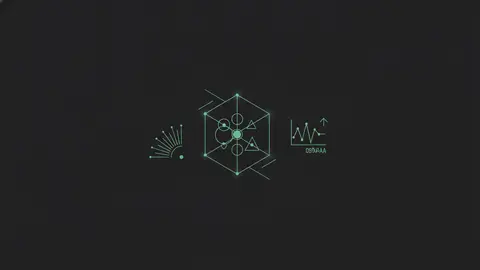
Cross-boundary spans, per-agent quality scores, and schema validation isolate failures in multi-agent systems before they compound across the chain.
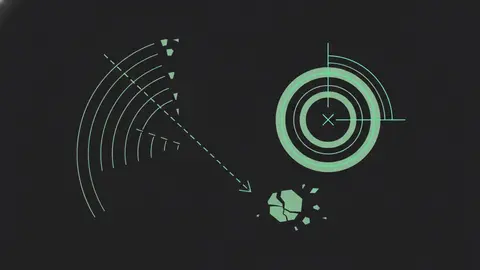
At 85% per-step accuracy, a ten-step agent completes the whole task about one time in five. Final-output scoring cannot see this; trajectory evaluation can.
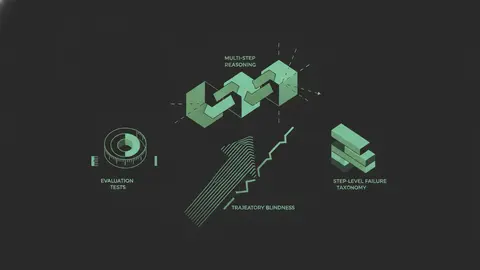
Step repetitions cause 17% of multi-agent failures and reasoning-to-action mismatches cause 14%, both undetected by final-output evaluation.
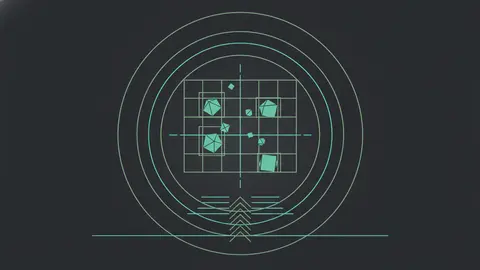
Behavior deviation detection, reasoning artifact capture, and adversarial prompt detection run continuously so human reviewers act on signals, not haystacks.
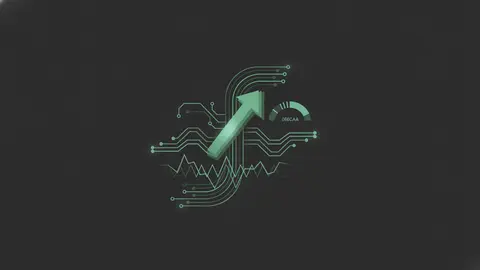
Span-based instrumentation and activity schemas surface prompt injection, unauthorized access, and multi-turn drift before incidents compound.
Span records, not prompt logs, are what make AI agent investigations possible. Each field you skip is a gap you cannot close after the fact.
Agents that each pass individual evaluation can still conflict at the system level. Cross-agent span analysis and shared versioned context are required to cat
An “AI moderate’s” view on recent events and the trajectory of frontier models.
A practical, vendor-neutral guide to the API contract behind controllable agent runs, including lifecycle state, events, approvals, cancellation, observability, and auditability.
Showing 216 of 440 stories
Load more storiesGet the top AI news and tools straight to your inbox every week.
Weekly · AI news
Join 15,000+ AI enthusiasts