

Stackness
Social platform for IT professionals to showcase tools, workflows, and approaches.
What is Stackness?
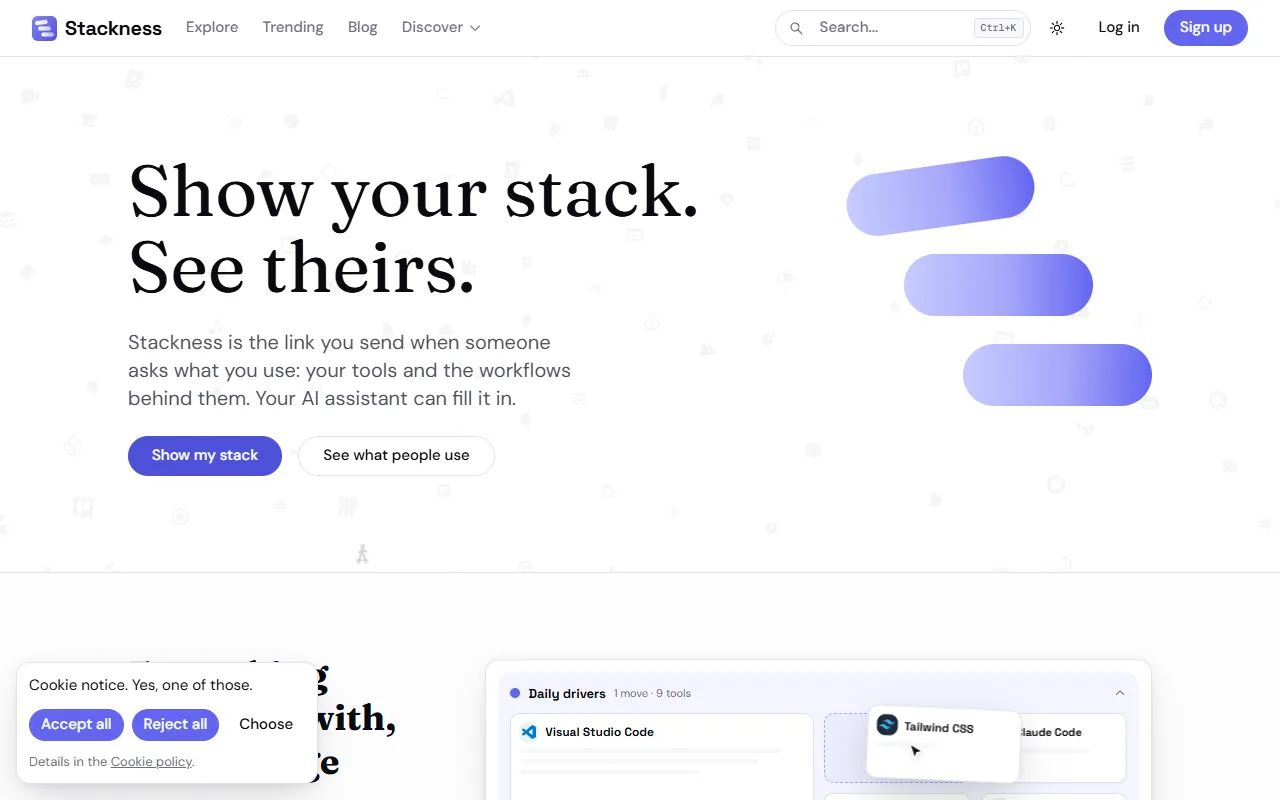
Stackness is an AI Website Builder tool. Social platform for IT professionals to showcase tools, workflows, and approaches. It is aimed at developers, it professionals and vibe coders.
Stackness is a social platform where IT professionals share their tools, workflows, and approaches. Users can build and display their tech stacks, view others' stacks, and explore tools before adopting them. It supports developer communities and knowledge exchange.
Built for developers, it professionals and vibe coders.
Features
Check Tools Before Using
AI Assistant
Support Stackness
Use cases
- Show your tech stack and workflows
- Share development approaches and techniques
- View tools and workflows of other IT professionals
- Evaluate tools before adoption
- Use an AI assistant to fill in stack details
- Organize work tools on one page
Who it's for
- Developers
- IT Professionals
- Vibe Coders
Pros & cons
Pros
- Public API available
- Supports GitHub and Anthropic integrations
Cons
No documented limitations yet.
Developer & API
Public REST API available
- Authentication
- API Key, Bearer Token, Oauth2
- Webhooks
- Supported
Security & compliance
- Encryption
- Data deletion
As stated on Stackness's website — not independently verified by AiByts.
FAQ
What is Stackness?
Stackness is an AI Website Builder tool. Social platform for IT professionals to showcase tools, workflows, and approaches. Stackness is a social platform where IT professionals share their tools, workflows, and approaches. Users can build and display their tech stacks, view others' stacks, and explore tools before adopting them. It supports developer communities and knowledge exchange.
Does Stackness have an API?
Yes, Stackness offers a public REST API with webhooks for building custom integrations.
Who should use Stackness?
Stackness is built for developers, it professionals and vibe coders. Common uses: show your tech stack and workflows, share development approaches and techniques, view tools and workflows of other IT professionals and evaluate tools before adoption.
What does Stackness integrate with?
Stackness integrates with GitHub and Anthropic.
What are the best alternatives to Stackness?
Similar tools on AiByts include Verse, Divi, Lovable, Nixmac and Staff.rip.
Stackness news & updates
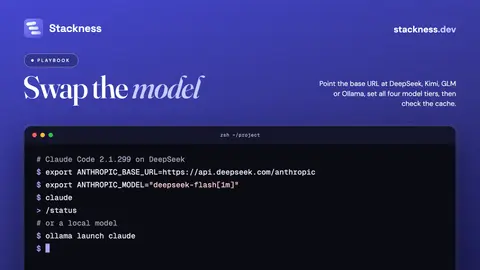
Run Claude Code with a different model provider: the variables per vendor, what CC Switch and magpie write, and what breaks
Point ANTHROPIC_BASE_URL at DeepSeek, Kimi, GLM or Ollama, set all four model tiers, test with curl and /status. Check the cache before the bill.
Stackness Blog9 min read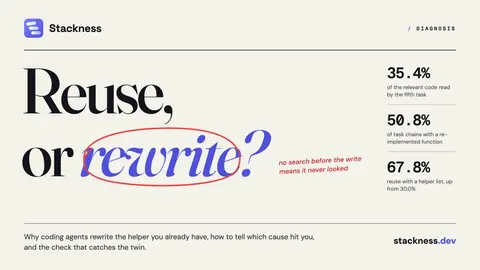
Stop a coding agent writing duplicate helper functions: the four causes, a test for each and the fix
Agents read 83.6% of the relevant code on turn 1 and 35.4% by turn 5. Check the transcript for a search before the write, then gate the diff with jscpd.
Stackness Blog9 min read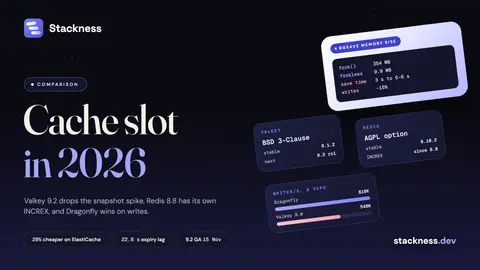
Valkey vs Redis vs Dragonfly in 2026: forkless BGSAVE, INCREX and which one takes the cache slot
For a new cache in October 2026, Valkey 9.1 is the default: BSD-licensed and 20% cheaper on ElastiCache. Its forkless BGSAVE and INCREX are still rc1.
Stackness Blog10 min read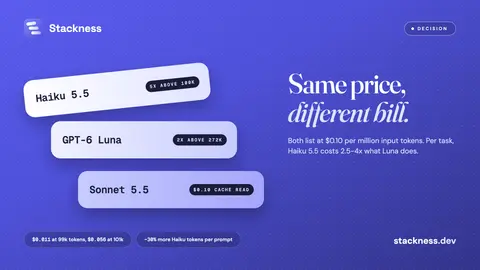
Claude Haiku 5.5 vs GPT-6 Luna cost per task: the 100k cliff, the tokenizer and which calls each one should take
Haiku 5.5 and GPT-6 Luna list at the same price, but Haiku costs 2.5-4x more per task and 5x above 100k tokens. Which calls each one should take.
Stackness Blog10 min read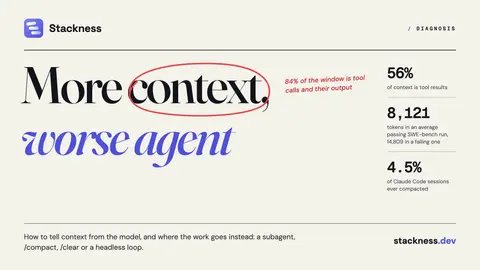
When more context makes your coding agent worse: subagent, /compact, /clear or a headless loop
Tool output was 84% of a coding agent's context in a September 2026 study. How to tell context is the problem, and where to route the work instead.
Stackness Blog9 min read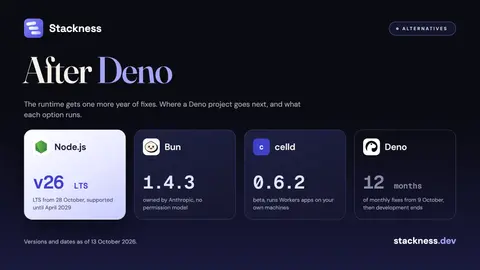
Deno alternatives after the Cloudflare deal: Node, Bun, workerd and celld for the runtime slot
Deno gets monthly fixes until about October 2027 and Deploy closes in six months. Node 26 is the pick for most Deno projects; here are all five options.
Stackness Blog8 min read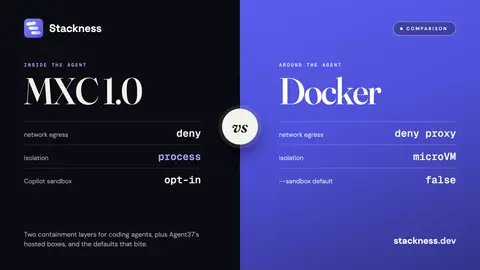
Agent sandbox comparison: Microsoft Execution Containers vs Docker Agent vs Agent37, and the defaults that bite
MXC 1.0.0 shipped on 7 October 2026 with egress denied by default, Docker Agent's microVM sandbox stays off until you ask, Agent37 leaves the internet open.
Stackness Blog9 min read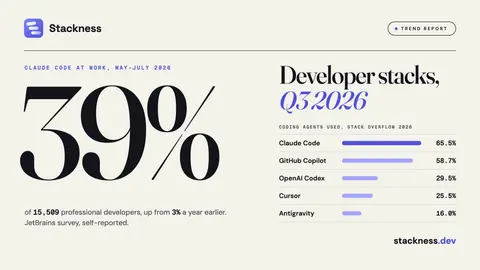
The state of developer stacks, Q3 2026
Claude Code led both Q3 2026 developer surveys, Codex grew fastest on GitHub and npm, and Copilot's vendor and survey numbers split. Data and method.
Stackness Blog12 min read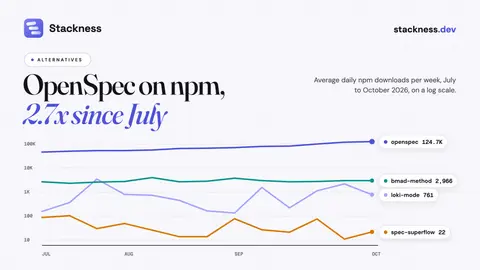
Spec-driven development tools for coding agents: OpenSpec, Spec Kit and four new frameworks compared
OpenSpec is the pick for most: MIT, 38 agents, half Spec Kit's tokens in one test. Eight spec-driven tools, and what each adds over a plain AGENTS.md.
Stackness Blog11 min read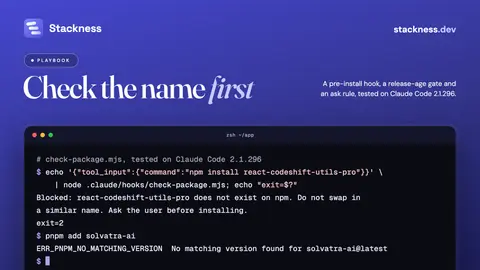
How to stop coding agents installing hallucinated packages: a pre-install hook, a release-age gate and an ask rule
A 33-line pre-install hook, a 7-day release-age gate and an ask rule stop agents installing invented packages. Tested on Claude Code 2.1.296 in October 2026.
Stackness Blog10 min read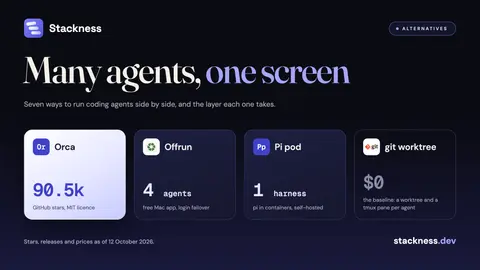
Manage multiple coding agents from one workspace: Orca, Offrun, Pi pod and four other options compared
Orca is the pick for most: MIT, three desktop platforms, a worktree per agent and quota per account. Seven ways to manage several coding agents, compared.
Stackness Blog10 min read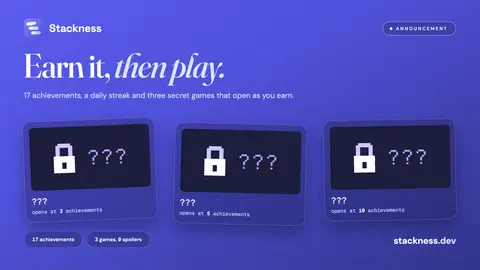
Earn it, then play: achievements and three secret games
Stackness now has 17 achievements, a streak that forgives you and three secret games that open at 3, 5 and 10. No spoilers, only hints.
Stackness Blog2 min read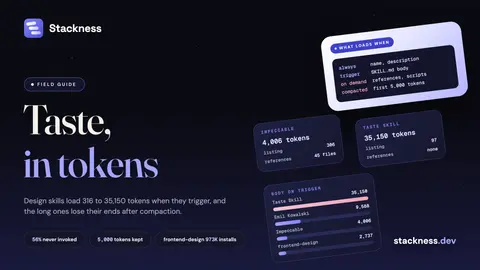
Agent skills for design and writing: what a non-code skill loads, and when it makes output worse
Design skills load 316 to 35,150 tokens when they trigger. What a non-code skill is, where it sits next to AGENTS.md and hooks, and when one makes output worse.
Stackness Blog8 min read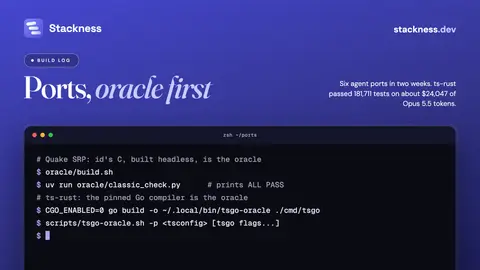
Clean-room ports with a coding agent: the oracle loop behind six agent ports, and what each run cost
ts-rust passed 181,711 ported tests for about $24,047 of Opus 5.5 tokens. Six agent ports, the oracle loop they share, what each cost and where it broke.
Stackness Blog9 min read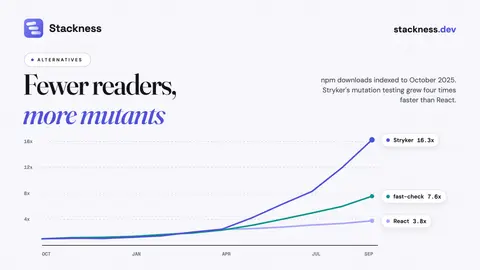
Alternatives to line-by-line code review: six verification layers for agent-written pull requests, and what each one catches
The best AI reviewer on GitHub's ReviewBench finds 26% of known issues. Six layers teams stack in place of reading every line, and what each one catches.
Stackness Blog10 min read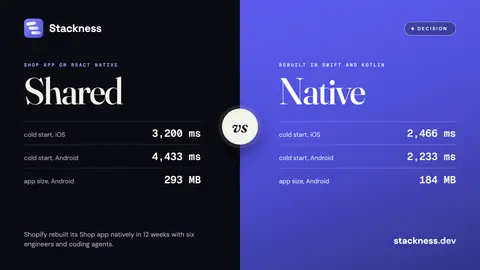
Why teams are dropping cross-platform frameworks in 2026, and when your team should follow
Shopify rebuilt its Shop app natively in 12 weeks because agents cut the cost of writing features twice. When that applies to your team, and when it does not.
Stackness Blog9 min read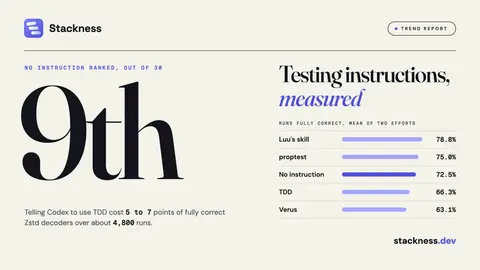
Do testing instructions improve coding agent correctness? What 30 conditions on one Zstd task measured
In a 30-condition eval, telling Codex to use TDD cut fully correct Zstd decoders by 5 to 7 points. No testing instruction clearly beat none.
Stackness Blog10 min read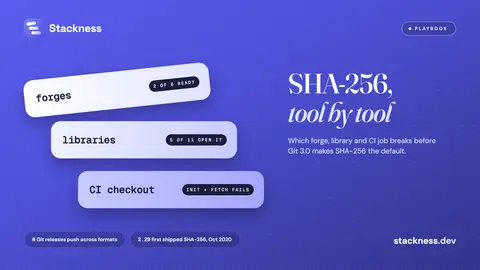
Git SHA-256 repository compatibility: test your stack before Git 3.0 makes it the default
No released Git can push or fetch between SHA-1 and SHA-256. Five steps to find which forge, library and CI job in your stack breaks before Git 3.0.
Stackness Blog9 min read
Details are compiled from Stackness's website and public sources, last verified Oct 5, 2026. Features and pricing change — confirm on the official site before you buy.
Try Stackness
Visit the official website
Comments
Sign in to join the discussion.